Characteristics of PETN
- First obtained
- 1893
- Start of use
- 1920s
- Formula
- C(CH2ONO2)3
- Starting materials
- tetrahydric alcohol and nitric or sulfuric acid
- Structure
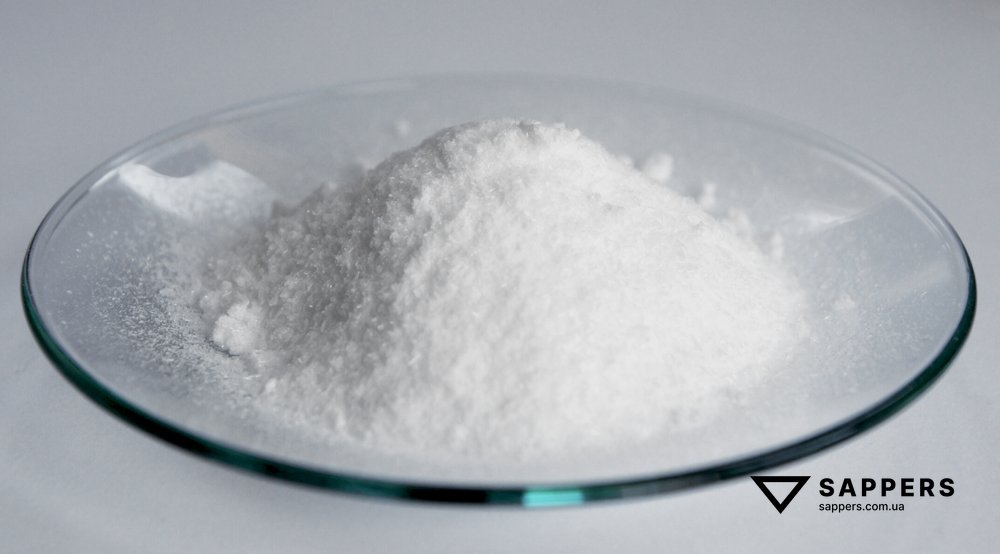
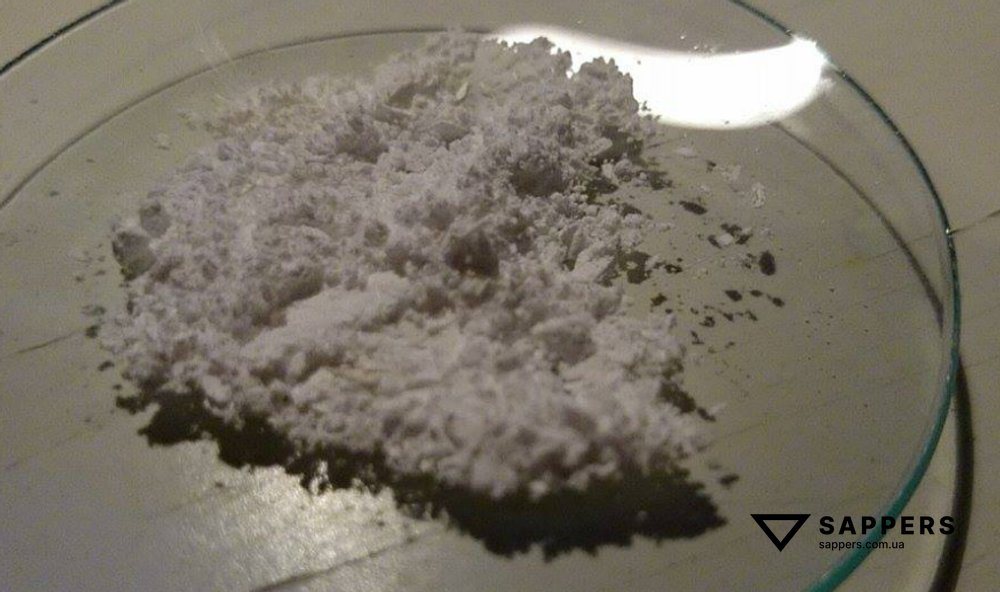
- crystalline substance
- Color
- white
- Sensitivity
- the most sensitive high explosive; detonates when struck by a bullet. Burning may transition to an explosion
- Impact sensitivity
- 100%
- Interaction with metals
- does not react with metals
- Solubility in water
- non-hygroscopic, insoluble
- TNT equivalent
- 1.45
- Flash point
- 205-210 ºC
- Melting point
- 138-140 ºC
- Density
- 1600 kg/m3
- Detonation velocity
- 7900 m/s
- Specific energy of explosive transformation
- 5.7 mJ/kg
- Blast effect
- 480 cm3
- Brisance
- 24 mm
- Specific volume of explosion products
- 0.79 m3/kg
- Special features
- burns with a white, soot-free flame
- Guaranteed storage life
- 20 years