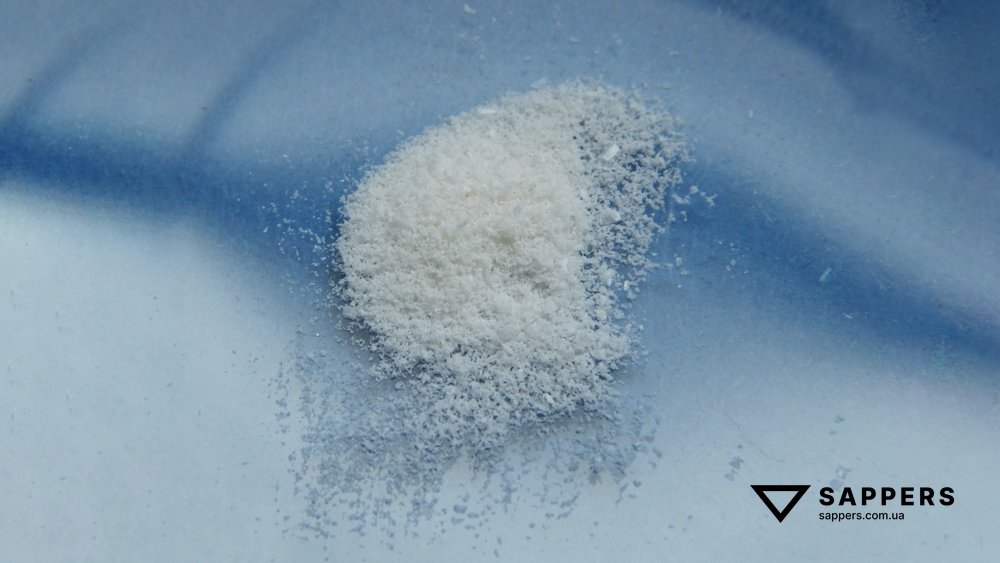
Characteristics of RDX
- Obtained
- 1897
- Start of use
- 1919 (Germany)
- Formula
- C3H3O6N
- Starting materials
- hexamine, nitric acid
- Structure
- fine-crystalline substance
- Color
- white
- Sensitivity
- sensitivity higher than tetryl but lower than PETN; may detonate from a bullet impact; combustion may transition to detonation
- Impact sensitivity
- 80-90%
- Interaction with metals
- does not interact with metals
- Solubility in water
- non-hygroscopic, insoluble
- TNT equivalent
- 1.42
- Ignition temperature
- 215-232 ºC
- Melting point
- 202-203 ºC
- Density
- 1700 kg/m³
- Detonation velocity
- 8600 m/s
- Specific energy of explosive transformation
- 5.8 MJ/kg
- Explosive power
- 470 cm³
- Brisance
- 18 mm
- Specific volume of explosion products
- 0.9 m³/kg
- Features
- tasteless, odorless, burns with a white flame
- Guaranteed storage life
- 20 years