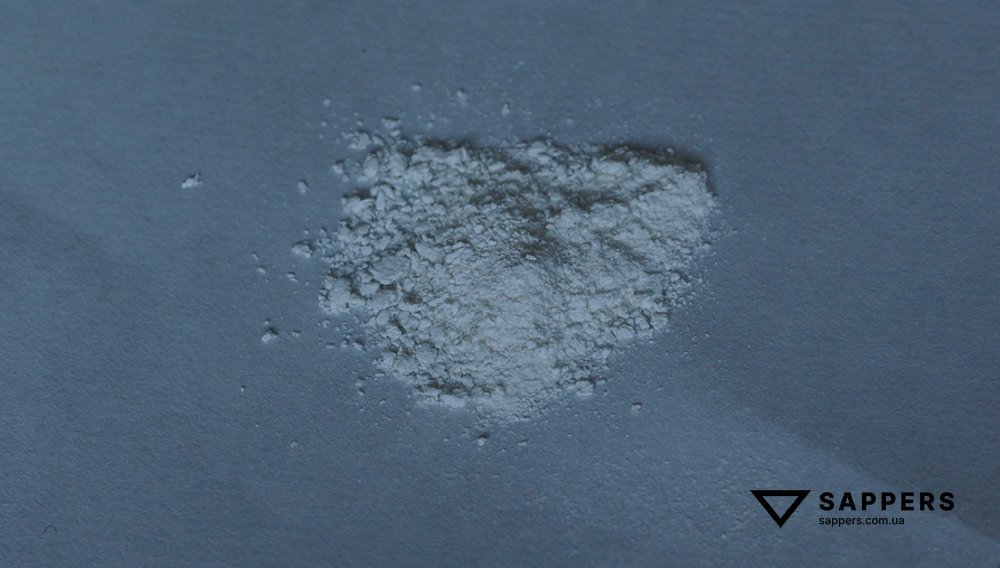
Lead Azide

Lead azide (lead salt of hydrazoic acid) is a white, fine-crystalline substance that is poorly soluble in water.

Lead azide is less sensitive to impact, friction, and flame than mercury fulminate. To ensure reliable initiation of lead azide detonation by flame, it is coated with a layer of lead styphnate. To initiate detonation in lead azide by stab action, it is coated with a layer of a special stab-sensitive composition.

Lead azide does not lose its detonating capability when moistened or at low temperatures. Its initiating capability is significantly higher than that of mercury fulminate.

It is used for loading detonator capsules.

Lead azide does not chemically interact with aluminum, but it reacts actively with copper and its alloys; therefore, the cases of detonator capsules loaded with lead azide are made of aluminum rather than copper.

Lead azide
Lead azide
Lead azide

Characteristics of lead azide

First obtained
1890
Formula
Pb(N3)2
Starting materials
sodium azide and lead nitrate
Structure
fine-crystalline substance
Color
white
Sensitivity
less sensitive than mercury fulminate, very sensitive to electric discharge
Interaction with metals
with copper – reacts; with aluminum – does not react
Solubility in water
poorly soluble
Ignition temperature
325–350 °C
Explosion temperature
4300 °C
Detonation velocity
5300 m/s
TNT equivalent
0.36
Features
to ensure reliable initiation, it is coated with a layer of TNRS