
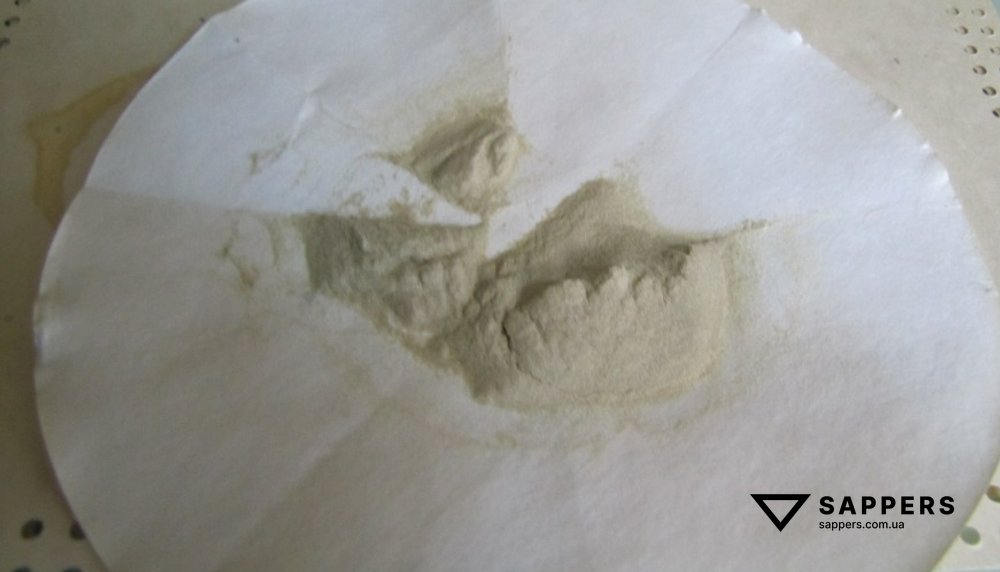
Characteristics of mercury fulminate
- First obtained
- 1799
- Formula
- Hg(ONC)2
- Starting materials
- mercury, nitric acid, and ethyl alcohol
- Structure
- fine-crystalline, free-flowing substance
- Color
- white or gray
- Sensitivity
- the most sensitive explosive
- Interaction with metals
- with aluminum – reacts; with copper – poorly; with nickel, lead – does not react
- Solubility in water
- poor
- Flash point
- 170–180 ºC
- Explosion temperature
- 4450 ºC
- Detonation velocity
- 4500–4850 m/s
- TNT equivalent
- 0.43
- Specific features
- toxic
In the absence of moisture, mercury fulminate does not chemically interact with copper and its alloys. With aluminum, however, it reacts intensively with the release of heat and the formation of non-explosive compounds (corrosive destruction of aluminum occurs). Therefore, cap cases containing mercury fulminate are made of copper or cupronickel, rather than aluminum.