Technical and Tactical Specifications of the RG-4 Grenade
- Type
- High-explosive fragmentation
- Diameter
- 53 mm
- Height
- 84 mm
- Weight
- 320 g
- Explosive weight
- 105 g
- Explosive type
- TNT
- Throwing range
- 30-35 m
- Effective casualty radius (offensive version)
- 5-10 m
- Effective casualty radius (defensive version)
- 20-25 m
- Lethal fragment radius (defensive version)
- Up to 200 m
The RG-4 grenade was developed in the 1950s. It is a further development of the RG-34 grenade (1934). The latter, in turn, was the result of analyzing the experience of using hand grenades during the First World War. At that time, a large number of devices with impact fuzes were used. Problems arose both with reliability of functioning and with the safety of the servicemen who used them. Numerous instances of functioning were recorded when they were accidentally dropped from the hand at the user’s feet, as well as from impacts against trench walls—both during the throwing motion and when striking the parapet in front of the thrower.

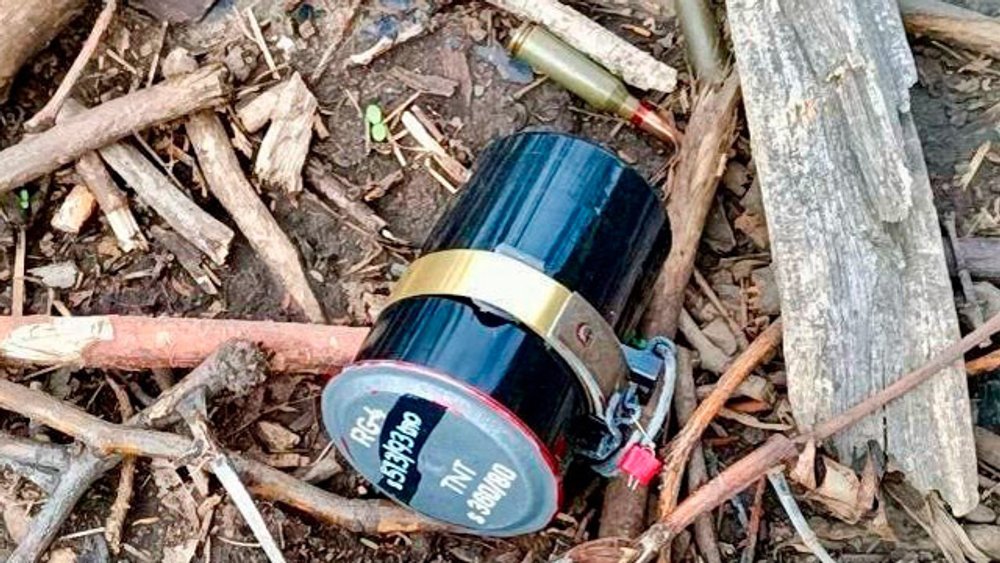

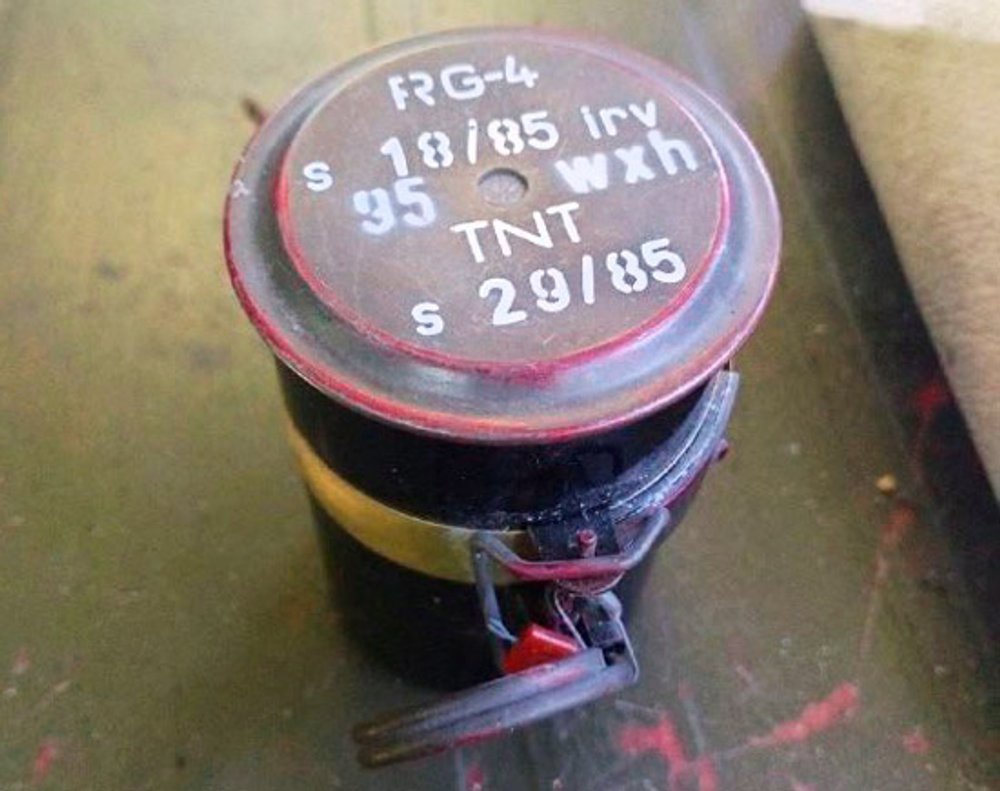
The grenade is classified as an offensive grenade and has a relatively small effective casualty radius of 5-10 m.
It can be fitted with a fragmentation sleeve placed over the lower part of the grenade, making it defensive and increasing the effective casualty radius to 20–25 m (lethal fragment radius up to 200 m).

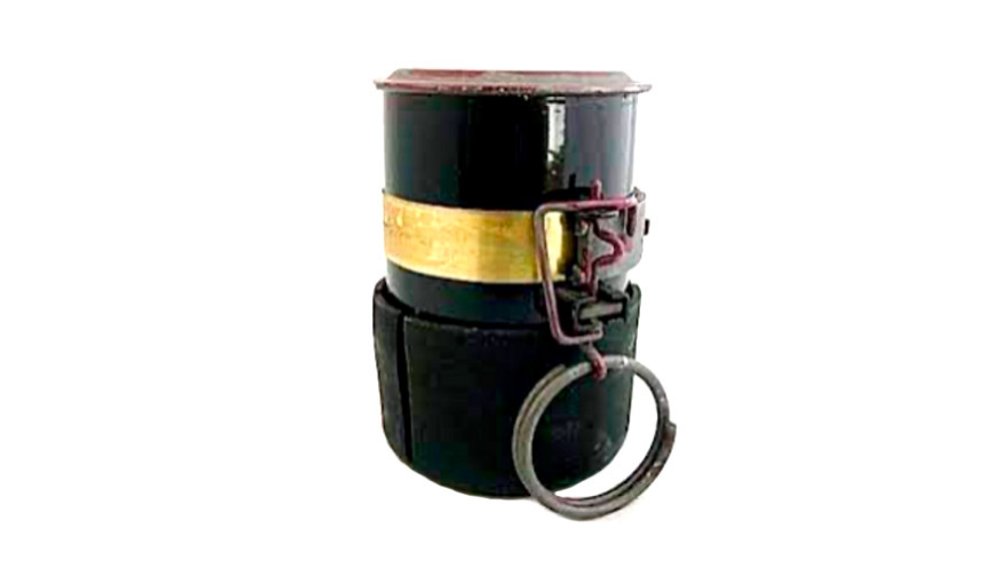
Construction of the RG-4 Grenade
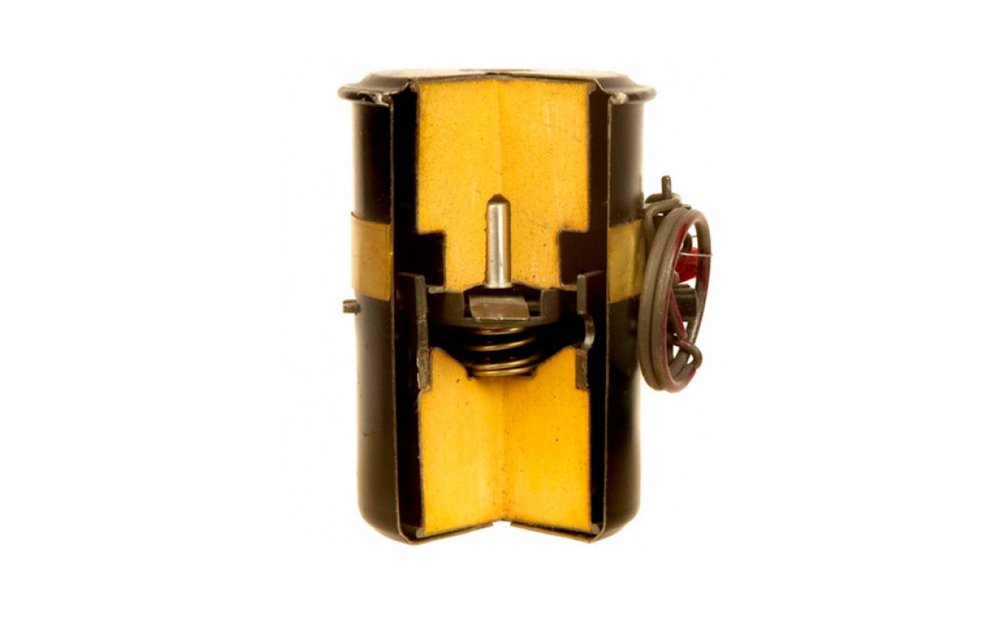
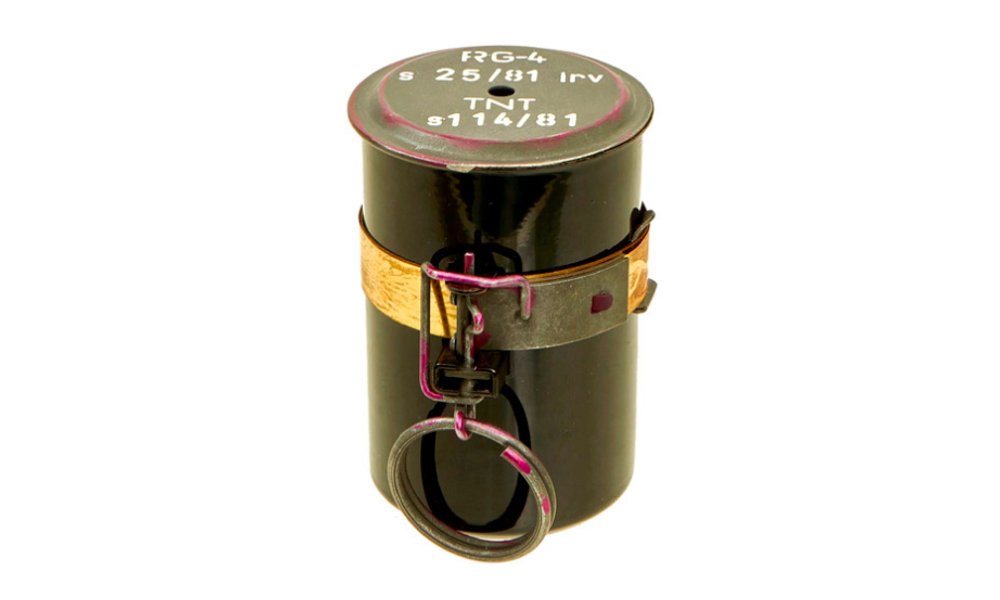
Externally, the RG-4 grenade resembles a tin can—a tall cylinder with a crimped lid. Around the middle, the body is wrapped with several turns of thin brass tape. The safety pins are secured by a pin with a ring. There is an additional safety device in the form of a seal.
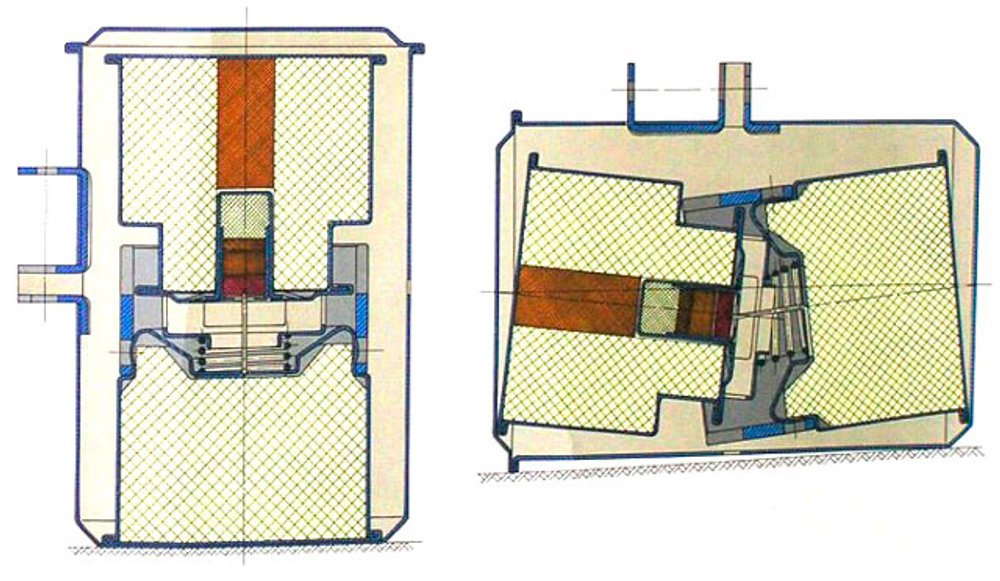
Inside the body are two thin-walled sleeves containing explosive charges. One is fitted with a primer and detonator, the other with a needle (striker). In the transport position, the sleeves are positioned opposite each other. A spring bears against the sleeve with the striker needle, and at its other end is a support bridge. The spring-loaded support bridge is prevented from release by two safety pins at once: one in the form of a fork, the other in the form of a plate to which the same thin brass tape is attached. The fork safety pin and the end of the tape are secured by a clasp with a ring.

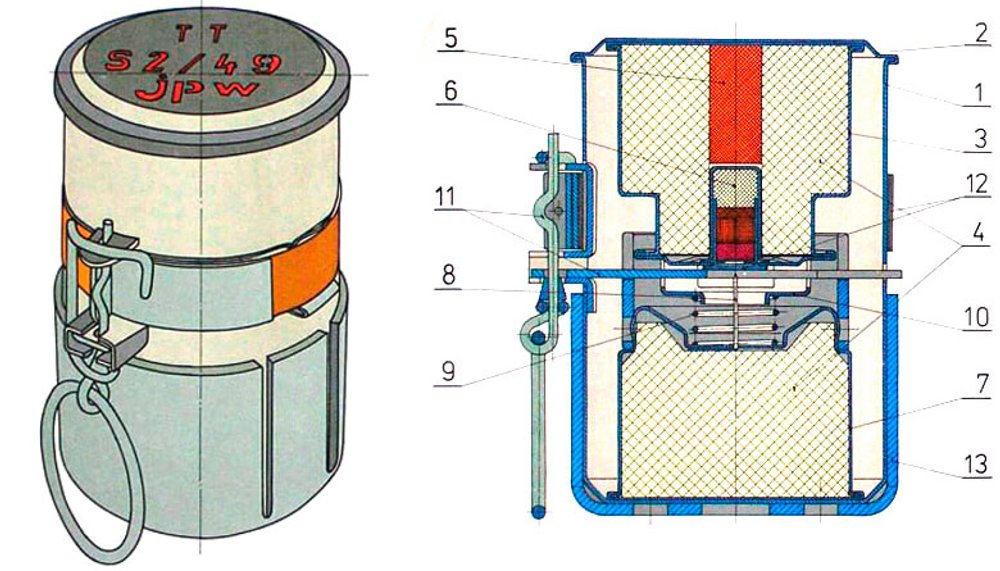

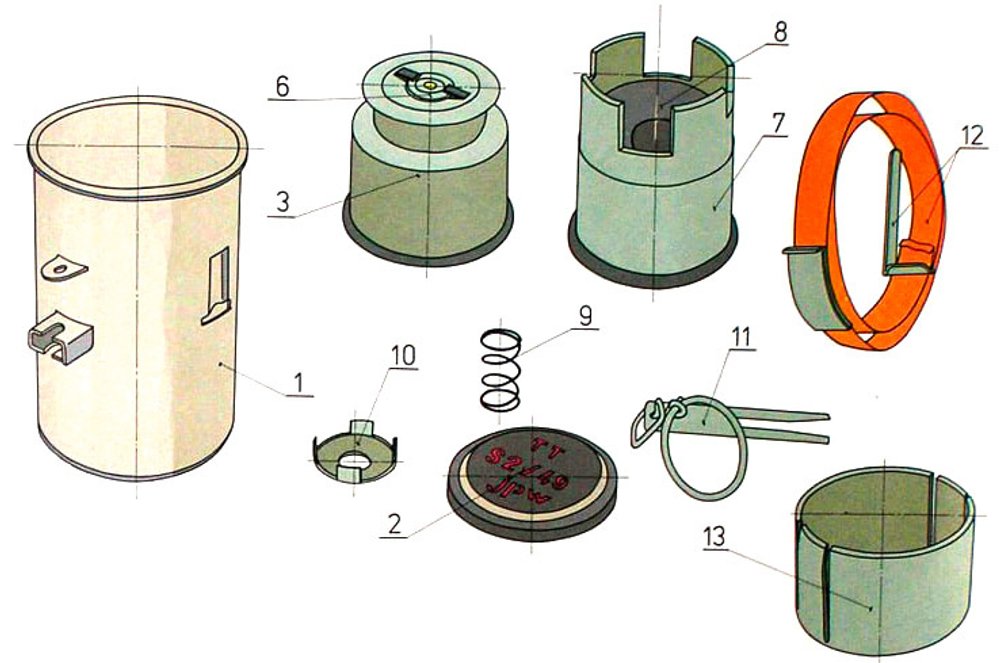
Employment and Principle of Operation
Employment:
- Remove the transport seal.
- Hold the grenade in the hand so that the fingers press down the safety tape.
- Take hold of the ring with the other hand.
- Remove the clasp with a rotating motion and pull out the fork safety pin.
- Then throw the grenade.
At the moment of the throw, the safety tape made of thin sheet brass is released. Once released, it unwinds and, at a distance of approximately 5–15 m, pulls out the second safety pin (plate). After that, only a relatively soft spring separates the sleeve with the striker needle from the second sleeve with the primer.

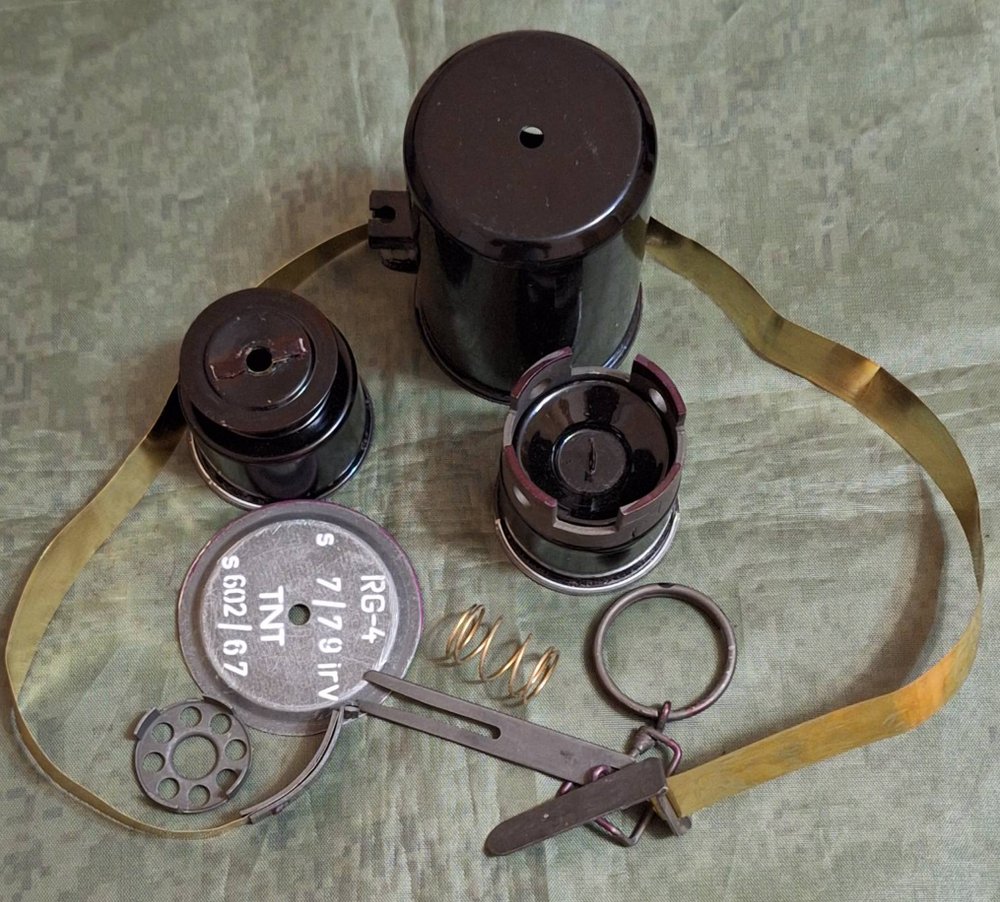
Upon contact with an obstacle by either end, the section with the primer and detonator, moving by inertia, compresses the spring and pierces the primer with the needle. The detonator is initiated. The detonation initiates the booster detonator (tetryl), which in turn detonates the main TNT charge. The explosion of the charge in one sleeve also initiates the charge in the second sleeve, where the needle is located.
When impacting or falling on its side, the sleeves with the charges deflect the spring downward, and contact between the striker needle and the primer also occurs.
Thus, the RG-4 functions reliably when impacting with any part. Only a primer that has failed due to improper storage conditions can result in a misfire.

However, the RG-4 also has obvious shortcomings.
First, its fragmentation effect is rather weak. The outer body is made of very thin metal. Only the headpiece on one of the sleeves is made of thicker metal and forms more or less effective casualty-producing fragments. The outer body and the casings of the sleeves with the charges are thin sheet metal, which breaks into very small fragments upon detonation. Such fragments do not penetrate even heavy clothing at distances greater than 5–6 m.
Adding an external fragmentation sleeve (a ring with slots) makes the RG-4 more powerful, effectively turning it into a defensive grenade.
The second shortcoming is the difficulty of use at short distances, during assaults, trench fighting, or when throwing into building windows (or from them). To release the second safety pin, the grenade must travel approximately 5–15 m so that the safety tape can unwind. At short distances this may not occur: the grenade falls, presses the tape down, the pin remains in place, and functioning does not occur. This feature must be taken into account when using the RG-4.