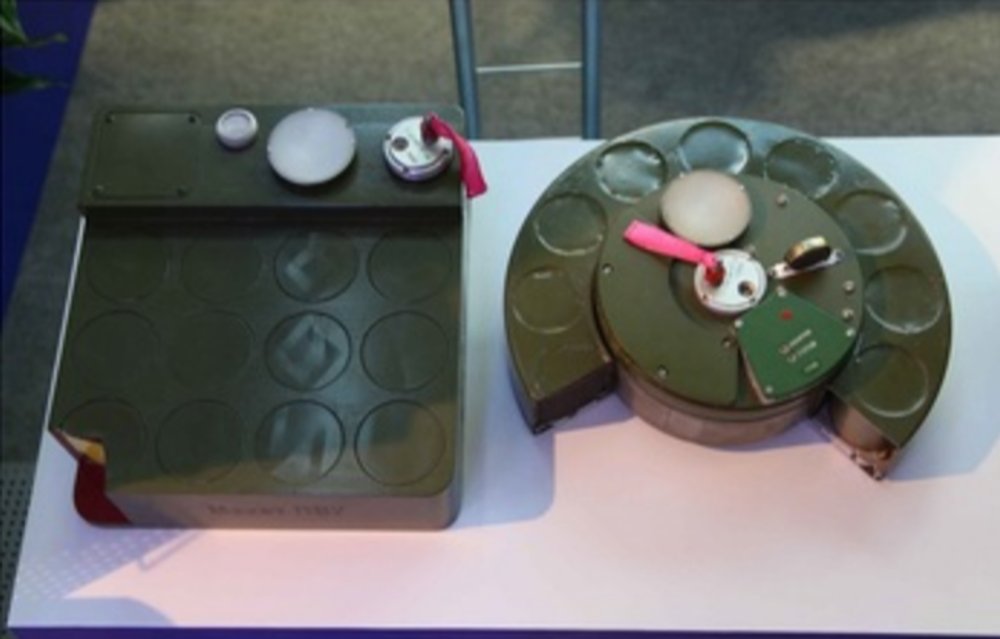
The mines are produced in two variants: rectangular and disc-shaped. They are emplaced on the ground manually; however, the disc-shaped variant is manufactured within the dimensions of TM-62 anti-tank mines, allowing it to be emplaced by mechanized means (PMZ-4P towed mine-laying trailers, GMZ-3 tracked mine-laying vehicle, VSM-1 helicopter mine-laying system).
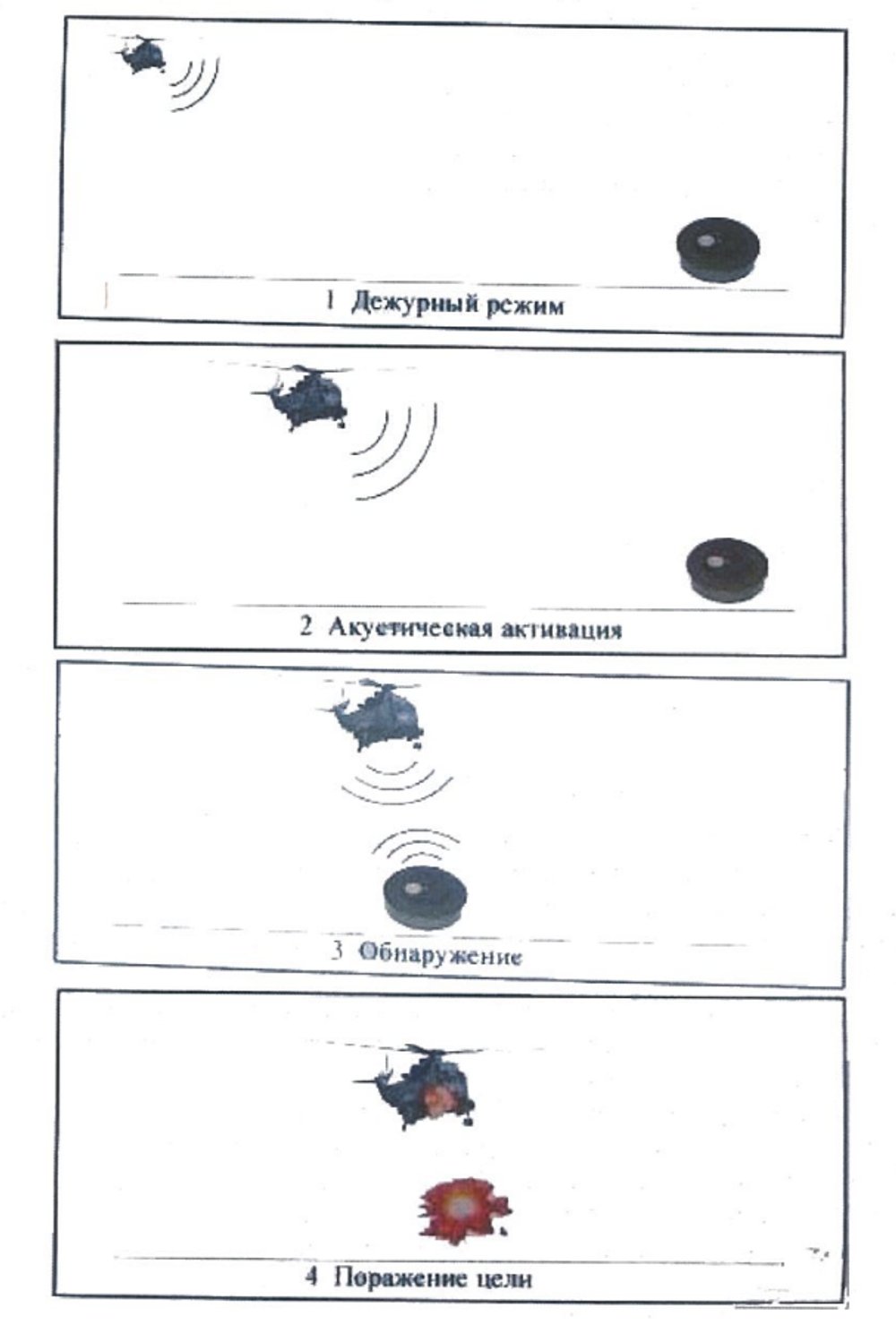
Aircraft are engaged by twelve explosively formed penetrators. These penetrators have a high flight velocity, which makes it possible to engage the target without applying lead.
After an aerial target is positioned above the mine, the electronics issue a detonation command, and all twelve charges function simultaneously, forming lethal elements which, at altitudes of up to 100 meters, penetrate an obstacle equivalent to a 12-mm steel plate.
Target detection and identification are carried out by acoustic sensors and the “388M” optical fuze. The detonation command is issued when the acquired data correspond to the acoustic signature of helicopters of the presumed adversary. A radar system is responsible for determining the moment of mine activation. The mine is also equipped with an identification friend-or-foe system. The mine is fully autonomous, meaning it independently identifies the target and issues the detonation command. Autonomy is maintained for six days.
The maximum target detection range is 400 meters; the maximum target flight speed is up to 80 m/s (280 km/h).