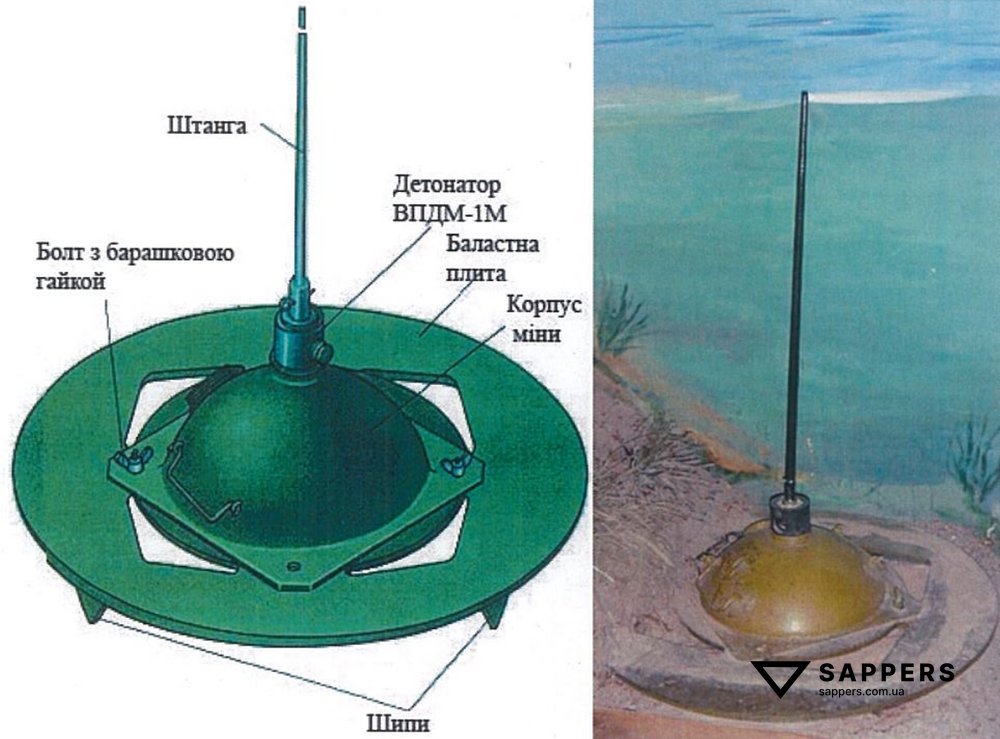
Technical and Tactical Characteristics of the PDM-1M Mine
- Mine type
- anti-landing bottom-laid high-explosive tilt-action mine
- Casing
- steel
- Weight
- 60 kg
- Explosive charge weight
- 10 kg
- Type of explosive
- TNT
- Diameter
- 0.8 m
- Height
- 1 m
- Target sensor height
- 0.7 m
- Actuation force
- 18-26 kg at a tilt angle of 10°-15°
- Emplacement depth
- 1.1-2 m
- Depth of the target sensor below the water surface
- 0.1-1 m
- Operating temperature range
- 0 to +30 °C
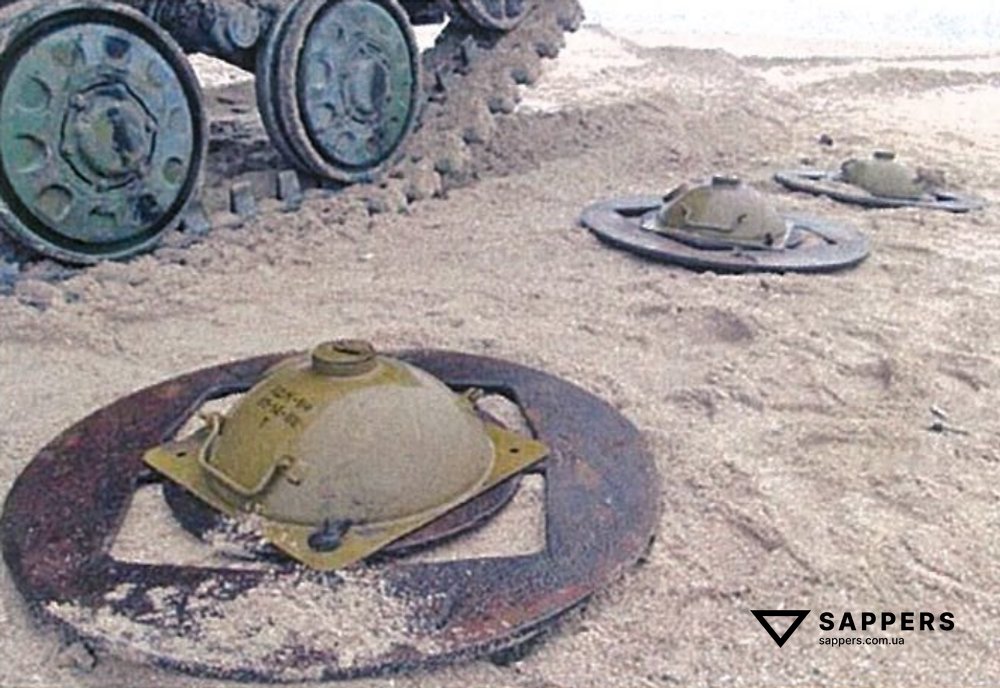
The mine is a spherical segment made of steel, filled with explosive and secured to a heavy steel ballast plate. A tilt-type fuze with a target-sensing rod is mounted on top.
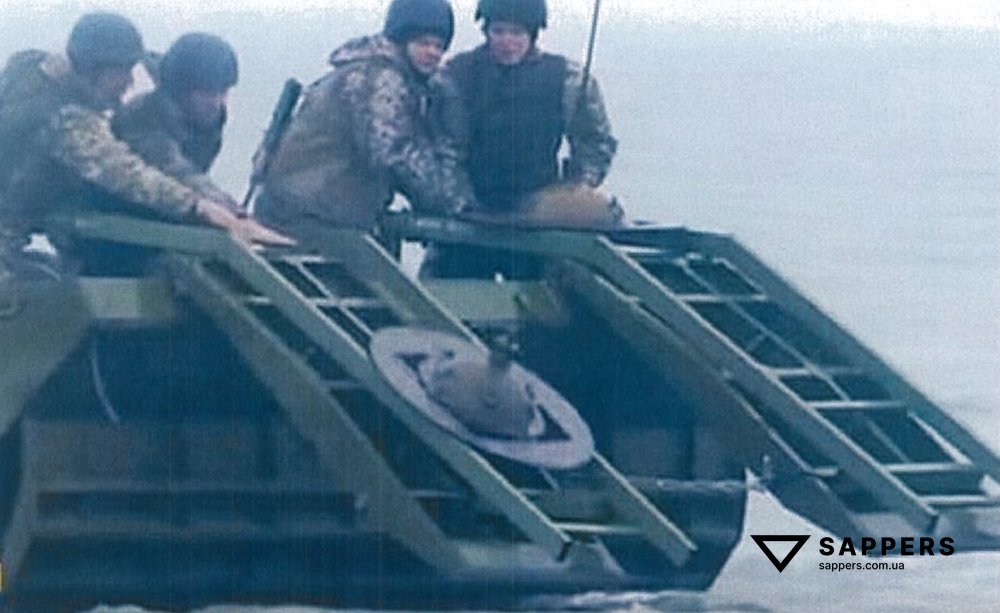
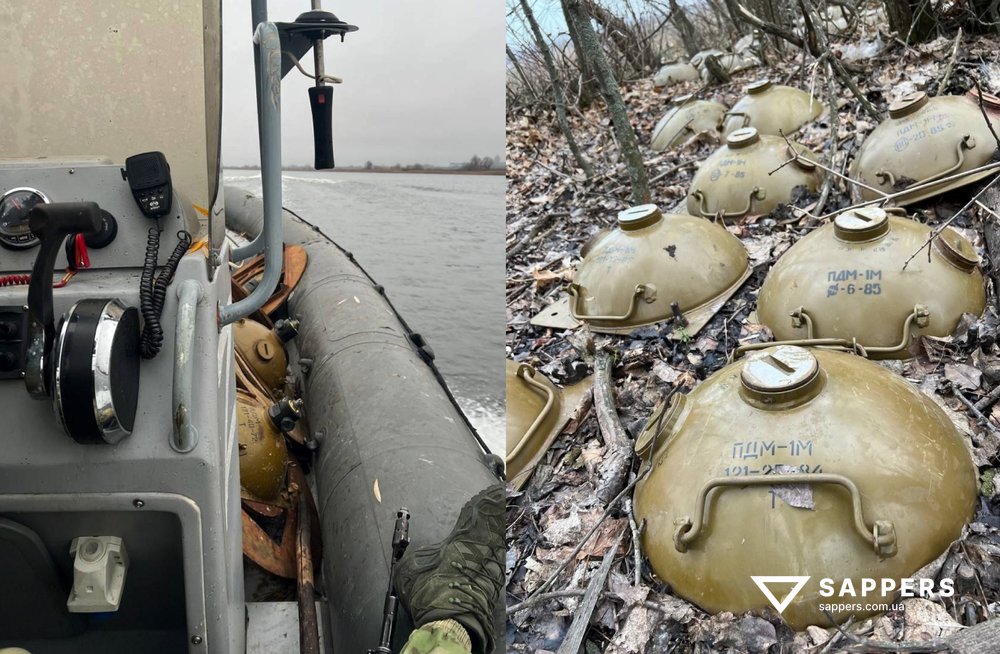
The mine is emplaced on the bottom of a body of water at a depth of 1.1-2 meters, manually from the shore or from a watercraft. The mine can also be emplaced from a helicopter.
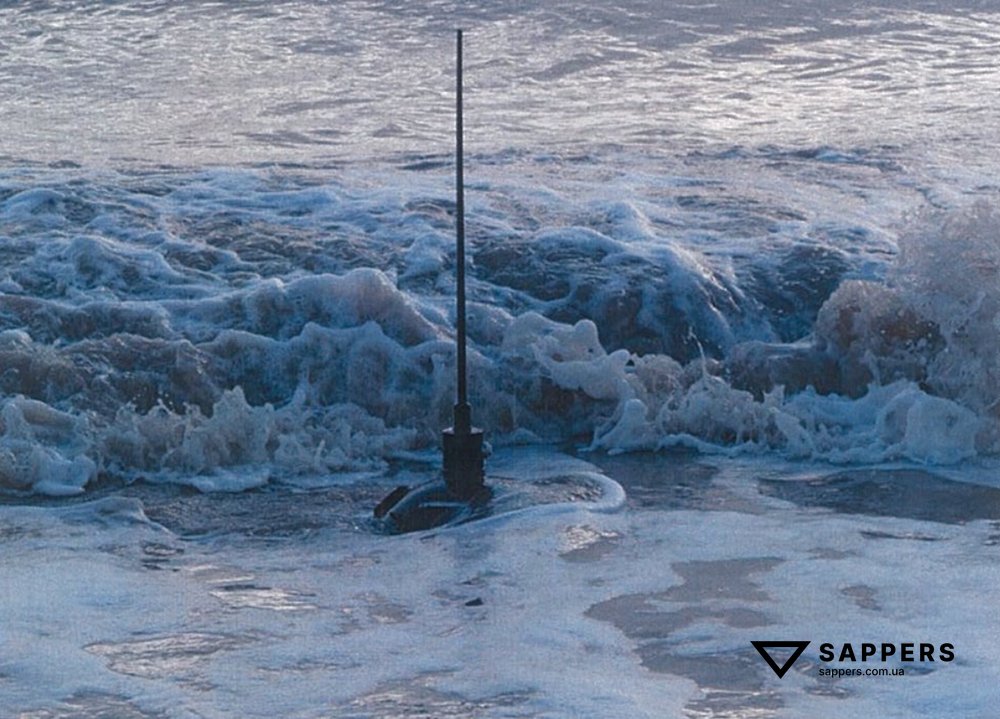
When a watercraft acts on the rod, it tilts and the MD-10 detonator initiates the mine’s explosive charge. During the explosion, a hole is formed in the hull of the enemy vehicle, while the hydraulic shock disables the vehicle’s engine and transmission.
Emplacement of these mines is possible only in advance, when the enemy is absent on the opposite bank, because installation requires a considerable amount of work and the involvement of a large number of personnel, which compromises the concealment of the operation.
In addition, a large amount of grass, debris, logs, branches, and other objects always drifts with the current, which often leads to false actuations. During the Vietnam War, mining the Mekong River against U.S. patrol boats produced no results. The mines detonated 2-3 hours after emplacement due to algae accumulated on the rods. Mining the coastal strip of the Suez Canal also produced no results. The sand beneath the ballast plates was quickly washed out, the mines overturned and detonated, or they were carried away by the current.
The VPDM-1M fuze is mechanical, contact-type, with a temporary sugar safety device and an MD-10 detonator.
The mine’s combat service life is not limited.
It has no anti-lift or anti-neutralization elements, but mine clearance is prohibited.
Coloring
Green.
Marking
Standard, applied in black paint to the side surface and includes:
- PDM-1M - mine code.
- 80-1-88 - manufacturer’s plant code - batch number - year of manufacture.
- T - filling code.