Technical and tactical characteristics of the TM-57 mine
- Type of mine
- track-breaking
- Body
- steel
- Weight of explosive:
TNT
MS mixture (RDX, TNT, Aluminum, Wax)
TGA mixture (RDX, TNT, Aluminum)
6.5 kg
7 kg
7 kg- Diameter
- 320 mm
- Height with MV-57
- 110 mm
- Height with MVSh-57
- 320 mm
- Height with MVZ-57
- 128 mm
- Target sensor diameter
- 220 mm
- MVSh-57 sensitivity
- 200-500 kg
- MVSh-57 pin tilt angle required for functioning
- 25-30°
- Operating travel of MV-57 and MVZ-57
- 3-20 mm
- Sensitivity of MV-57 and MVZ-57
- 40-110 kg
- Operating temperature range
- -50 to +50 °C

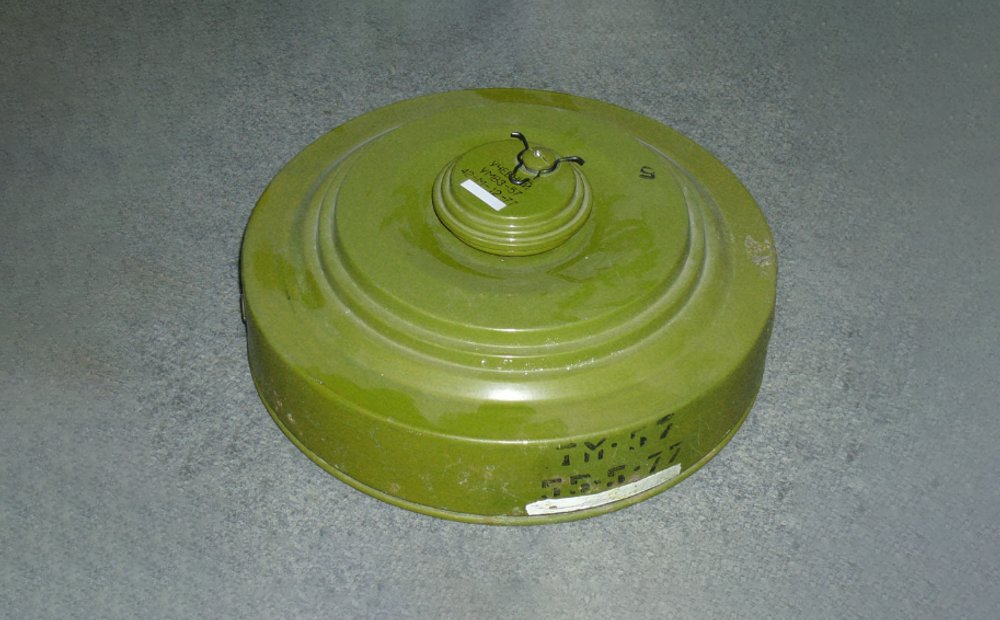
The mine may be emplaced either on the ground or in the ground, in snow, under water, manually or by mechanized means (towed mine-laying devices, PMZ-4P, GMZ-3 tracked minelayer, VSM-1 helicopter mine-laying system).
The mine’s combat service life is not limited. When the metal body of the mine is destroyed by corrosion, the mine’s sensitivity increases from 200-500 kgf to 3-5 kgf. The mine is not equipped with a self-destruct mechanism.
The mine may be used with the following fuzes: MV-57, MVSh-57, MZK, MVZ-57. The first three mechanisms are intended exclusively for manual emplacement. The MVZ-57 may be used for both mechanized and manual emplacement. For anti-handling purposes, there is an additional well on the side of the body for screwing in a MUV fuze with an MD-5M detonator. This additional well allows an electric detonator to be screwed into the mine and the TM-57 to be used as a conventional demolition charge or command-detonated mine.
At the moment the mine passes along the minelayer conveyor, a special mechanism presses the button on the fuze body, starting a clockwork mechanism that arms the fuze after 2-3 minutes.
The mine detonates when a track or wheel runs over the fuze or pressure cover. The MVSh-57 fuze is analogous to the MVSh-46 fuze.
TM-57 mines are also used as under-ice mines, according to the same principle as TM-46 mines and with the same VPMP fuze. The electric detonator is screwed into the side igniter well. The mines are emplaced in no fewer than two rows. The distance between mines in a row and between rows is 8-10 m. For every 20 passive mines, at least one active mine is emplaced. Active mines are emplaced along the centerline between rows and between mines in the rows on the surface of the ice, bottom down. Snow at the mine emplacement site is cleared away and then thrown over the mine from above, camouflaging it.
Due to the fact that safety covers and special keys are generally not at hand, such mines should therefore be destroyed by detonation.

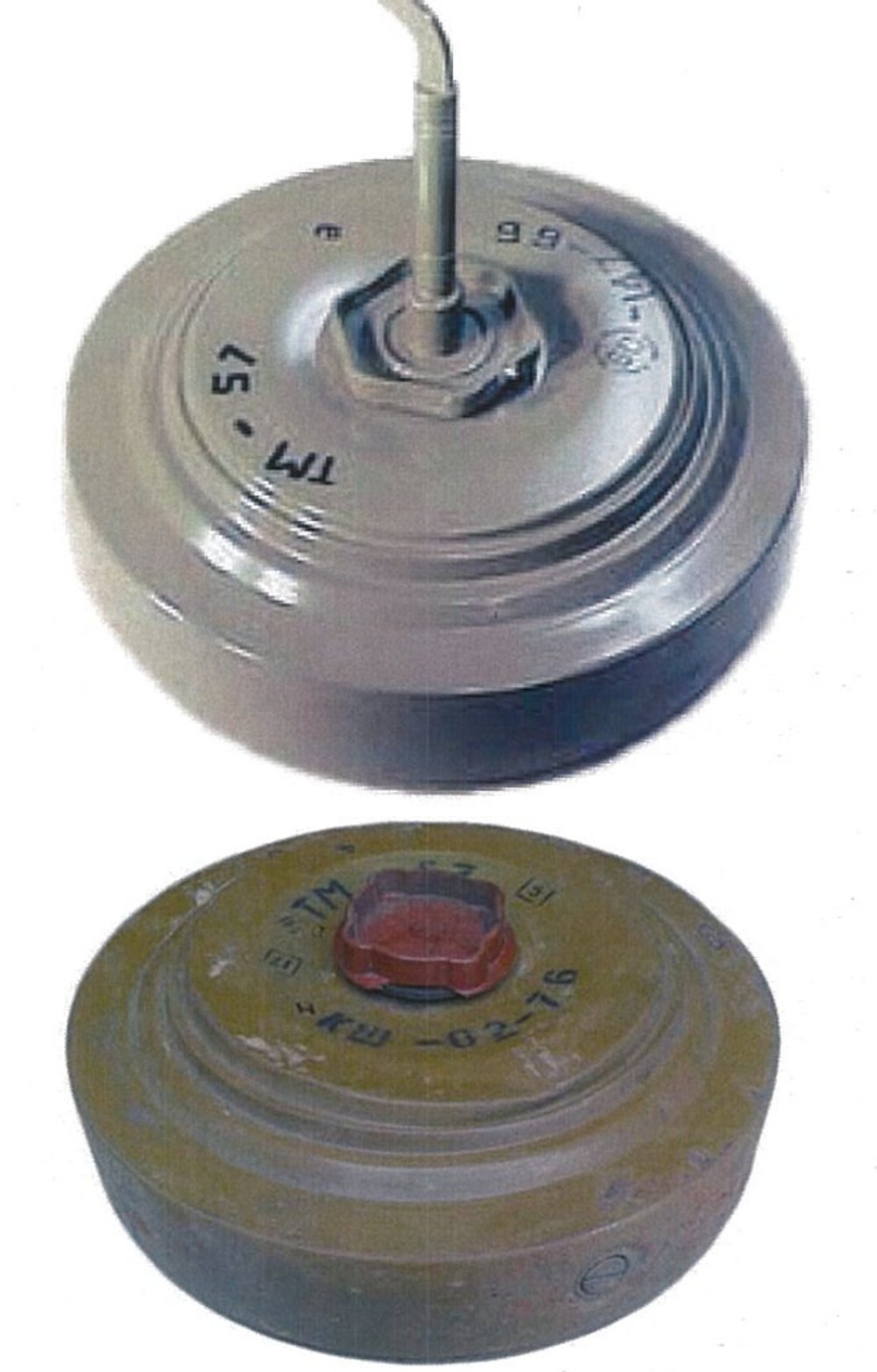
Mine coloration
The mine is painted dark green or olive green.
Mine markings
Applied in black letters with paint to the mine cover or side and include: the manufacturer’s plant code, lot number, and designation. The marking "TM-57" is also indicated on the bottom of the body by raised stamping. The MVZ-57 fuze markings are applied in black letters with paint to the mine cover and include: lot number, date of manufacture, and designation.
Damage capabilities
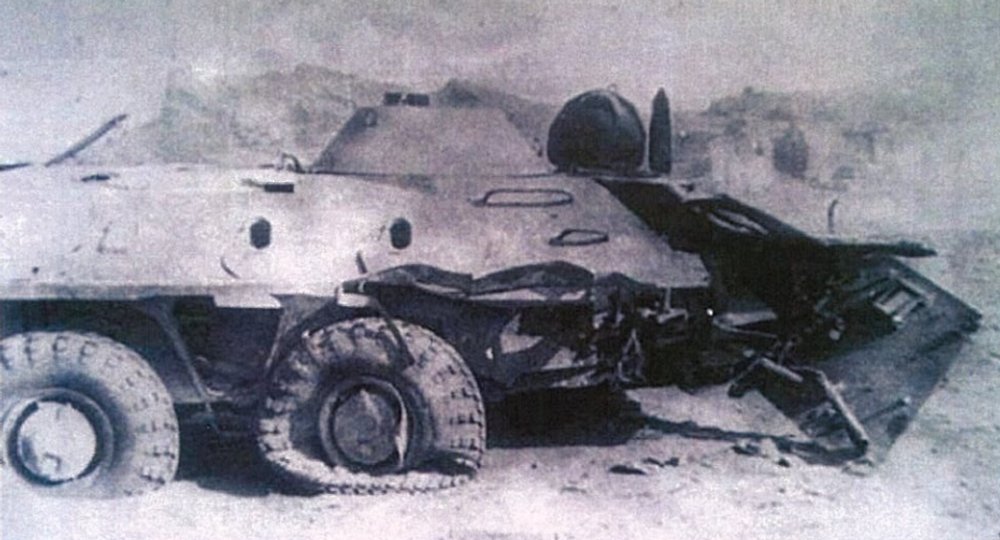
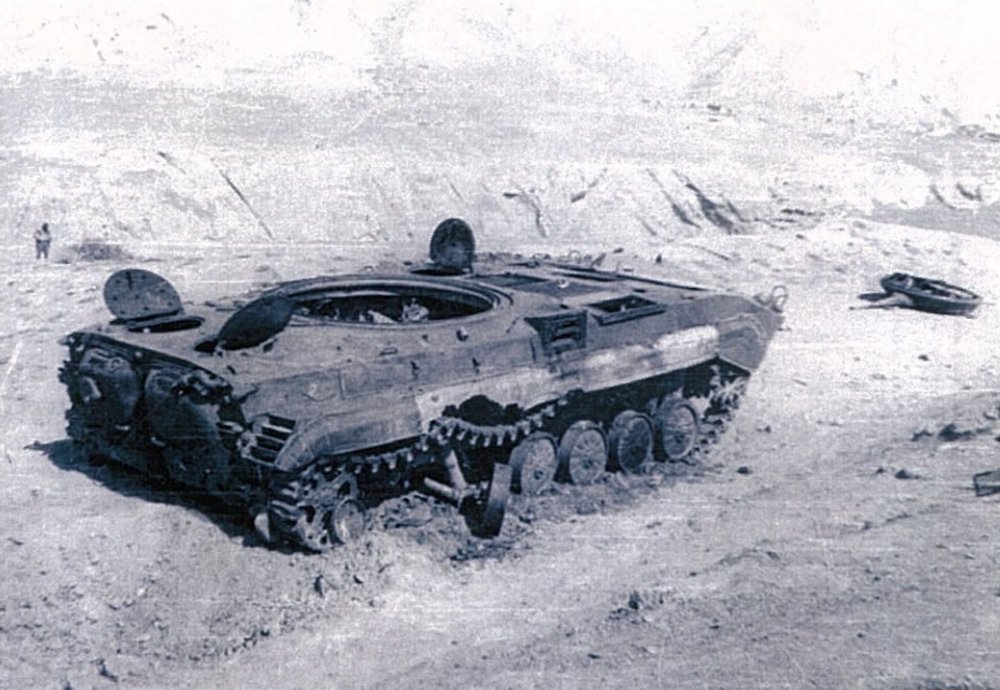
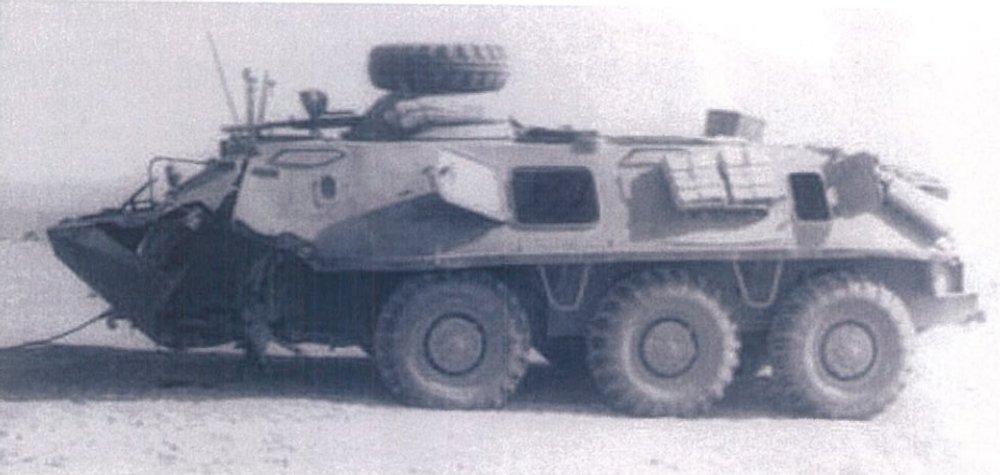
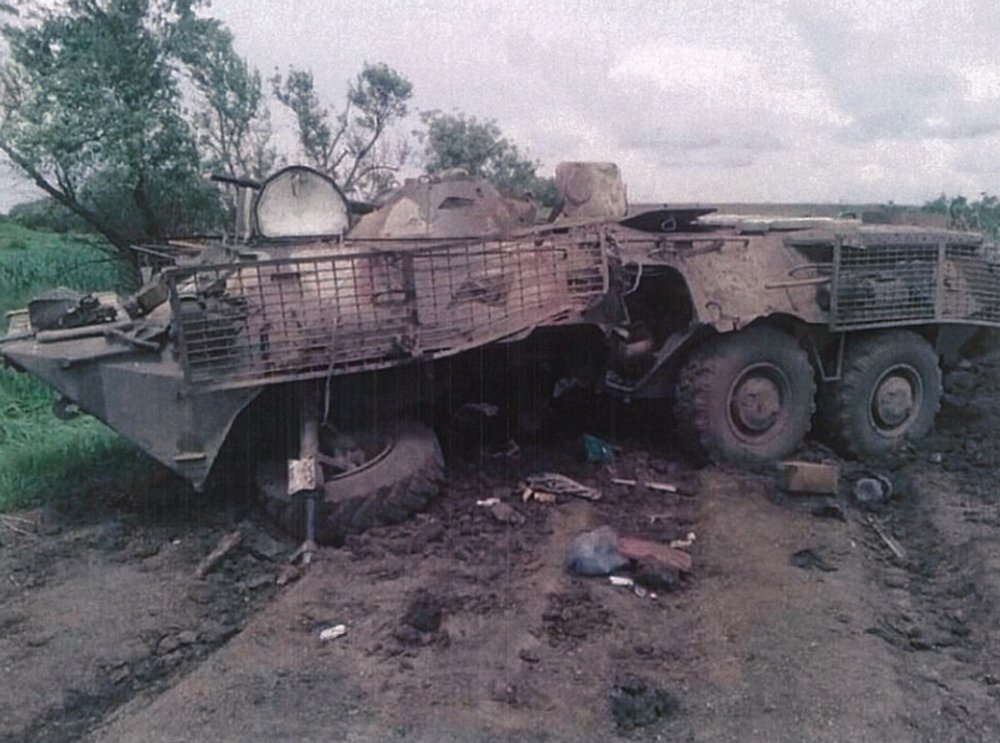
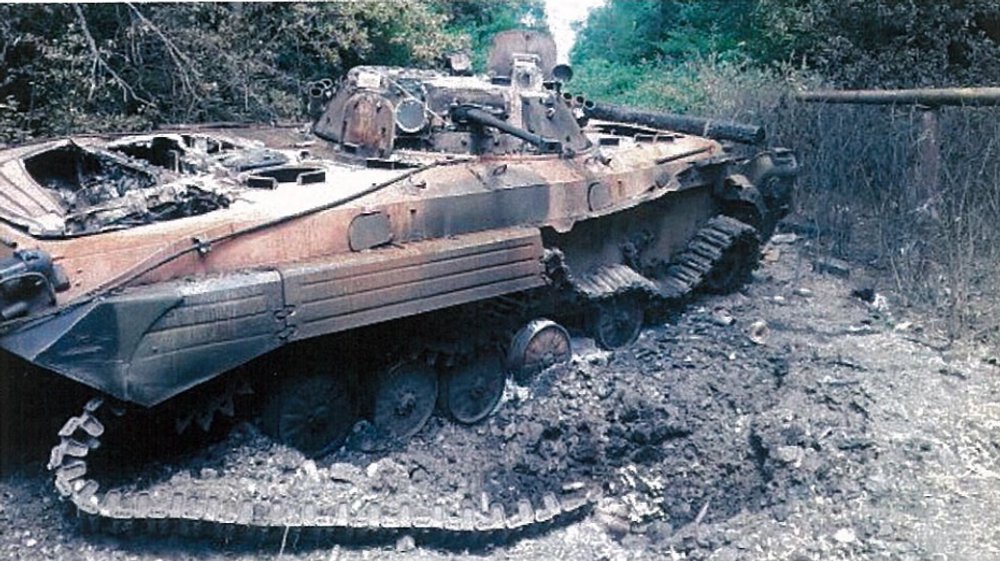
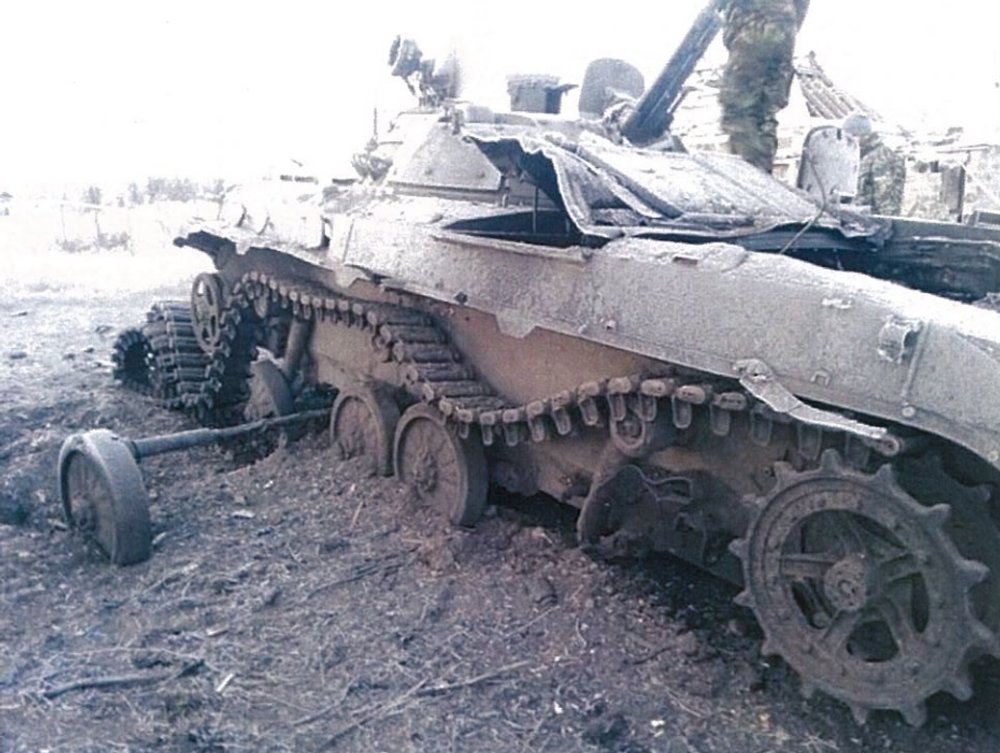
The detonation of a TM-57 breaks 3-4 track links and renders a tank’s road wheel and its balance arm completely unserviceable.