TM-72 Antitank Anti-Bottom Mine

The TM-72 mine is an antitank anti-bottom shaped-charge mine. It is designed to engage enemy tracked or wheeled vehicles. It provides for breaking a track or penetrating the vehicle bottom, followed by damage to control units and injury to the crew.

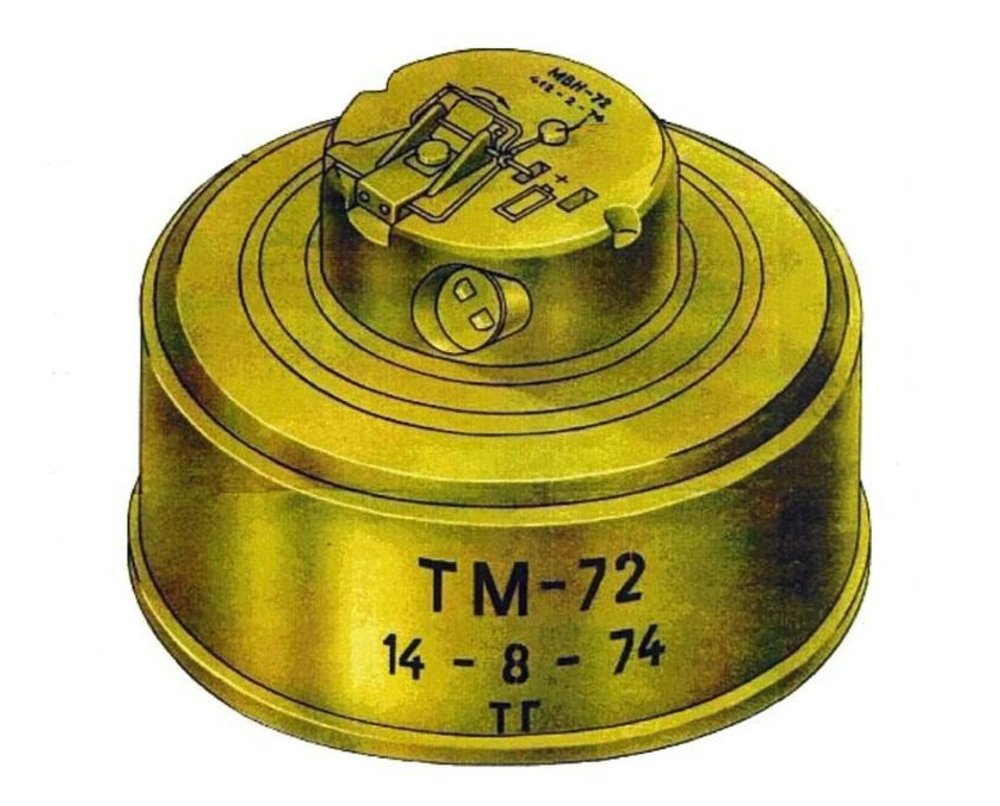
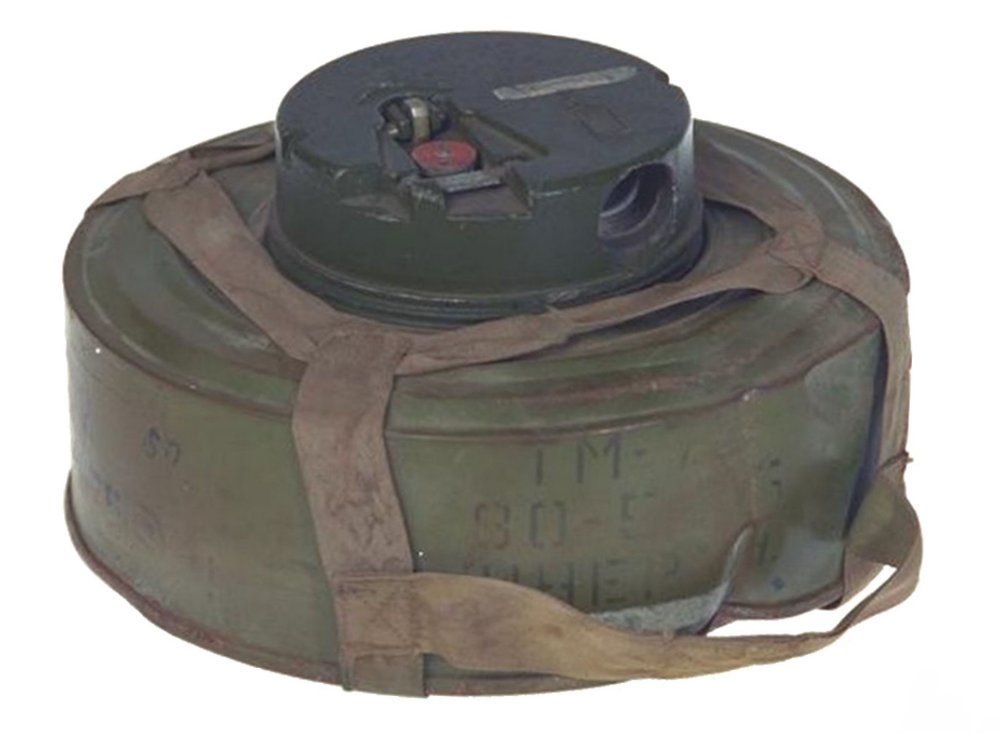
TM-72 anti-bottom mine with MVN-72 fuze, photo by Collective Awareness to Unexploded Ordnance (CAT-UXO)

Technical and tactical characteristics of the TM-72 mine

Mine type
anti-bottom shaped-charge
Casing
metal
Weight
6 kg
Weight of explosive charge
2.5 kg
Explosive type
TG-40
Diameter
250 mm
Height with MVN-62, MVN-72, MVN-80 fuze
128 mm
Height with MVSh-62 fuze
330 mm
Effect
penetrates armor up to 100 mm, producing a 50-60 mm diameter hole from a distance of 0.25-0.5 m
Operating temperature range
-40 to +50 °C
Emplacement method
on the ground and in the ground manually, or by laying from a vehicle
Color
olive / green
Marking
TM-72 - mine designation;
80-6-73 - manufacturer plant code - lot number - year of manufacture (numbers may vary);
TG – explosive designation
TM-72 mine with MVN-72 fuze

Design and operating principle

The TM-72 mine consists of a casing filled with a shaped charge with an additional detonator, and a fuze. The mine has a removable webbing carrying handle.

In the metal casing (pos. 3) of the mine, in the center, there is a well (pos. 4) with threads for screwing in the fuze (pos. 2). On the side of the casing there is an “eye” through which the explosive charge is poured. In the absence of the fuze, the threaded part of the well is closed with a polyethylene plug (pos. 5). A rubber gasket (pos. 6) is used to seal the joint between the mine and the fuze.

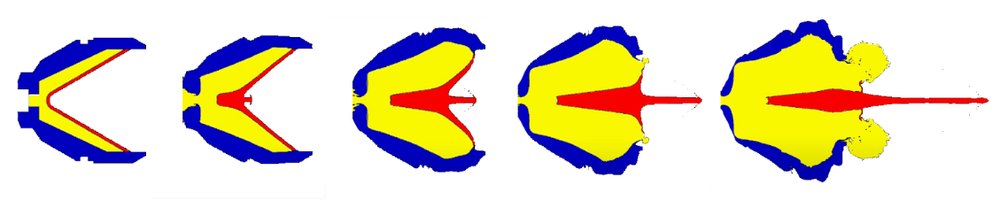
The shaped charge (pos. 7) has an annular shaped-charge cavity with a steel liner (pos. 8). To ensure better formation of the shaped-charge jet (Fig. 3), an insert (pos. 10) made of foam plastic with a metal washer (pos. 9) is used. The additional detonator (pos. 11) is a TNT block weighing 20 g, secured at the bottom of the fuze well.

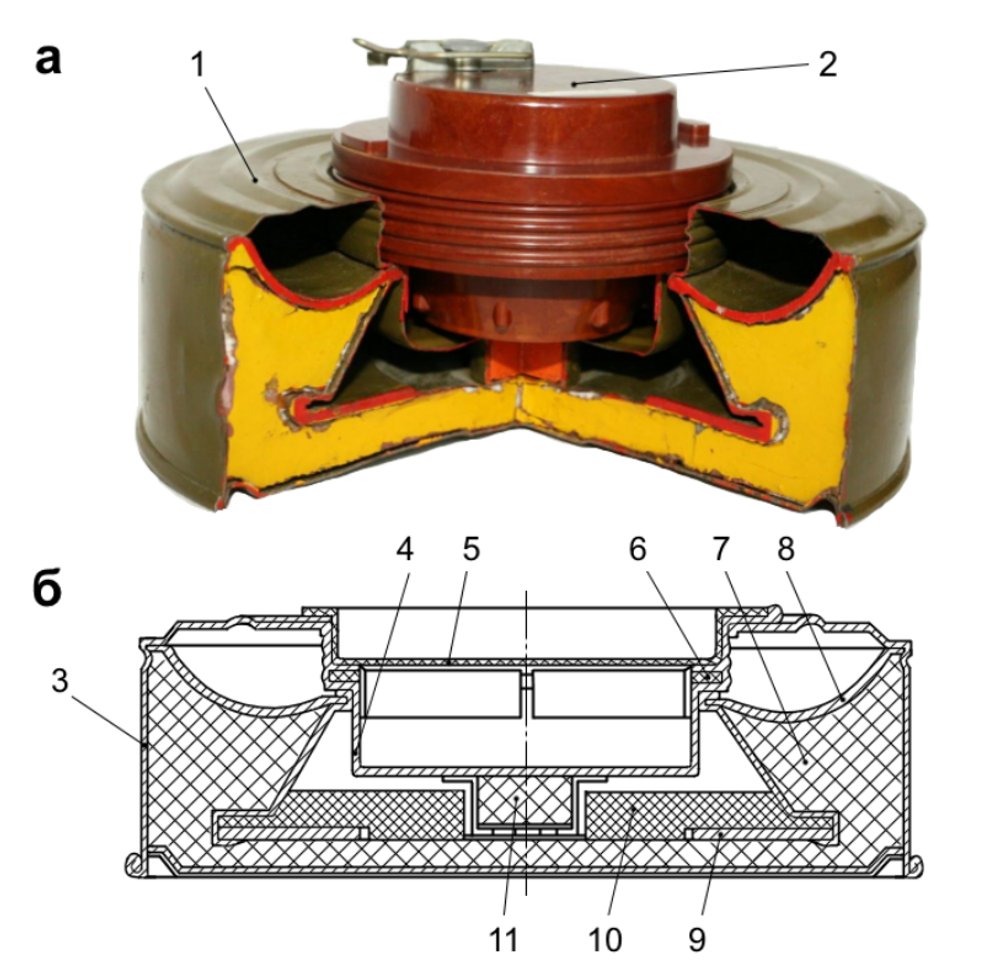
Diagram of the TM-72 anti-bottom mine with MVP-62 fuze: a - general view, b - sectional view, without fuze; 1 - mine, 2 - MVP-62 fuze, 3 - casing, 4 - well, 5 - plug, 6 - rubber gasket, 7 - explosive charge, 8 - liner of the shaped-charge cavity, 9 - washer, 10 - insert, 11 - additional detonator.
Simulation of shaped-charge jet formation using a conical liner as an example, video frames from the Oilfield Training Center channel.

Preparation and emplacement

Minefields using TM-72 mines are emplaced manually or laid from vehicles.

TM-72 mines may be emplaced:

  • In the ground, flush with the ground surface.
  • On the ground surface (in winter - on snow).
  • In snow, concealed with a layer of snow up to 15 cm.
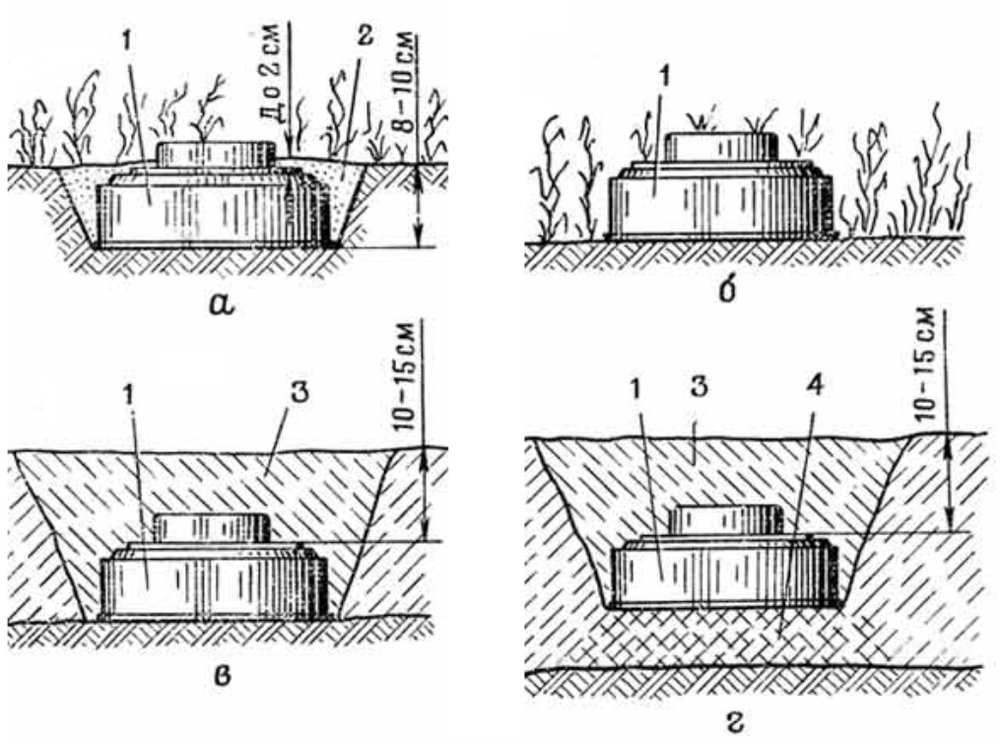
Emplacement of the TM-72 mine: a - in the ground; b - on the ground surface; c - in snow with snow depth up to 25 cm; d - in snow with snow depth over 25 cm; 1 - mine; 2 - concealment of the mine casing with soil; 3 - concealment with loose snow; 4 - compacted snow.

Concealment of emplaced TM-72 mines is carried out using surrounding material (grass, leaves, etc.) or a layer of soil up to 2 cm. Concealing the mine with a layer of soil exceeding 2 cm is not permitted, as this reduces the mine’s destructive effect. Concealment with snow, in a layer up to 15 cm, has almost no effect on the mine’s armor penetration. Mines emplaced in the ground (snow) are more resistant to the effects of the blast wave of a nuclear explosion and to a mine-clearing charge.

To emplace the mine in the ground manually, it is necessary to:

  • Dig a hole 8-10 cm deep to the size of the mine casing.
  • Place the mine in the hole, and fill the voids around the sides of the mine with soil; excess soil removed when digging the hole must be concealed separately in depressions in the terrain.
  • Conceal the mine by bending grass over it, using leaves, sprinkling the mine casing with a layer of up to 2 cm, dust, or other local material matching the background of the surrounding terrain.
  • Set the mine fuze to the armed position and adjust the concealment.

The steps for setting the fuze to the armed/transport position depend on the type of fuze used.

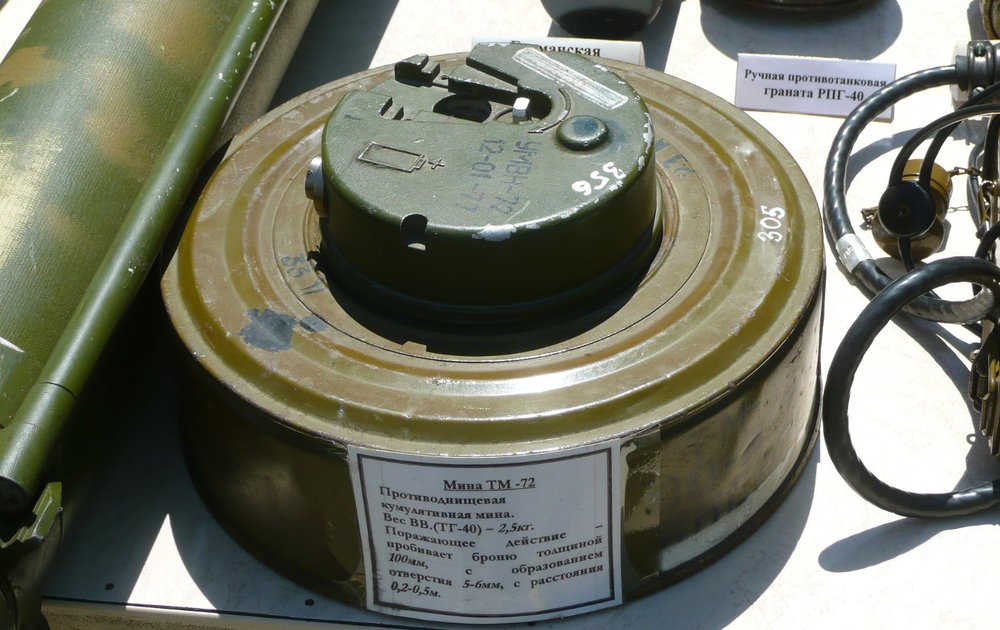
Training version of the TM-72 mine with UMVN-72 fuze.
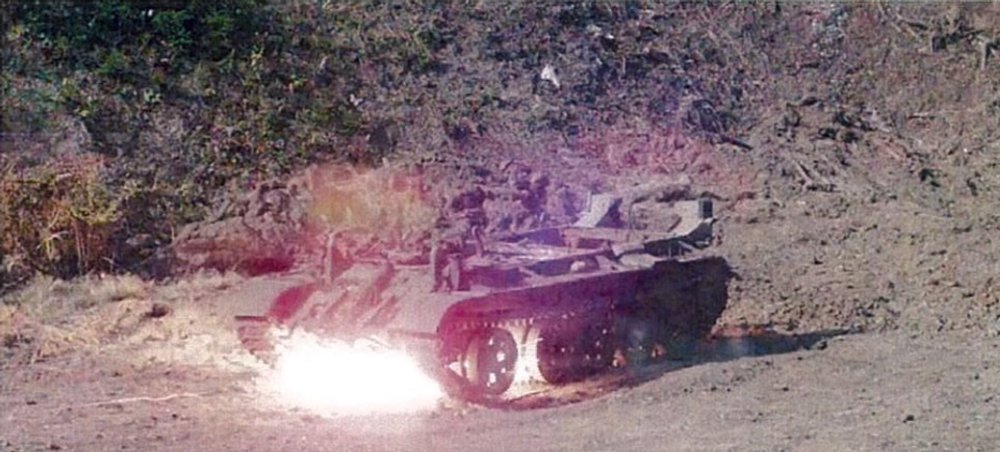
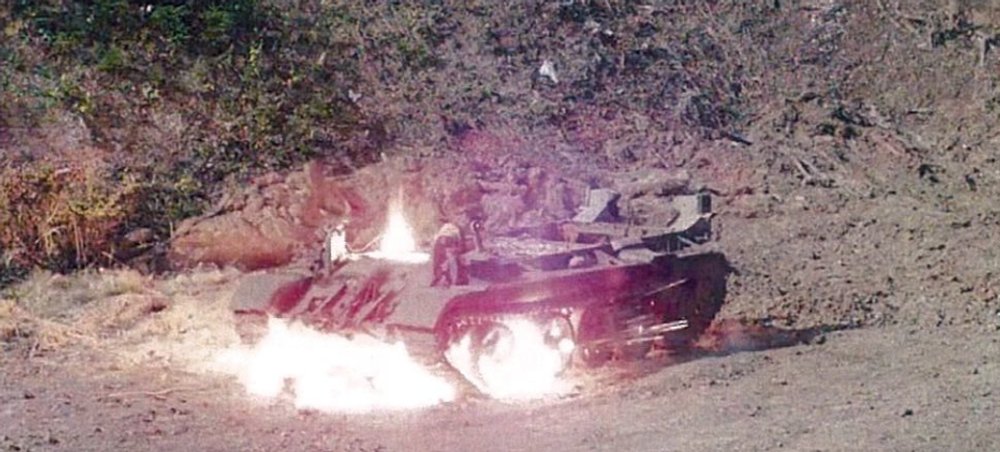
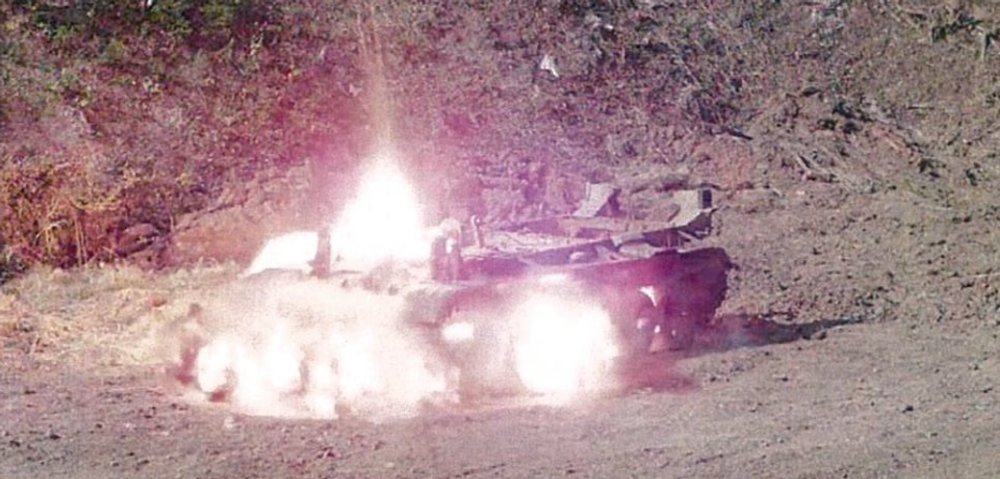
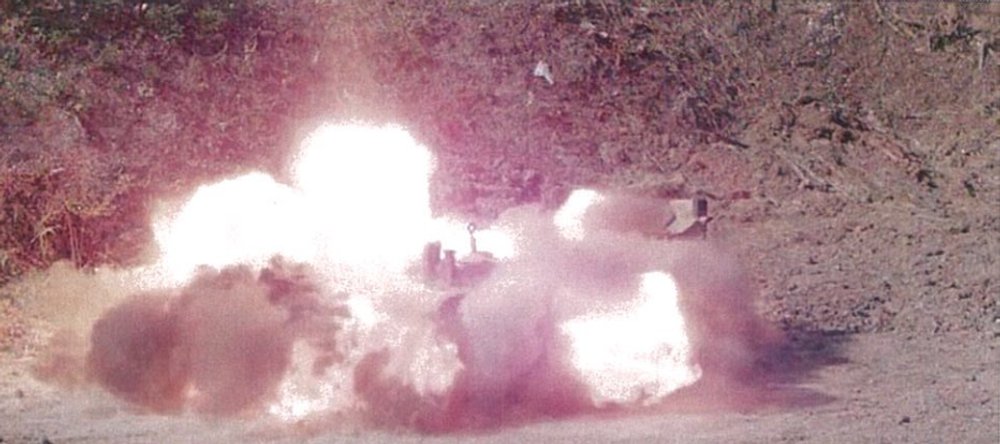
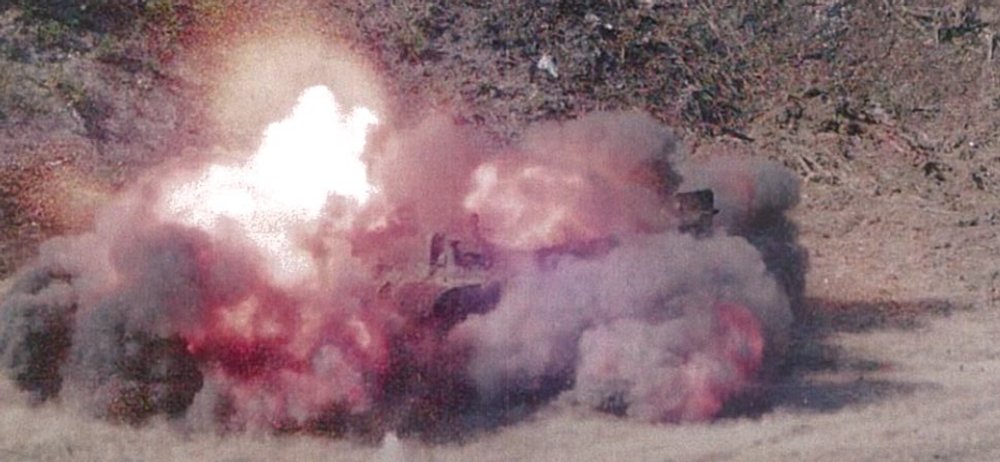
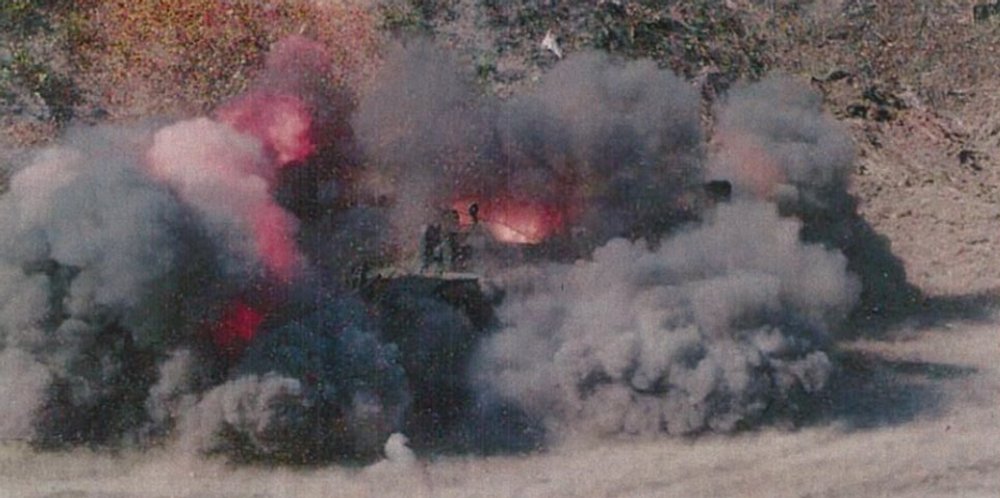
Video frame sequence of a BREM armored recovery vehicle based on the T-55 tank detonating on a TM-72 mine; the bottom was penetrated and a fire broke out inside