Technical and tactical characteristics of the TMK-2 mine
- Type of mine
- bottom-attack shaped-charge
- Body
- metal
- Weight
- 12 kg
- Explosive charge weight:
TNT
TG-50
6 kg
6.5 kg- Diameter
- 307 mm
- Height with fuze
- 265-1100 mm
- Armor penetration
- 60/110 mm
- Target sensor tilt angle for functioning
- 24-26°
- Target sensor tilt force
- 8-12 kg
- Operating temperature range
- -50 to +50 °C

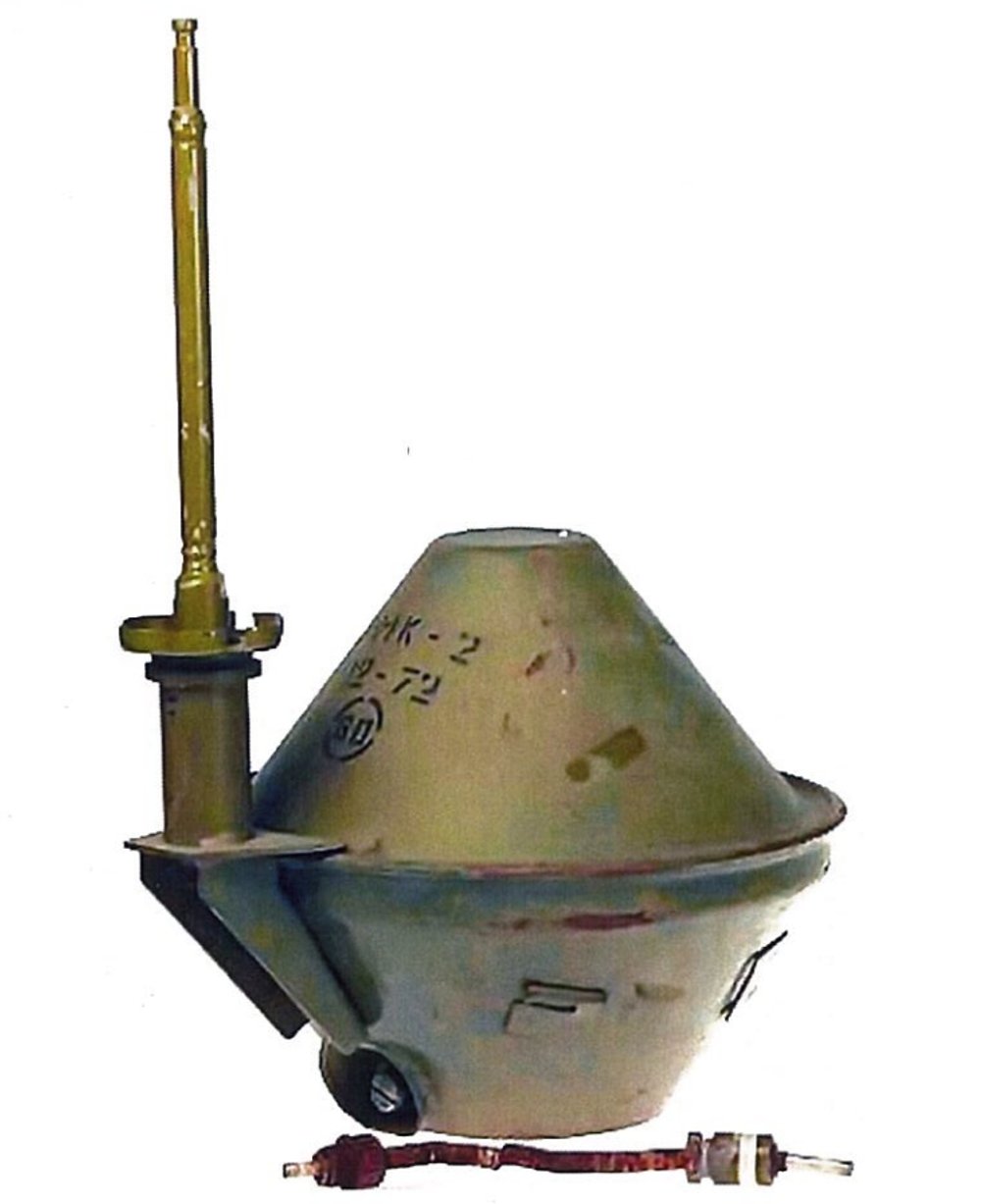
The mine may be emplaced in soil (snow) only manually. Emplacement or laying by mechanized means is not provided for.
The mine’s combat service life is limited by the time required for corrosion to destroy the fuze mounting bracket. The mine is not fitted with a self-destruct mechanism. It has no sockets for anti-disturbance devices.
The mine is used with the standard MVK-2 fuze, the DUK-2 detonating device (which transfers detonation from the fuze initiator to the main charge), and the MD-7M detonator. The fuze provides a delay in functioning of 0.3-0.45 seconds so that the explosion occurs beneath the center of the vehicle.
During detonation of the mine, the shaped-charge jet penetrates 60 millimeters of armor when filled with TNT and 110 millimeters when filled with TG-50. When the mine detonates under a wheel or track, the track link and road wheel (wheel) are destroyed; when it detonates under the hull, fragments of armor melted by the shaped-charge jet injure the crew and damage the tank’s internal equipment, which may lead to a fire in the tank and detonation of ammunition located on the floor. As a rule, the tank is completely disabled and cannot be restored.
Tilting of the target sensor when a tank is moving fairly slowly often does not cause the fuze to function, but instead turns the mine into a position close to horizontal. This is especially the case in soft soils. During flooding, the mine floats up and lies on its side.
Coloring
As a rule, the mine is painted dark green or olive green. Certain batches may be painted olive yellow or yellow gray.
Marking
Applied in black letters with paint to the upper conical part of the mine body:
TMK-2 - mine code (may be absent).
34-34-72 - manufacturer’s plant code - batch number - year of manufacture
T - filling code