Technical and Tactical Characteristics of the TM-83 Mine
- Type of mine
- anti-tank off-route mine operating on the explosively formed penetrator principle
- Body
- steel
- Weight
- 28.1 kg
- Weight of TG 40/60 explosive
- 9.6 kg
- Length
- 455 mm
- Width
- 377 mm
- Height
- 440 mm
- Lethal effect of the mine
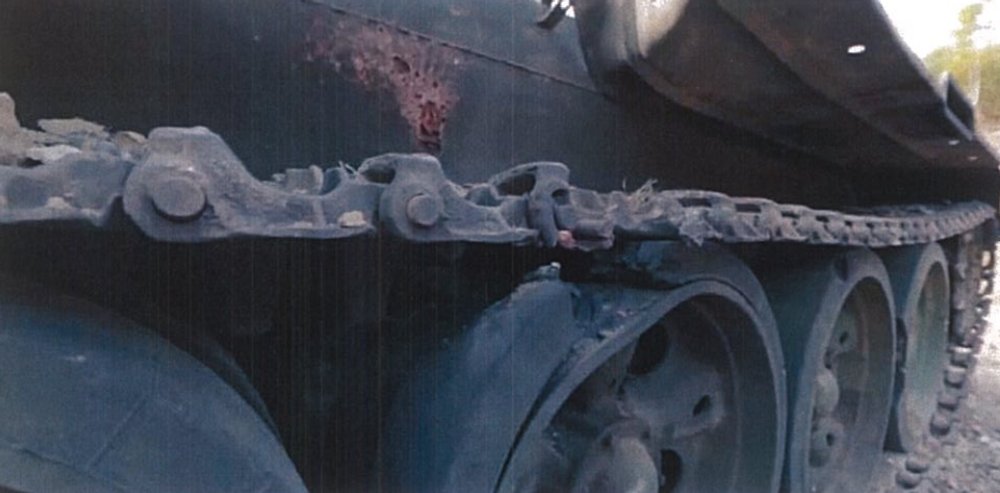
- 100 mm of armor from a distance of 5 to 30 m
- Diameter of the perforation upon penetration
- 80 mm
- Detonator target sensors
- seismic and infrared
- Combat operating time
- 30 days
- Emplacement time (2 persons)
- 15 - 20 min
- Seismic sensor sensitivity (against a tank)
- 200 - 250 m
- Infrared sensor sensitivity (against a tank)
- 90 - 120 m
- Operating temperature range
- -30 to +50 °C
- Restrictions on use due to weather conditions
- fog (heavy snowfall, downpour) with visibility of less than 50 m
- Neutralization
- Only in the command-operated variant
- Removal
- Only in the command-operated variant

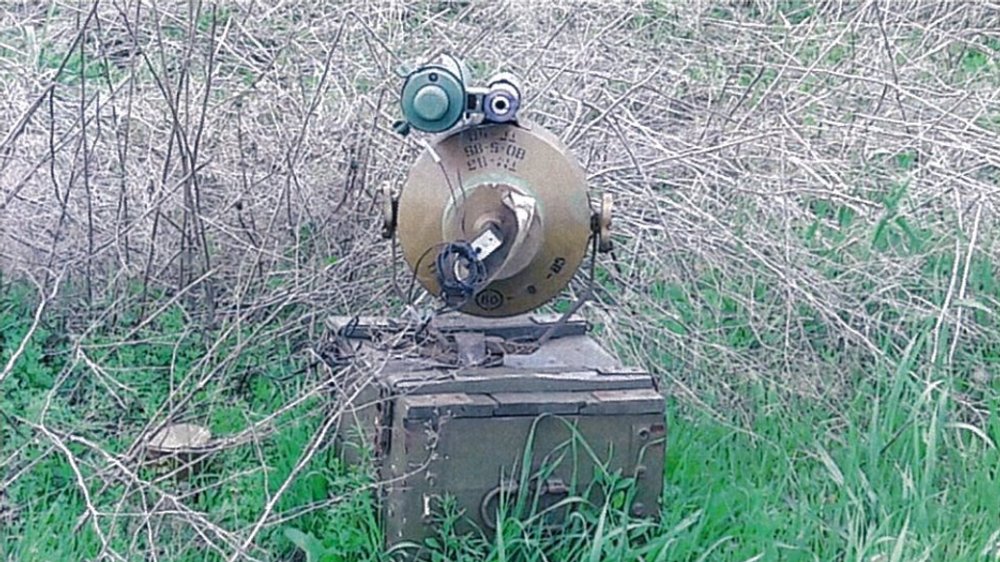
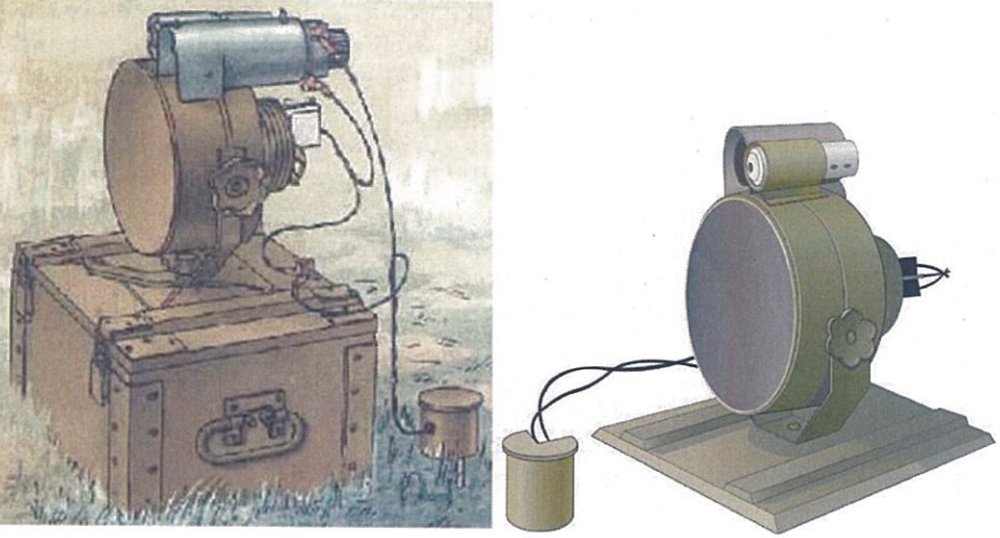
The mine may be placed on the ground or attached to objects only manually. The packing crate or its lid serves as the base for the mine.
The engagement distance against a tank is up to 50 meters; the mine is emplaced to the side of the probable tank route at a distance of 5-50 meters from the route axis. The mine is aimed at the point of impact using the sight.
The mine has two target sensors: seismic and infrared. The seismic sensor ensures the mine operates in target standby mode, which conserves power supply energy.
When a target approaches, the seismic sensor issues a command to switch the mine to the firing position, thereby activating the infrared sensor. As soon as the target appears in the field of view of the infrared sensor, which detects the infrared radiation of the vehicle (tank), it issues a command to the safety-and-actuating mechanism to detonate the mine. During detonation of the mine charge, an explosively formed penetrator is formed from the copper liner of the shaped-charge cavity, which at a distance of 5 to 50 meters penetrates armor up to 100 mm thick, creating a hole 80 mm in diameter in the armor.

If the target does not enter the field of view of the infrared sensor, after 3 minutes the mine returns to target standby mode.
The TM-83 mine manufactured before 1984 is also equipped with an infrared electric lamp and a reflecting mirror.

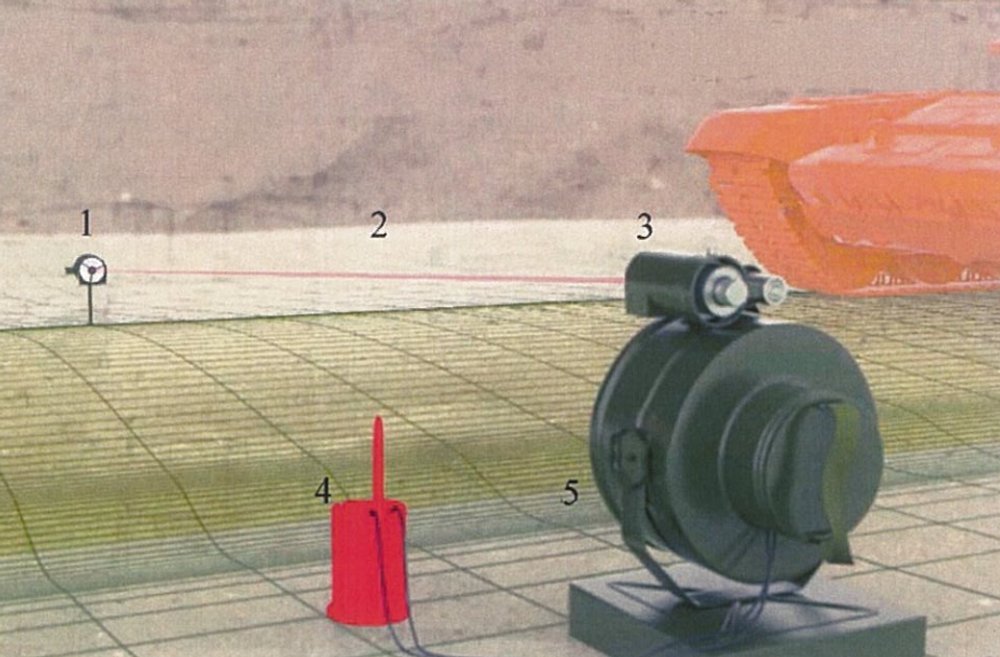
The mine may be emplaced in a non-command-operated (autonomous) variant and in a command-operated variant. The command operability of the mine consists in the fact that, by means of a 100-meter wired line and a control panel (the control panel of the MZU mine is used), it can be switched to safe (safety) mode or to target standby mode. In safety mode, the mine can be removed and neutralized. If the mine is emplaced in the non-command-operated variant, it is considered non-neutralizable. Due to the high sensitivity of the seismic sensor, there is a possibility of the infrared sensor being triggered by the thermal radiation of the human body when a person approaches the mine (from any side closer than 10 meters). Destruction of such a mine is possible only by firing at it with a heavy machine gun. Also, in the non-command-operated variant, the mine may be emplaced with an MVE-72 or MVE-NS fuze. The striker mechanism of the fuze is screwed onto the MD-5M detonator instead of the ZVM. In this variant, the TM-83 mine is emplaced similarly to the TM-73 mine.
The mine’s combat operating period is limited by the service life of the power supply battery, which depends on the ambient temperature, but is not less than 30 days. The mine is not fitted with a self-destruct mechanism and has no anti-lifting devices, but booby traps may be used.
The emplaced mine is covered with a cover to protect it from adverse weather conditions and to improve camouflage, while the infrared sensor and the shaped-charge cavity remain uncovered.
The mine is used, as a rule, in obstacle nodes in populated areas, on mountain roads, in defiles, and in other places where bypassing is impossible or difficult. However, the typical nature of such possible emplacement sites for similar mines allows combat engineers to detect and neutralize the mine in a timely manner. However, if the entire terrain permits emplacement of the mine, its detection becomes problematic, because the mine itself and its sensor are located far off to the side (from 5 to 50 meters).
The operation of the mine is adversely affected by dust (smoke) in the air, fog, heavy snowfall, heavy rain, and other factors that may interfere with the activation of the infrared target sensor.
Emplacement of the mine takes 15-20 minutes by a two-man crew.
Coloring
As a rule, the mine is painted dark green or olive green.
Marking
Applied in black letters with paint on the body and contains:
TM-83 - mine designation.
80-5-85 - manufacturer’s plant code - batch number - year of manufacture.
TG-40 - filling code.
A mine emplaced in the non-command-operated variant is switched to the firing position 1-30 minutes after the safety pin of the safety-and-actuating mechanism is removed.
A mine emplaced in the field in the command-operated variant is switched to the firing position no more than 30 minutes after the safety pin of the safety-and-actuating mechanism is removed, and the mechanism is activated using the MZU control panel.