
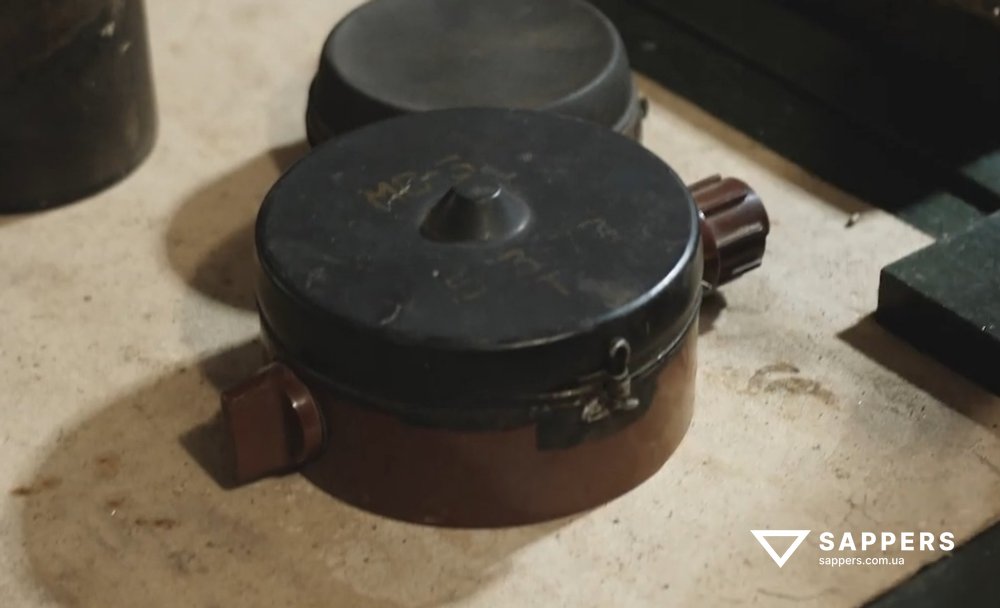
Technical and tactical characteristics of the MS-3 mine
- Mine type
- pressure-release blast booby-trap mine
- Body
- plastic
- Weight
- 0.66 kg
- Weight of TNT explosive charge
- 0.34 kg
- Diameter
- 110 mm
- Height
- 65 mm
- Type of target sensor
- pressure-release
- Diameter of target sensor
- 51 mm
- Actuation force
- 5 kg
- Detonator
- integral
- Fuze
- MD-3
- Time to armed state
- 5 minutes - 15 hours (depending on ambient temperature)
- Operating temperature range
- -40 to +40 °C

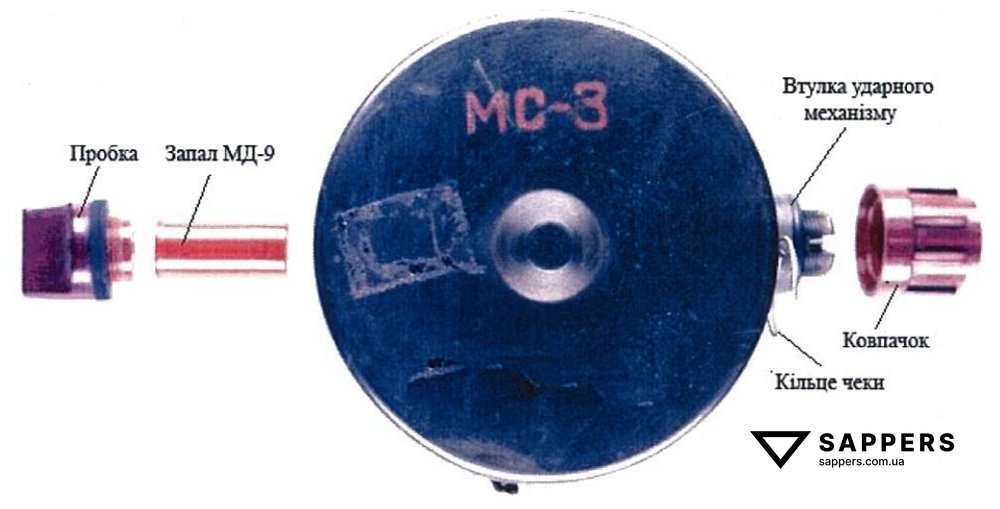
In terms of design, explosive-technical characteristics, and external appearance, the MS-3 does not differ from the PMN anti-personnel mine, except for the projection in the center of the mine’s upper surface and the principle of actuation. Whereas the PMN detonates when pressure is applied to its cover, the MS-3, conversely, detonates when the load is removed from it (the mine in the armed position must be continuously loaded).

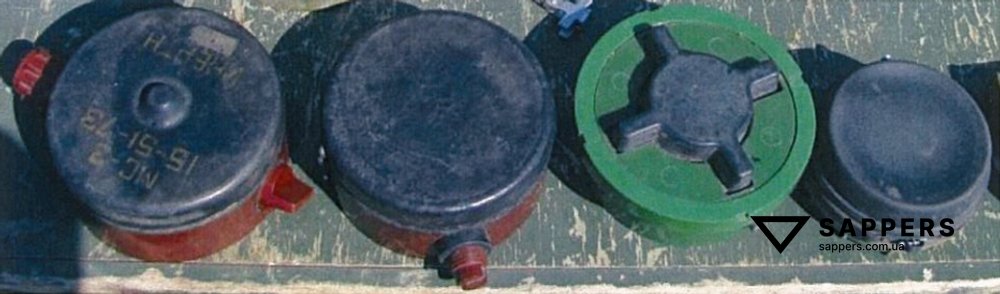
The mine may be emplaced either on the ground surface or in the ground, in snow, manually.
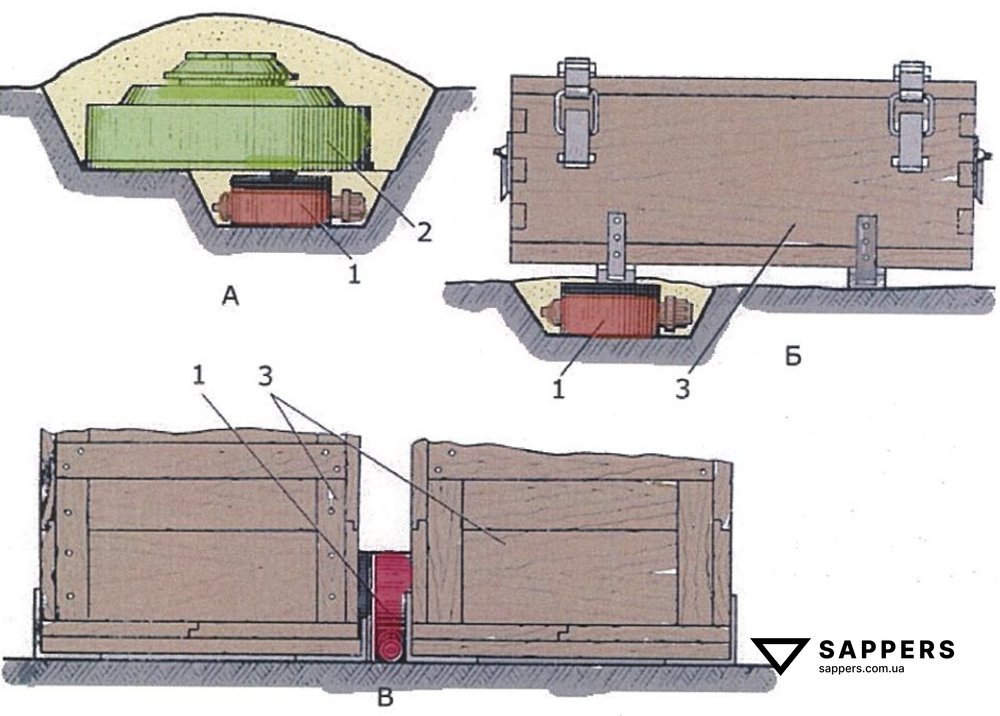
When used as an anti-lift device, the MS-3 mine is emplaced so that an attempt to remove the anti-tank (or other) mine from its emplacement location causes the MS-3 mine to detonate, which in turn leads to detonation of the main mine. When emplacing an anti-tank mine together with the MS-3, a recess for the MS-3 is made in the hole so that the main mine, when lowered into the hole, presses on the MS-3 projection and rests with its lower surface tightly against the upper surface of the MS-3.
When used as a booby-trap mine, the MS-3 is emplaced in the terrain so that it is not visible (for example, in an excavated hole), and an object is placed on it that will necessarily attract the enemy’s interest and induce him to lift it (a weapon, box, crate, etc.) or use it (a vehicle, telephone, portable ladder, etc.). In this case, casualties to personnel are inflicted by the blast effect of the mine itself.

After all actions to place the main mine in the armed position have been completed, the safety pin is removed from the MS-3 and the mine is camouflaged. From the moment the pin is pulled from the MS-3, returning it to the safe position is impossible. After the delay time expires, the MS-3 will inevitably become armed. If at that moment there is no load on it, the MS-3 will detonate.
The minimum load mass must be not less than 5 kg. Detonation of the MS-3 occurs when the load is displaced upward by 3-5 mm.
The mine has a detonator that is part of the mine’s construction.
MD-9 type fuze. The fuze has the form of a brown plastic cylinder with a flange at one end and a cap at the other end. This fuze is not used in any mines other than the PMN.
The mine’s service life in combat is not limited. The mine is not fitted with a self-destruct mechanism. The mine is not subject to disarming.
Coloring
Brown with a black cover.
Marking
Standard marking, applied to the rubber cover or to the side in white or yellow letters and containing:
- MS - mine code.
- 15-3-74 - manufacturer’s plant code - batch number - year of manufacture.
- T - filling code.