Technical and Tactical Characteristics of the M-225 Mine
- Mine type
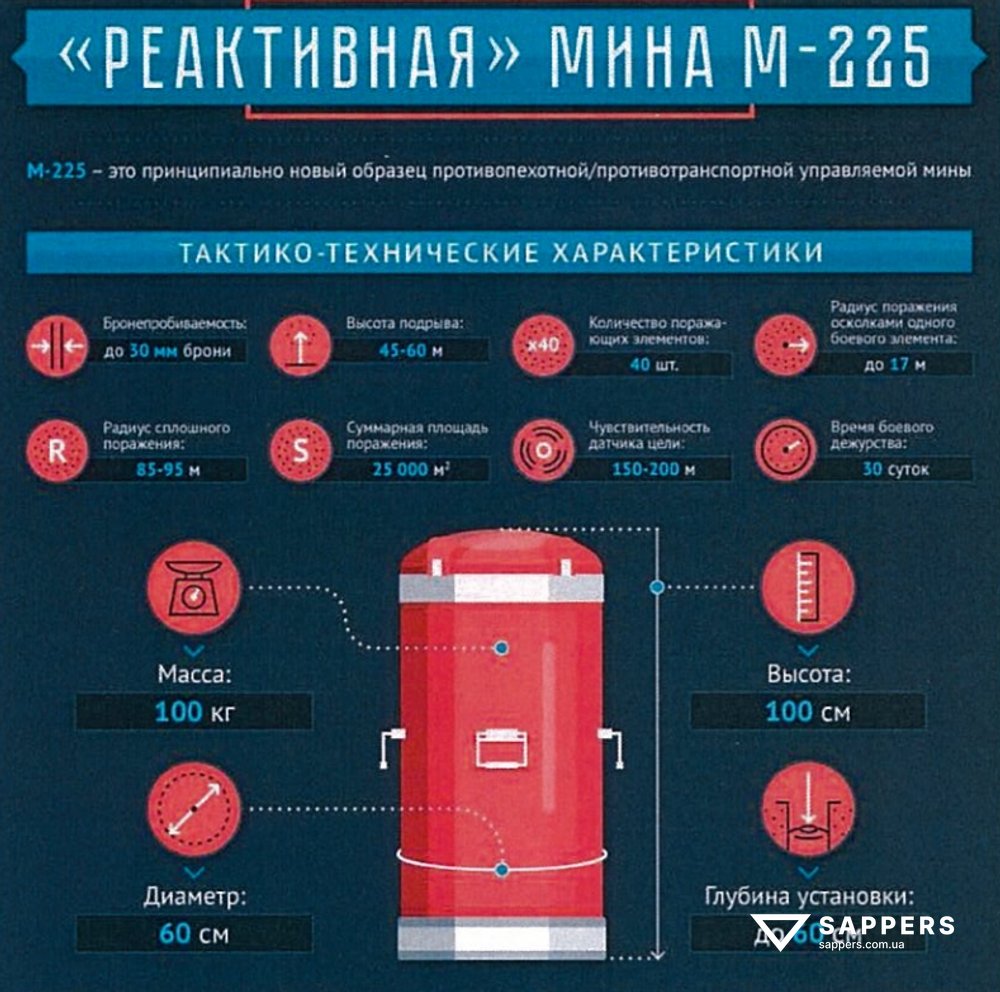
- anti-personnel command-controlled shaped-charge fragmentation, bounding, all-round effect, command-controlled
- Body
- steel
- Weight
- 100 kg
- Diameter
- 600 mm
- Height
- 1000 mm
- Detonator type
- Non-contact seismic/remote
- Target sensor response radius
- 150-200 m
- Radius of continuous lethal effect
- 85-95 m
- Lethal radius of one element
- 17 m
- Area of effect
- 25,000 m²
- Combat standby duration
- 30 days
- Operating temperature range
- -40 to +50 °C

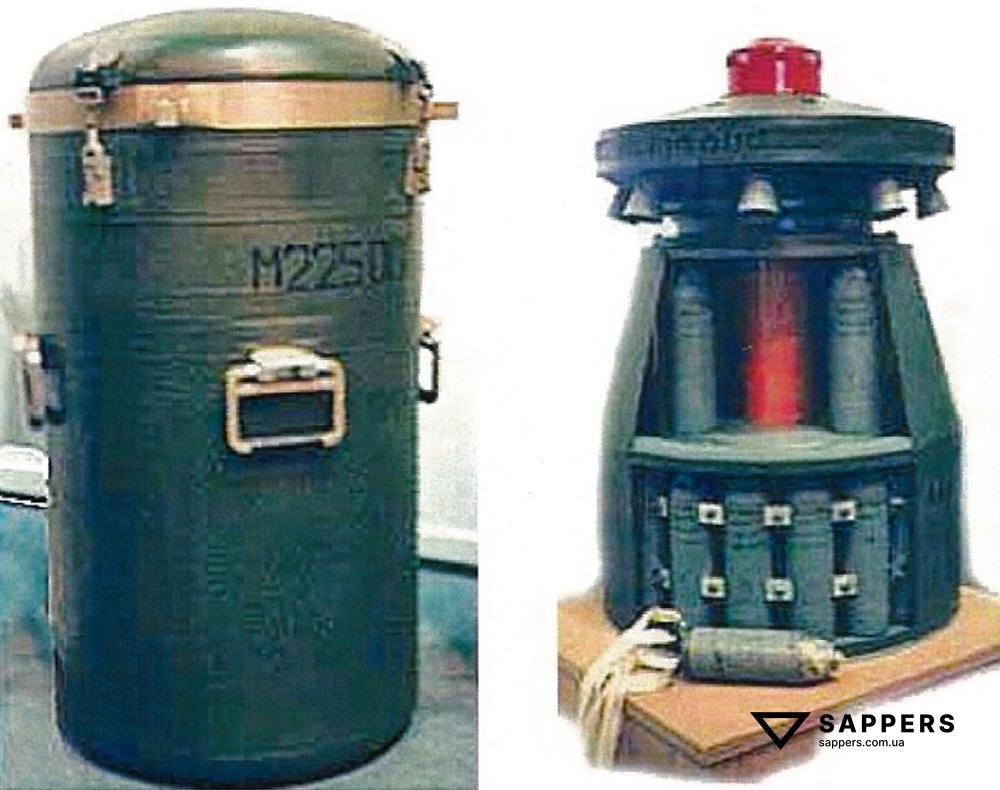
The mine is emplaced manually or using mechanized means underground at a depth of up to 0.6 meters from the mine cover. The mines are controlled by an operator from the PU-404P control panel via wired communication or the PU-404R radio remote control. One control panel can control the operation of up to 100 mines. The control range of the radio remote is up to 10 km, and of the wired system up to 4 km. The mine is equipped with a combined target sensor comprising a seismic sensor with target discrimination for vehicles and personnel (in the event of simultaneous intrusion of personnel and vehicles into the detection zone, discrimination errors may reach 15-18%), a magnetic sensor with target discrimination by metal mass, and a thermal sensor with target discrimination by the amount of heat emitted. If the mine is in combat standby mode (there are two modes in total: passive standby mode and combat standby mode), then when a target or targets enter the detection zone (zone radius: 150-250 meters), the target sensors inform the control panel of the target type (person, vehicle), the number of targets, their speed, direction of movement, and distance to the lethal zone. The control panel processes these signals and provides the operator with recommendations on the advisability of detonating mines, which of the mines on combat standby should be detonated, and how many and which mines in passive mode should be switched to combat standby mode. If targets are simultaneously within the lethal zones of several mines, recommendations are issued as to which mine is optimal to detonate.
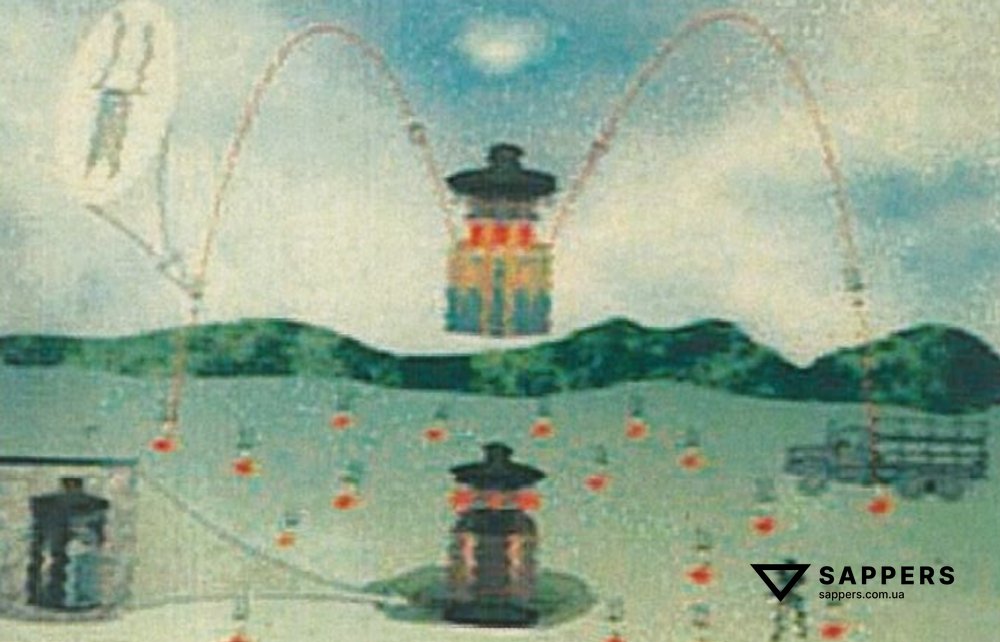
When a detonation command is issued from the control panel, a pyrotechnic cartridge first functions, ejecting the mine cover and the camouflage layer of soil. Then the rocket motor of the cluster warhead is initiated, and it rises to a height of 45-60 meters. Upon reaching this height, the canister disperses lethal elements within a radius of 85-95 meters; there are 40 of them in the canister (Fig. 2). The lethal elements are in the form of metal cylinders. The element length is 160 mm, and the diameter is 65 mm. In the tail section there are four fabric stabilizing tapes, which ensure that the lethal element falls nose-down. When the detonator contacts the ground surface or a vehicle, an explosion occurs. Personnel are affected by fragments of the lethal element (lethal radius 17 meters). Vehicles are affected by a shaped-charge jet, since the forward part of the explosive charge has a shaped-charge liner with a penetration capability of up to 30 mm of armor.

A self-destruction command can be issued from the control panel immediately or after the established period of combat operation has expired. In the event of an attempt to remove the mine, a breach in the integrity of the wired control line, or interference with the radio link, the control panel informs the operator that control of the mine is impossible. In this case, depending on the previous settings, the mine may switch to safe mode or self-destruct. Loss of communication with the control panel for a pre-set period of time results in self-destruction of the mine.


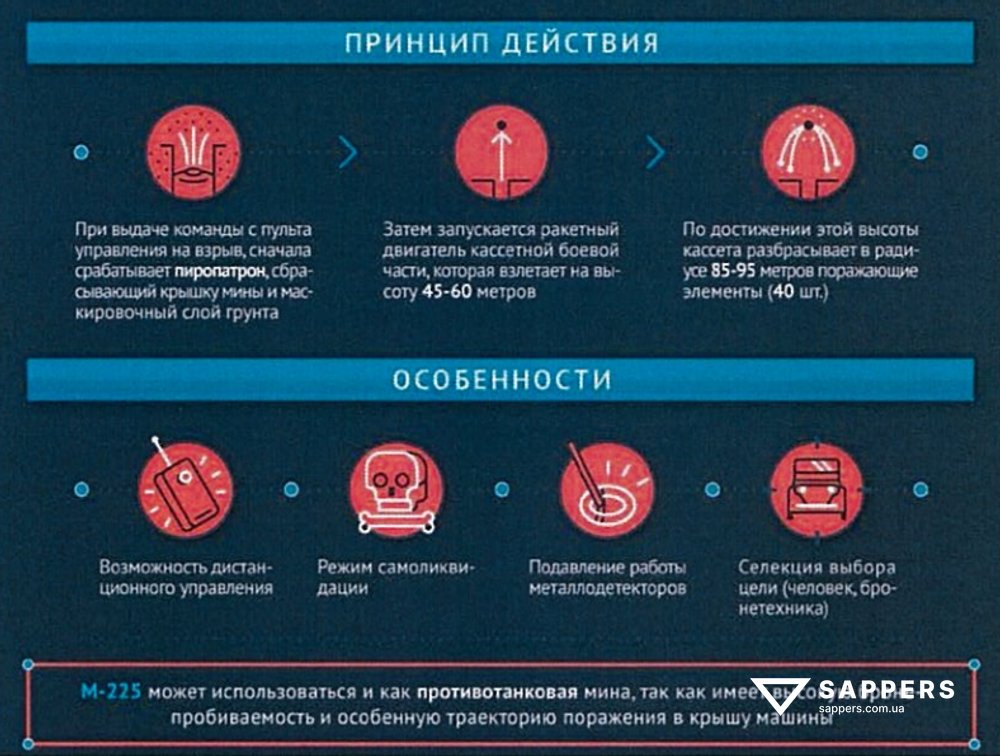
The mine may be equipped with devices that suppress the operation of metal detectors (mine detectors), radio-frequency mine detectors, and odor-based mine detectors. Production of a simplified version of the mine without target sensors is possible. In this case, the operator observes the battlefield and visually determines the presence of targets in the lethal zone, after which he issues the command to detonate the mine.
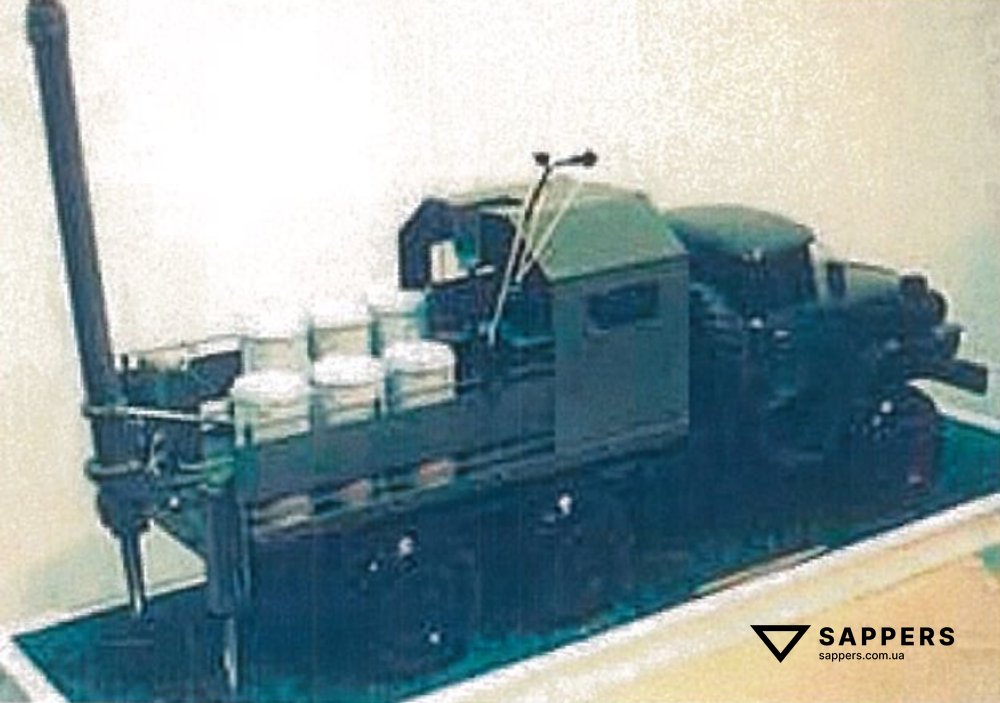
For emplacement of mines in the field, the factory has developed a minelayer based on the ZIL-131 or Kamaz-4310 truck. Conversion of any other truck or tracked vehicle into a minelayer is possible. The minelayer is fitted with drilling equipment that allows boreholes for mines to be drilled in category I-IV soils, crane equipment for mine emplacement and mine testing equipment, as well as a wired control panel and a radio remote control. The ZIL-131 minelayer carries up to 12 mines.

Coloration
Green.