
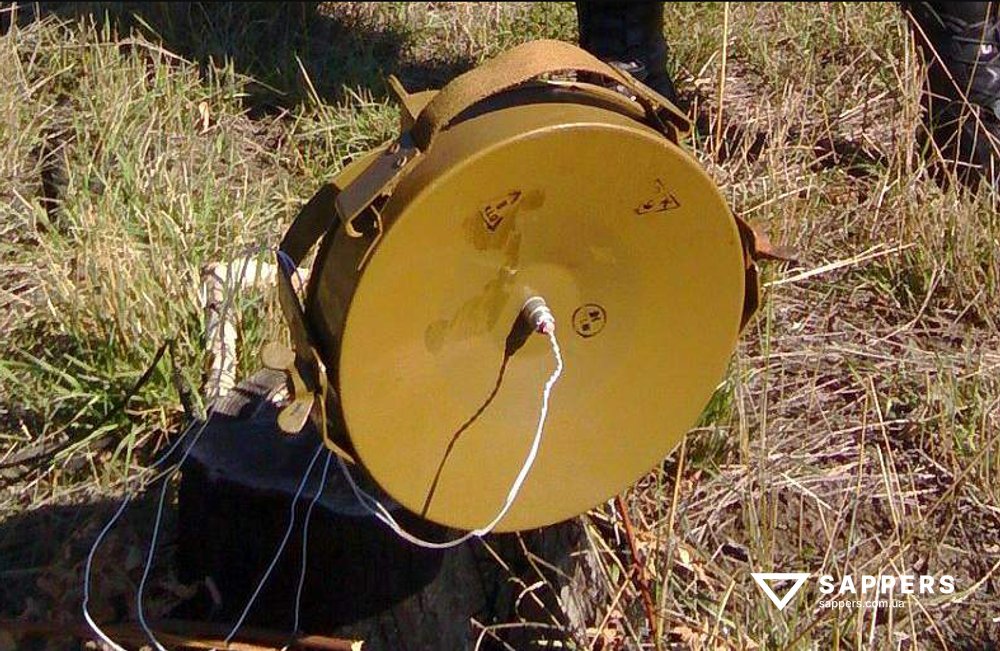
Tactical and Technical Characteristics of the MON-100 Mine
- Type of mine
- command-detonated directional fragmentation antipersonnel mine
- Casing
- steel
- Weight
- 5 kg
- Weight of explosive filler, TNT
- 2 kg
- Diameter
- 236 mm
- Width
- 82.5 mm
- Number of PFEs
- 400 (rollers)
- Diameter of one PFE
- 10 mm
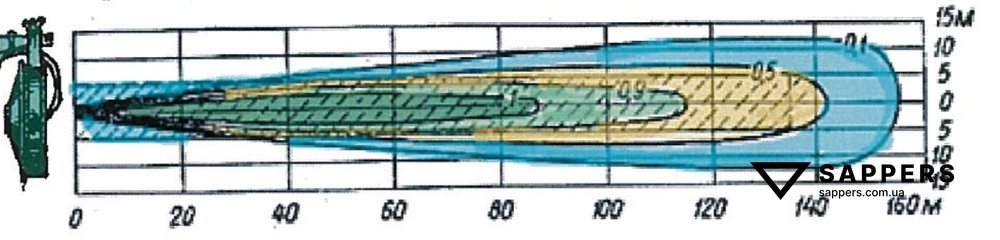
- Continuous casualty distance
- 116 m
- Radius of continuous casualty at a distance of 100 m
- 6.5 - 9.5 m
- Flight range of lethal fragments
- 160 m
- Dispersion range of lethal fragments to the rear and sides
- up to 30 m (the stake may be projected rearward 300-400 m)
- Operating temperature range
- -50 to +50 °C

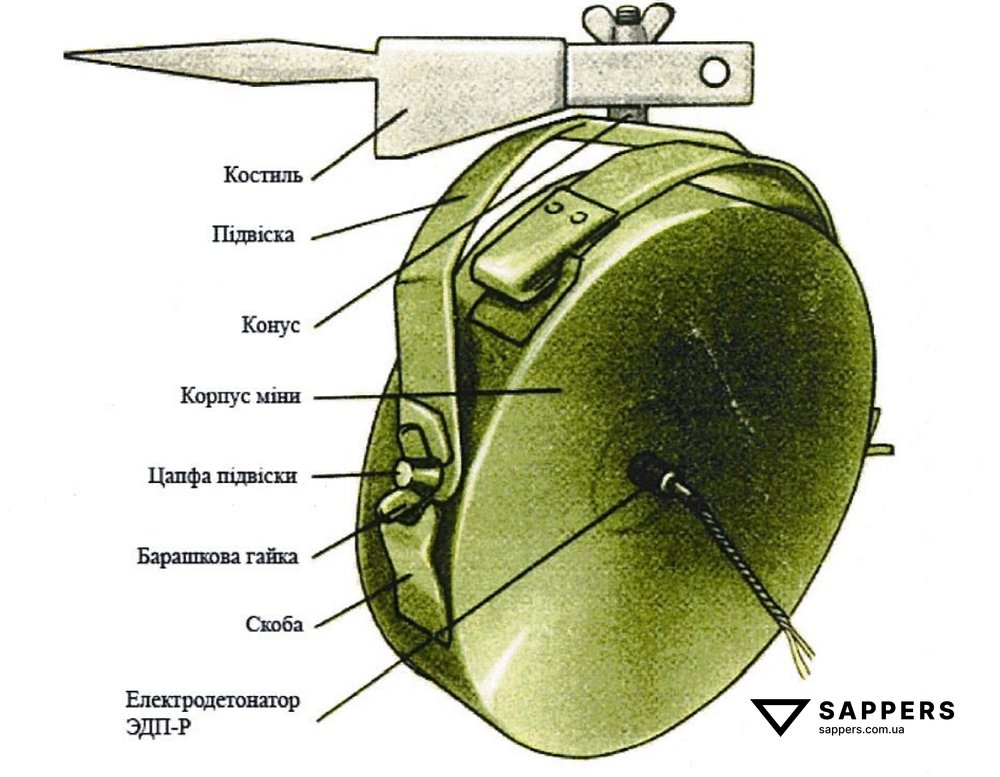
The mine is emplaced manually on the ground or attached to local objects. For this purpose, the mine has a special bracket that can be driven into local objects. The bracket is fitted with rings that enable aiming of the mine.
The mine is usually emplaced in a command-detonated configuration and is detonated by an EDP-R electric detonator or mechanically (by an MUV or MUV-2 detonator with an MD-5M blasting cap and tripwire).
The mine may also be used with an MVE-72 (MVE-NS) fuze, which has a target sensor in the form of a low-visibility thin breakwire, 65/40 meters long respectively. In this case, the mine’s combat operating time is limited by the service life of the power-supply battery.

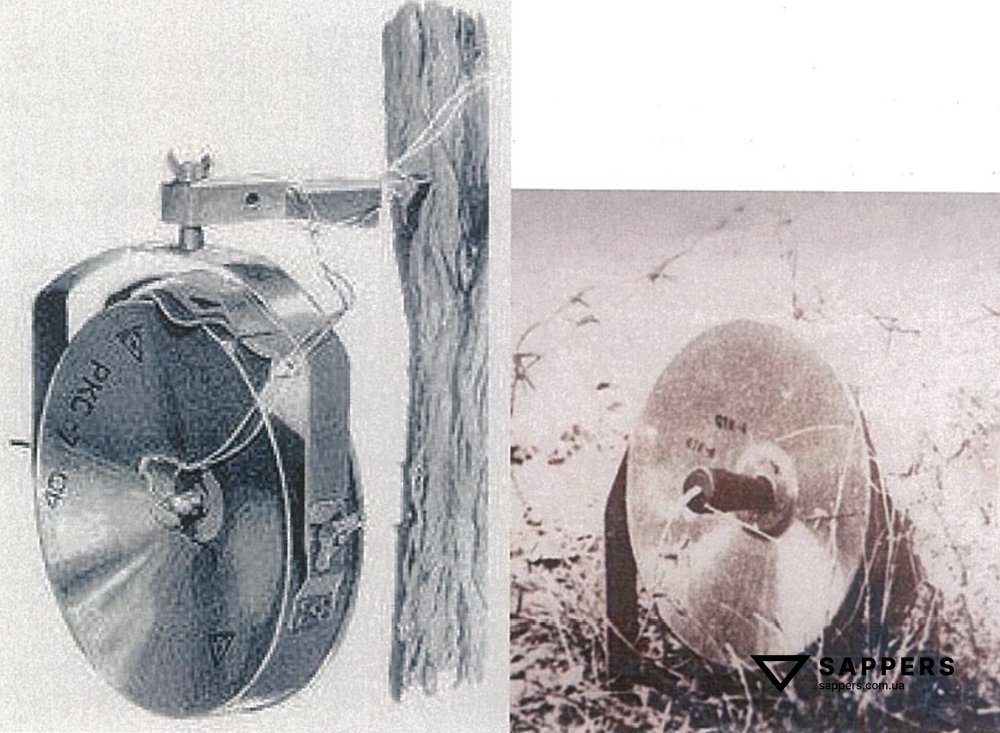

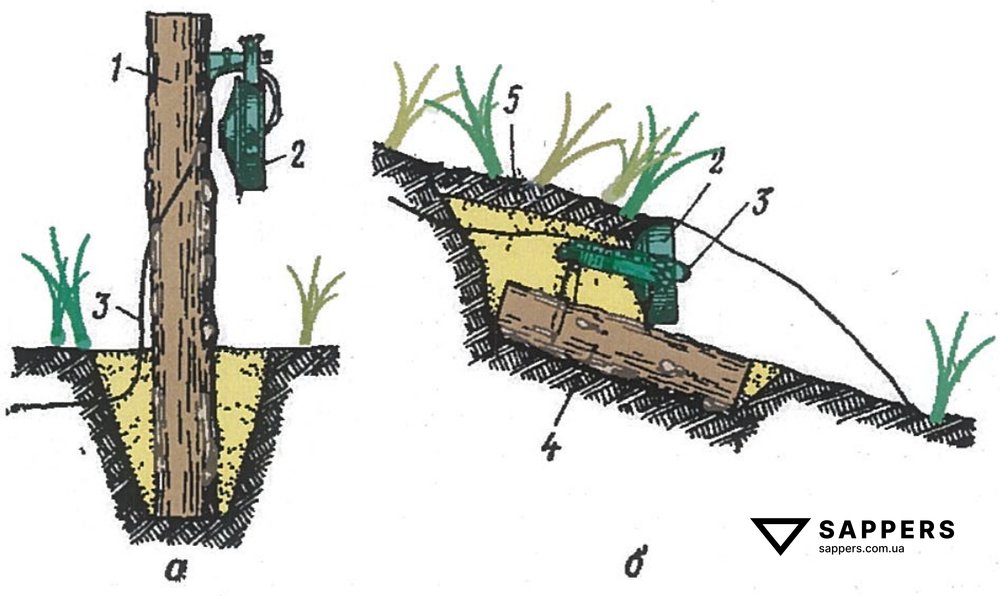
Detonation is initiated by the operator from a control panel when the enemy appears in the casualty sector. The mine produces a very dense, narrow cone of fragments. It is intended exclusively for command-detonated antipersonnel minefields. However, it is extremely difficult for the operator to determine whether the enemy is within the casualty zone. The mine must be aimed very precisely, and it is not equipped with any sighting devices. Therefore, the MON-100 mine is recommended for use only in groups in narrow areas (defiles, ravines, narrow streets, passages).

The mine’s combat operating time is unlimited.
It has no self-destruct, anti-lift, or anti-neutralization elements. The safe distance from the mine to the rear and to the sides is specified as 35 meters, but combat practice shows that individual fragments of the casing and bracket fly to the rear and sides over a considerably greater distance.
Coloring
Green or brown.
Marking
Standard, applied in black paint on the side wall and includes:
- MON-100 - mine designation.
- V-2515-1-82 - manufacturer’s plant code - lot number - year of manufacture.
- T - filling code.