
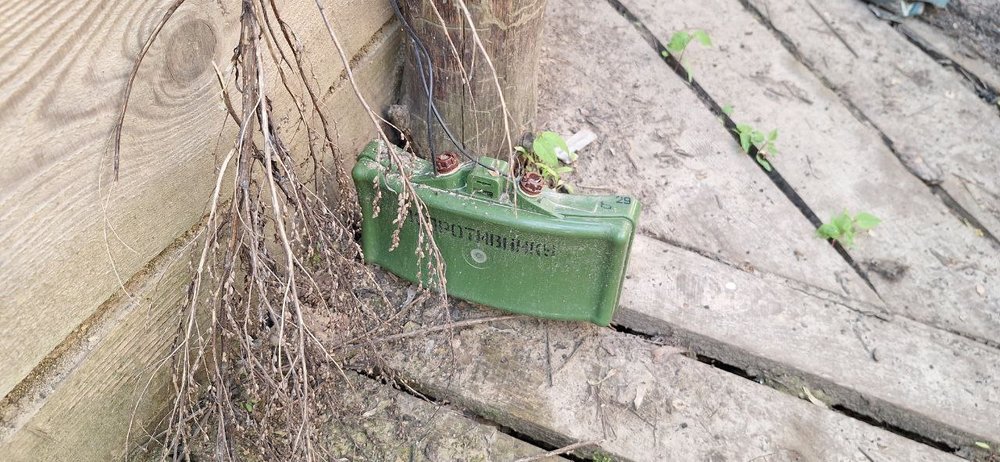
Technical and tactical characteristics of the MON-50 mine
- Mine type
- command-detonated directional fragmentation antipersonnel mine
- Body
- plastic
- Weight
- 2 kg
- Weight of PVV-5A explosive
- 0.7 kg
- Length
- 226 mm
- Width
- 66 mm
- Height
- 90 mm
- Number of preformed lethal elements
- 485/540 (balls / rollers)
- Continuous casualty radius
- 50/58 m (balls / rollers)
- Range of lethal fragment projection
- 80/85 m (balls / rollers)
- Operating temperature range
- -40 to +50 °C


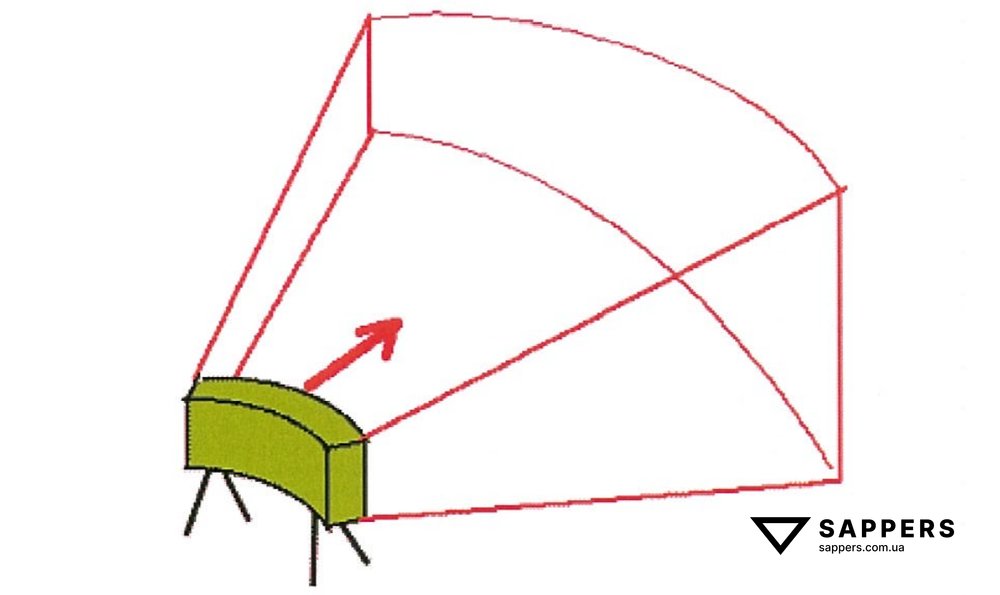
Personnel (one person or several simultaneously) are engaged when the mine is detonated by preformed lethal elements (balls or rollers), which are projected toward the enemy in a 54° horizontal sector to a distance of up to 50 meters. The height of the lethal sector is from 15 cm to 4 meters at maximum range. Detonation is carried out by the operator from a control panel when the enemy appears in the lethal sector, or if a soldier trips the breakwire sensor of the МВЗ-72 detonator, or the tension sensor of a MUV-series detonator.
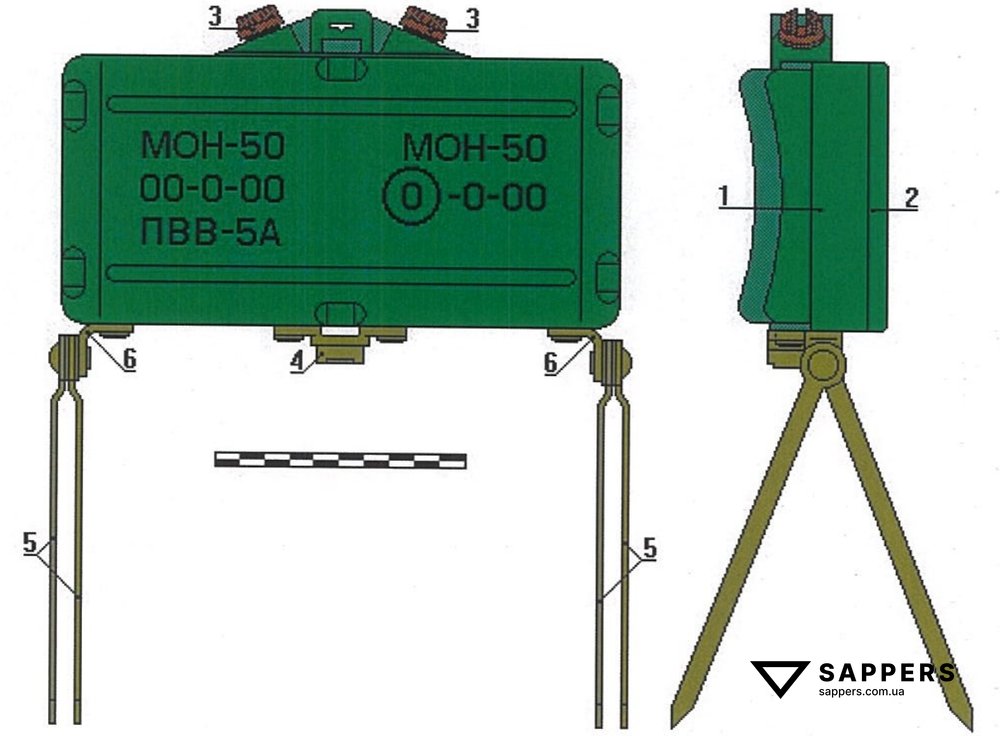
The mine itself is not supplied with detonators, but has two threaded plugs in the upper part for the MD-5M igniter and the EDP-R electric detonator. Thus, the mine can be initiated by one of two methods.
The effectiveness of the mine depends greatly on how accurately it is aimed. Therefore, there is a sight in its upper part, the field of view of which shows the combat engineer the lethal zone.


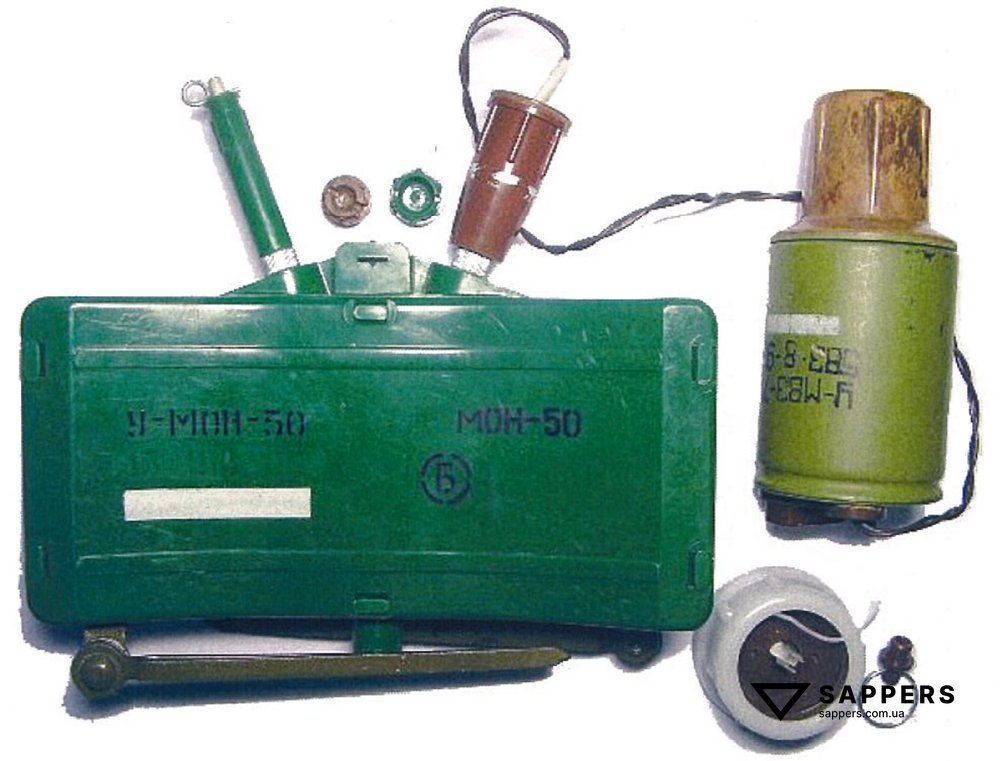

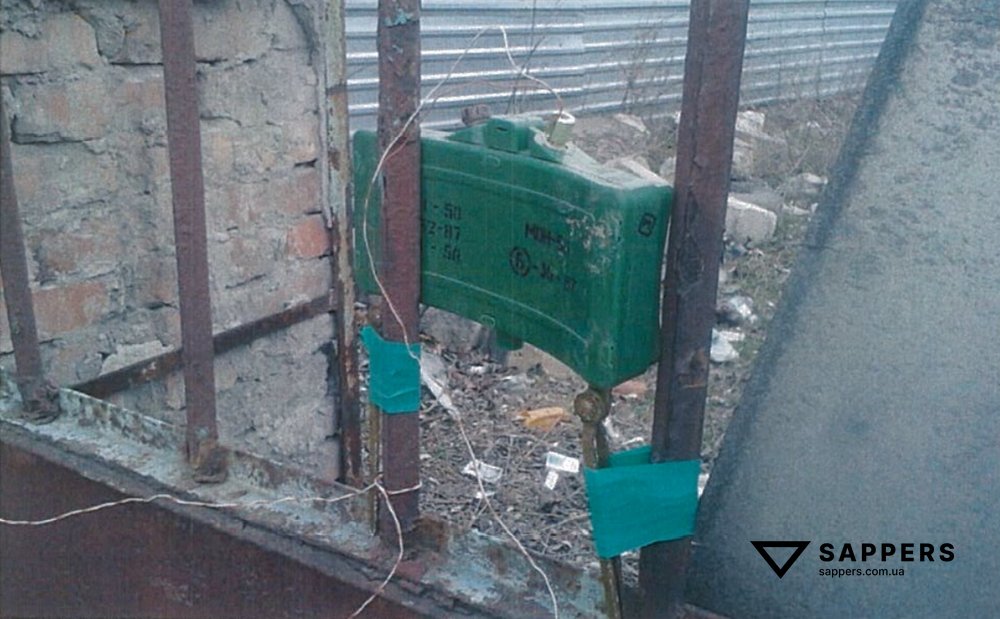
The mine is emplaced manually on the ground, using folding legs.

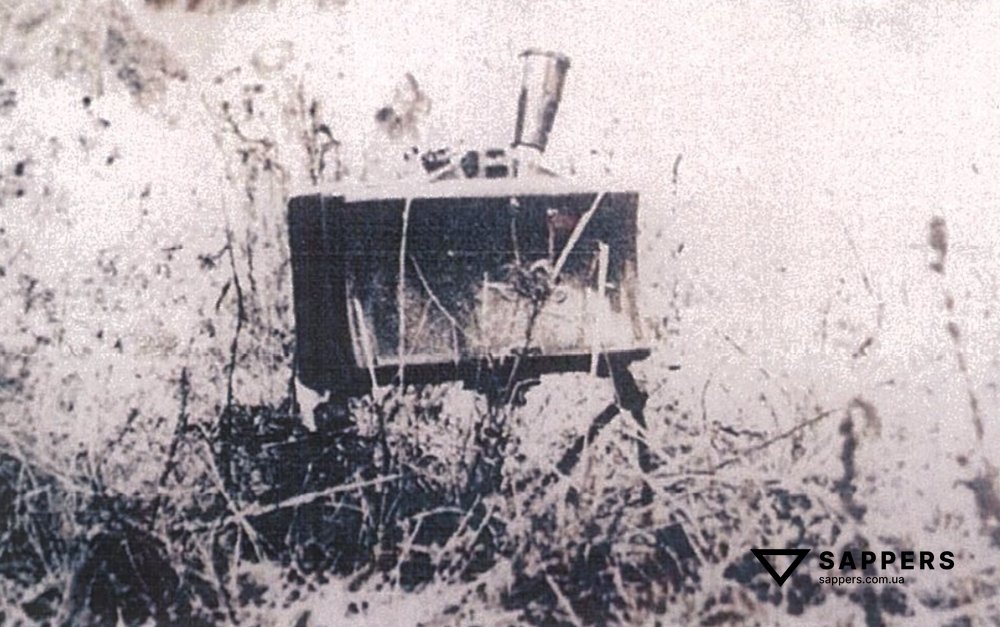
If the ground is very soft or emplacement is carried out on snow, the mine’s carrying bag, filled with soil or snow, is placed under the mine.
The mine can also be attached to local objects or surfaces by means of a clamp.

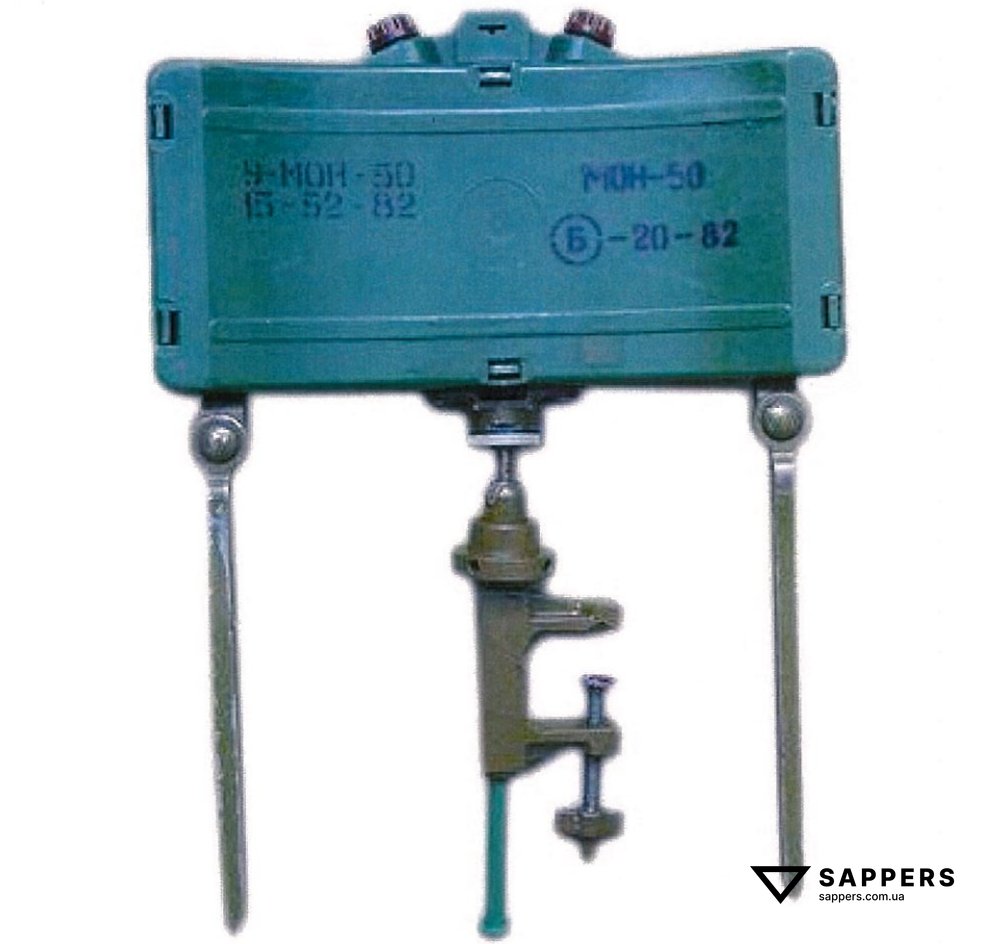
For screwing the clamp into wooden surfaces (trees, doors, fences, etc.), it has a rod with auger-type threading; in the lower part of the mine body, there is a flange with a threaded socket for attaching the clamp.
As noted above, the mine can also be used with an MVE-72 or MVE-NS detonator, which has a target sensor in the form of a low-visibility thin breakwire, with an actuation force of 0.3 kgf. In this case, the mine’s service life in combat is limited by the service life of the power-supply battery (MVE-72 - up to 4 months; MVE-NS - 25-90 days). Other uses of the mine are possible when other detonators are employed (as an object mine or a booby-trap mine). The mines may be included in the NVU-P command-detonated antipersonnel minefield set.
The mine’s service life in combat is not limited. It has no self-destruct, anti-lift, or anti-handling devices. The safe distance from the mine to the rear and sides is defined as 35 meters; however, combat practice shows that at a distance of 12-15 meters there is already no need to fear body fragments.

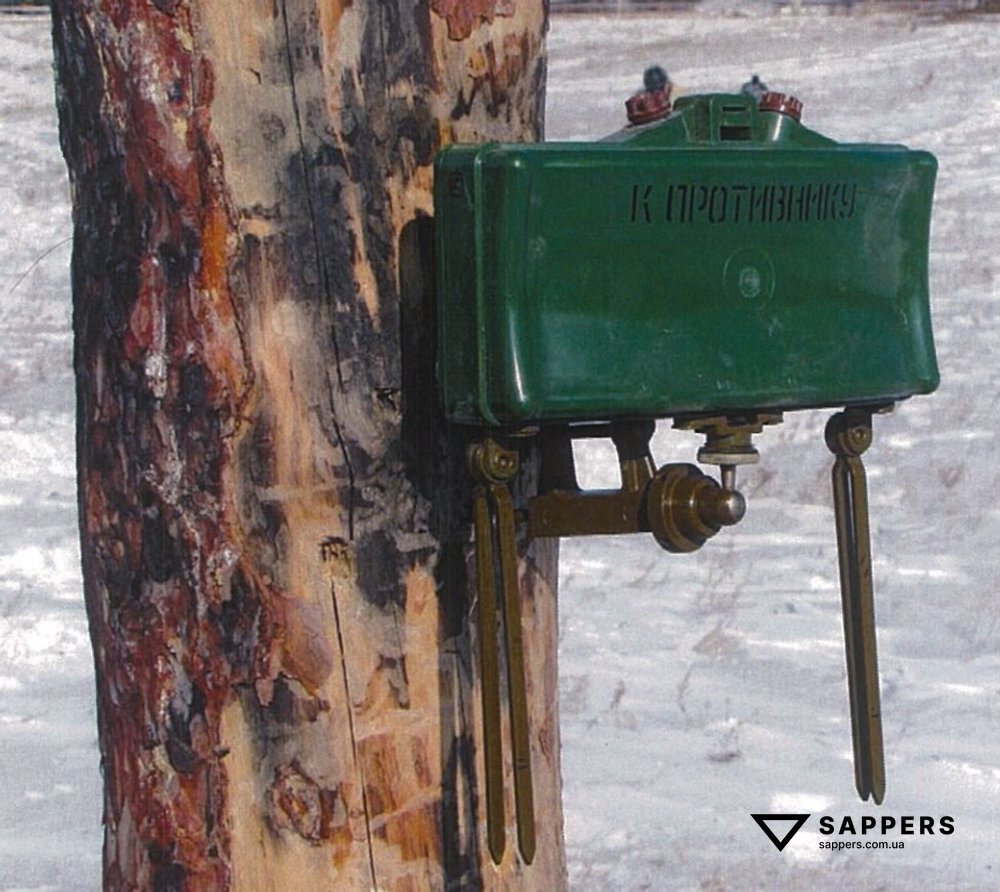

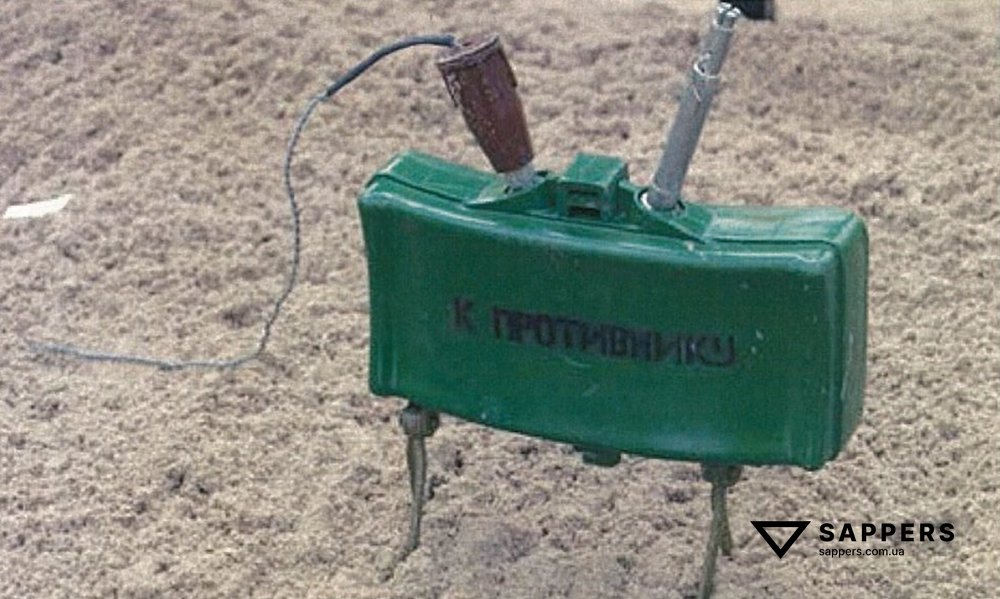
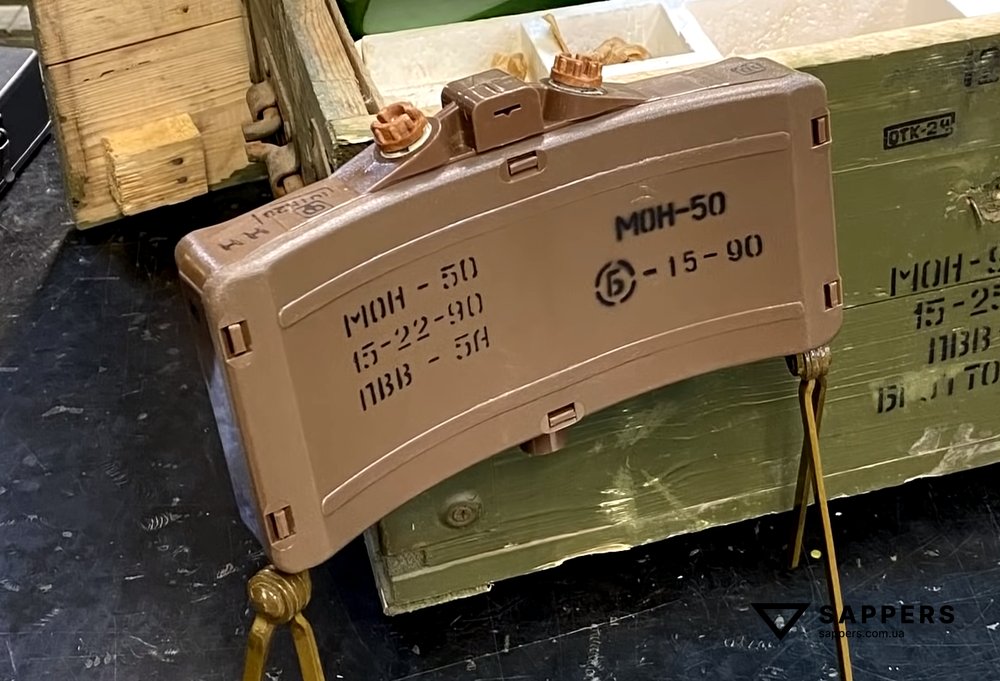
Coloring
Green, brown, light brown, matte or glossy
Marking
Standard, applied in black paint on the side wall and contains:
- MON-50 - mine code.
- B-20-82 - manufacturer’s plant code - batch number - year of manufacture.
- PVV-5A - filling code.