
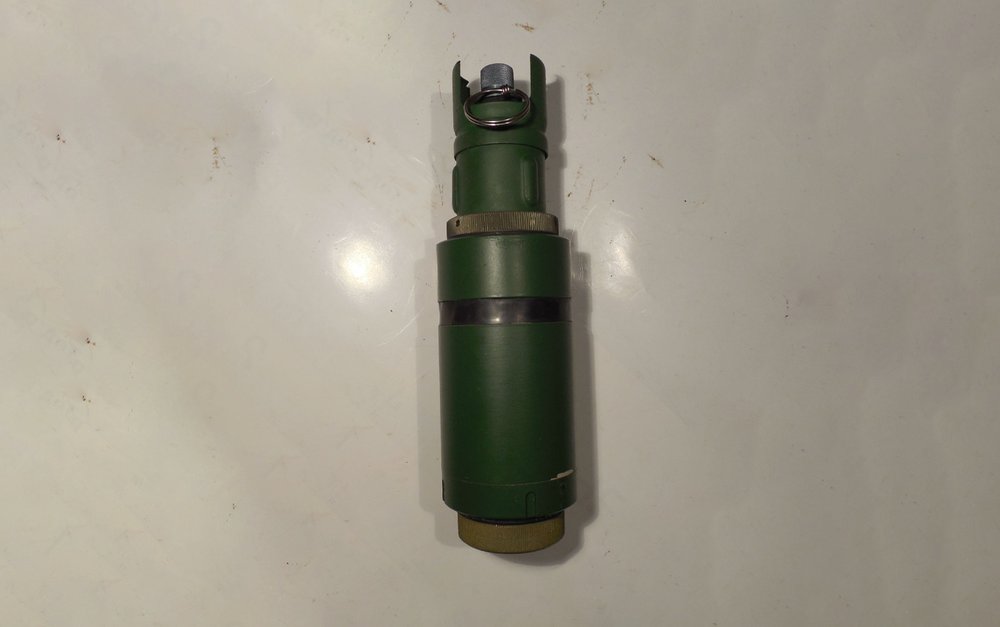
Tactical and technical characteristics of the ZMG mine-grenade
- Type of mine
- delayed-action incendiary
- Body
- magnesium alloy
- Weight
- 0.81 kg
- Weight of incendiary composition
- 0.65 kg
- Diameter
- 61 mm
- Height
- 220 mm
- Operating temperature range
- -50 to +50 °C

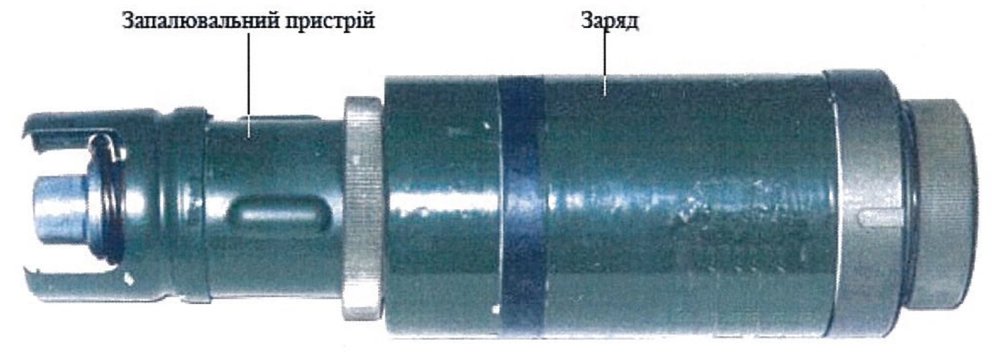
The mine is emplaced manually, or used as a delayed-action grenade, or dropped from a UAV. On 26 December 2015, at approximately 03:00, the largest arsenal in Ukraine (and one of the largest in Europe) near Balakliia was attacked from the air by Russian UAVs, which dropped ZMG incendiary mine-grenades. Only thanks to the rapid response of military personnel was a tragedy avoided.

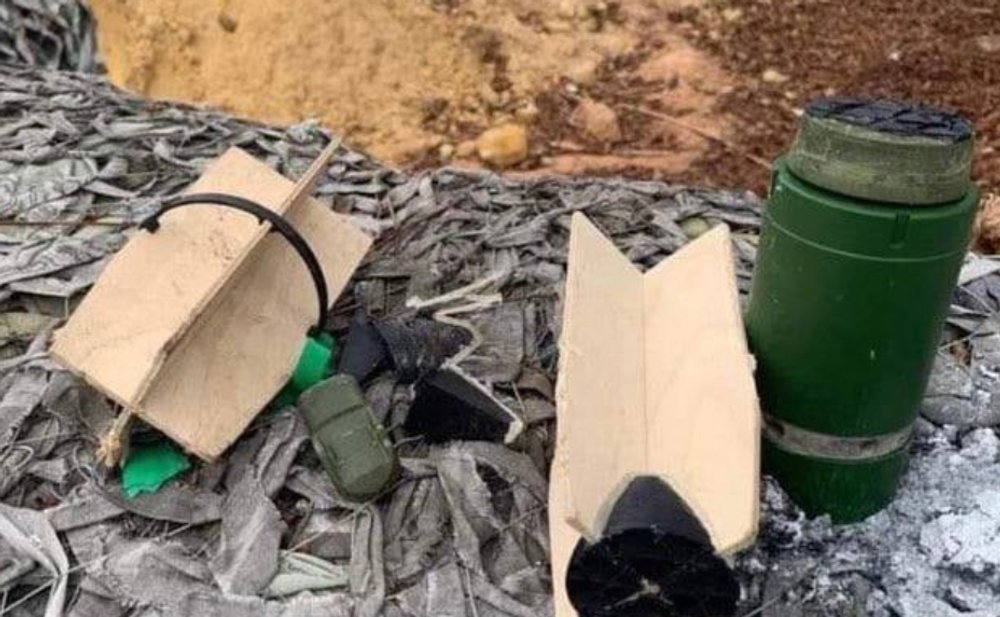
The ZMG body is made of combustible magnesium alloy; therefore, upon impact with the ground, the mine produces a fireworks effect, with fire spreading in different directions and burning for up to 15 minutes at temperatures of up to 2300 °C.
The mine has a stab-type firing mechanism with a pyrotechnic delay. The delay time depends on the installed metal element and the ambient air temperature, and ranges from 7 seconds to 60 hours.
Instead of the stab-type firing mechanism, the mine may be used with VZD-144, VZD-ZM, and MUV detonators, and with the VUZ-4 firing device.
Demining of ZMG fitted with MUV-series detonators is prohibited.
With the VUZ-4 device, four ZMG mine-grenades can be used simultaneously; they are connected by electrical wires 20 meters long each and are initiated from the device simultaneously.