Technical and tactical characteristics of the MPM mine
- Mine type
- object high-explosive time-delay mine
- Body
- Bakelite (phenolic plastic)
- Weight
- 0.77 kg
- Explosive weight
- 0.3 kg
- Explosive type
- TG-50
- Length
- 150 mm
- Width
- 75 mm
- Height
- 50 mm
- Combat capabilities of the mine
- A 20 by 60 mm hole in a 25 mm thick steel plate
- Holding force of the magnets
- 5-6 kg
- Operating temperature range
- -20 to +40 °C
This is the oldest mine currently in service with the Armed Forces of the Russian Federation. It was adopted for service in the USSR in the late 1930s.
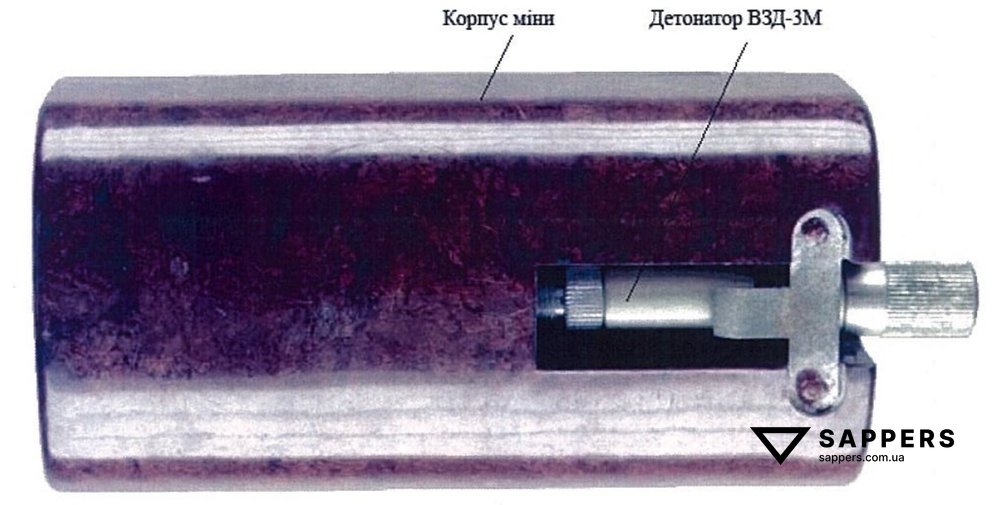
This mine is extremely simple. It consists of a Bakelite (phenolic plastic) body with an internal cavity for the explosive charge and two cavities for accommodating magnets. At one end of the body there is a recess for the detonator, with a socket at the end for the igniter. Both the standard VZD-ZM detonator and the MUV, VPF, or an igniter tube may be installed. The width of the mine was selected based on the height of the railway rail web. The mine is attached to the object to be destroyed by means of two arc-shaped magnets fixed in the lower part of the mine. The magnets ensure reliable retention of the mine on the rail. However, the mine is used to a greater extent not as a charge for damaging railway rails, but as a sabotage device. Primarily, the mine is used against unarmored targets (containers, pipelines, electrical fittings, hydraulic fittings, shut-off devices, vehicles, aircraft, helicopters). The mine is most effective when used as a sabotage device against small containers (up to 10 m), vehicle fuel tanks, transformer cabinets, electrical cables and communications cables, and for terrorist acts. Use against railway tank cars is inadvisable, because the charge power is insufficient to penetrate the tank wall in its lower part.
The mine detonates after the preset delay period of a VZD-ZM type delayed-action detonator with an MD-2 detonator. The delay time is determined by the type of metal element installed in the detonator in advance.
The detonator is supplied with four standard metal elements:
No. 1 - delay time 15 minutes - 1 hour 50 minutes, at +20 to -20 °C;
No. 3 - delay time 1 hour - 9 hours 10 minutes, at +20 to -20 °C;
No. 5 - delay time 2 hours - 33 hours, at +30 to -20 °C;
No. 6 - delay time 2 hours 20 minutes - 73 hours, at +40 to -20 °C;
There are no target sensors. There are no anti-handling or self-destruction elements.
A significant drawback of the mine is the weak holding capability of the magnets. Thus, when the mine is attached to the underside of a vehicle body, while moving and under sufficiently strong jolts, the mine detaches and falls to the ground.
Coloring
Dark brown.
Marking
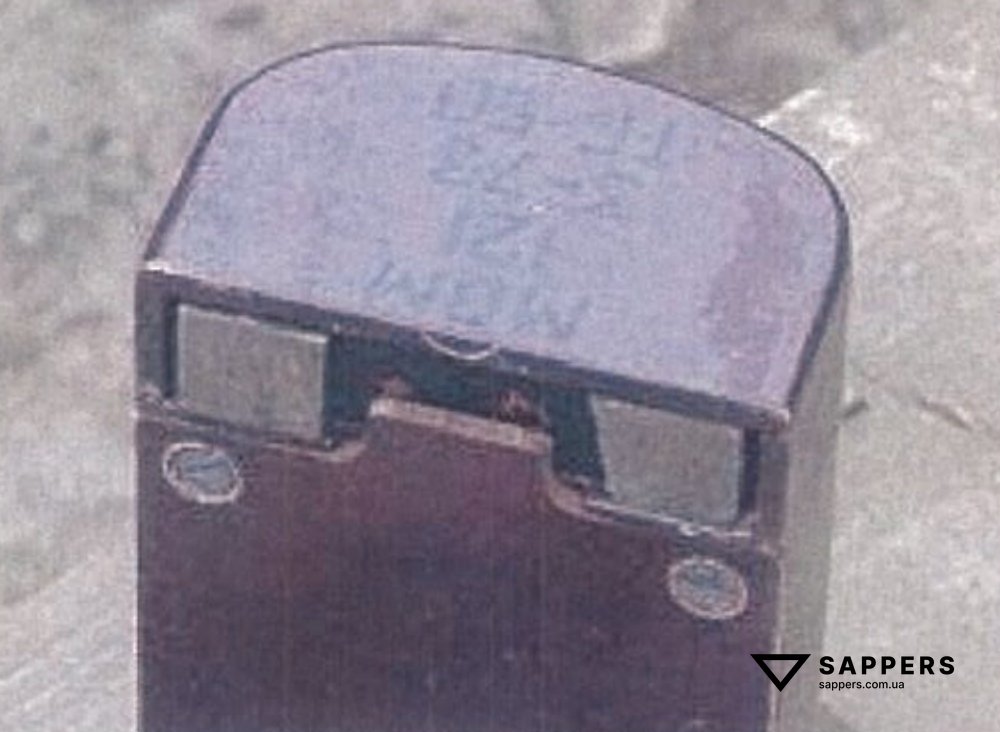
Standard, applied in black paint to the lower end face and includes:
- MPM - mine code.
- 121-3-73 - manufacturer's plant code - batch number - year of manufacture.
- TG-50 - filling code.