Technical and tactical characteristics of the OZM-3 mine
- Mine type
- antipersonnel bounding fragmentation mine with all-round effect
- Body
- cast iron
- Weight
- 3.2 kg
- Weight of TNT explosive charge
- 0.75 kg
- Diameter
- 75 mm
- Height
- 130 mm
- Length of target sensor
- 5 or 10 m
- Height of mine burst
- 0.4-1.4 m
- Fuzes
- MUV, MUV-2, MUV-3, MUV-4
- Sensitivity:
MUV, MUV-2
MUV-3, MUV-4
0.5 - 1 kg
1.5 - 6 kg- Continuous casualty radius
- 9 m
- Operating temperature range
- -40 to +50 °C

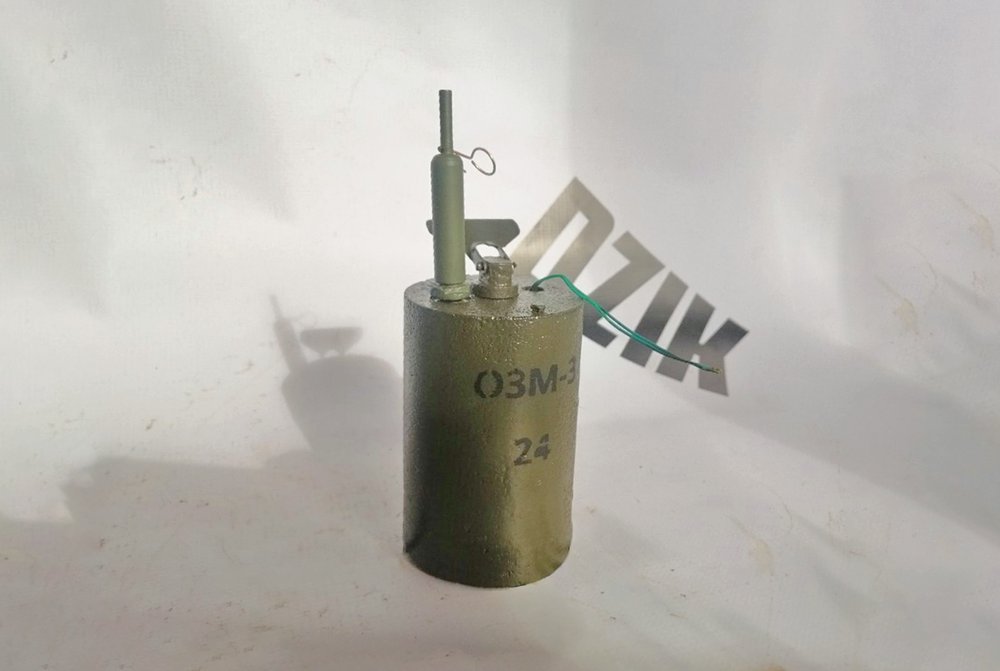

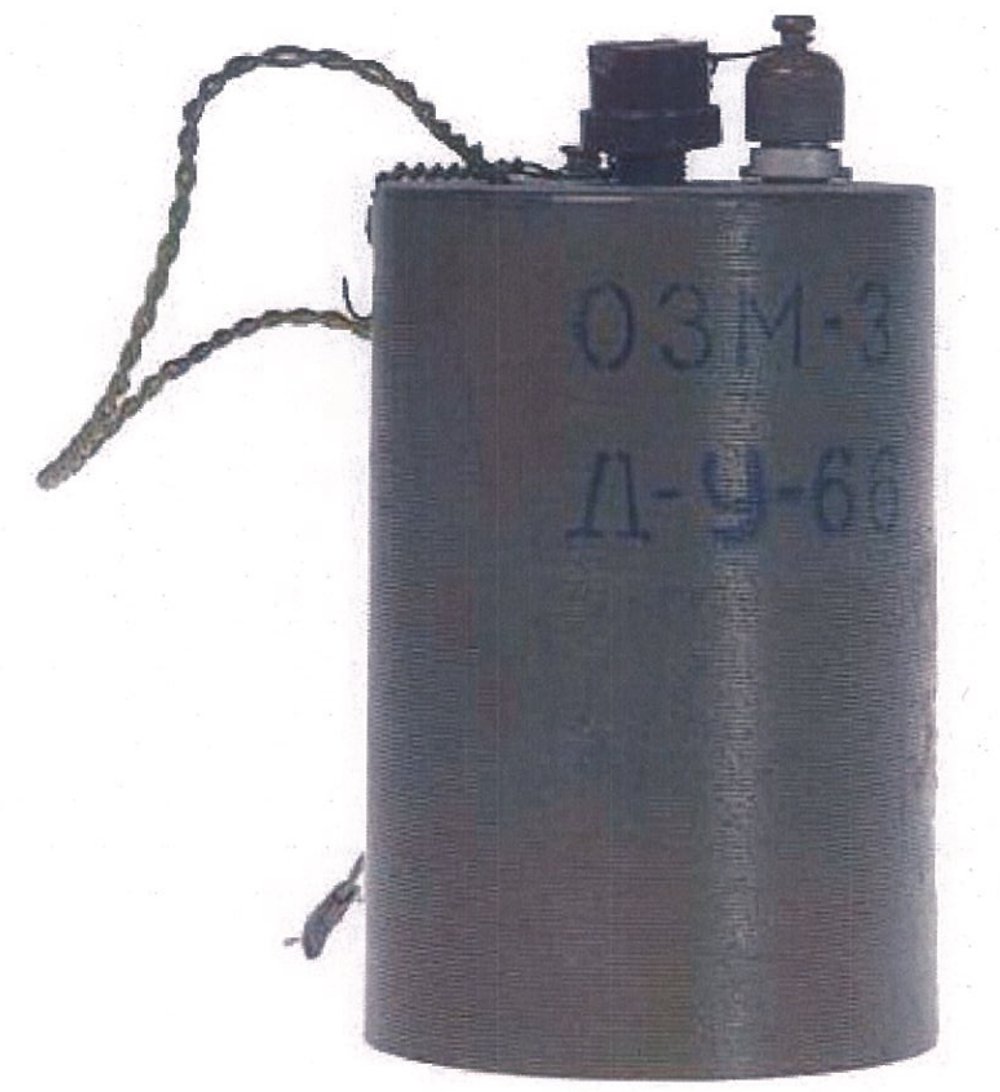
Personnel casualties (to one or several persons simultaneously) are inflicted by fragments of the mine body when it detonates at a height of 40-140 cm above the ground surface after being propelled upward by the powder ejection charge, which functions at the moment when an enemy soldier, catching his foot on the wire tripwire, pulls out the fuze firing pin, or when an electrical impulse is sent from a control panel to the igniter of the ejection charge.
The mine’s service life in combat is not limited. The mine is not fitted with a self-destruct mechanism. It has no anti-lift or anti-neutralization devices; however, the very high sensitivity of the MUV fuze makes neutralization of the mine extremely dangerous. Neutralization of OZM-3 mines fitted with the MUV-2 or MUV-3 fuze is prohibited! MUV-series fuzes are very similar in external appearance, so it is better not to take the risk.

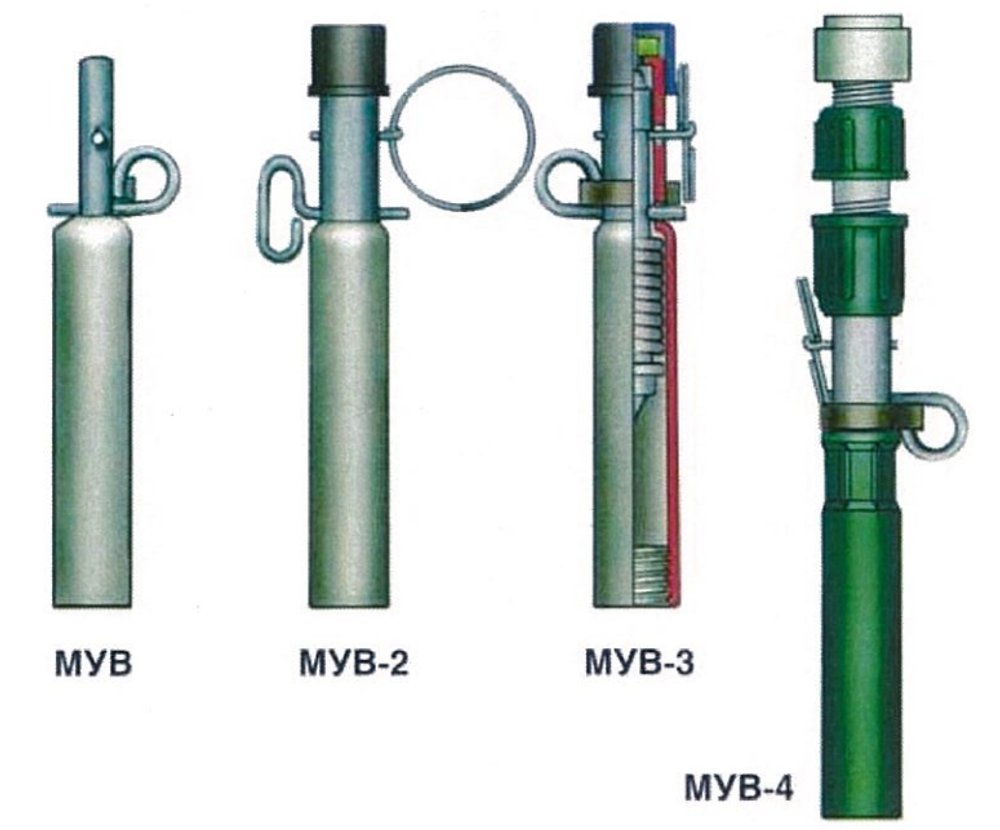

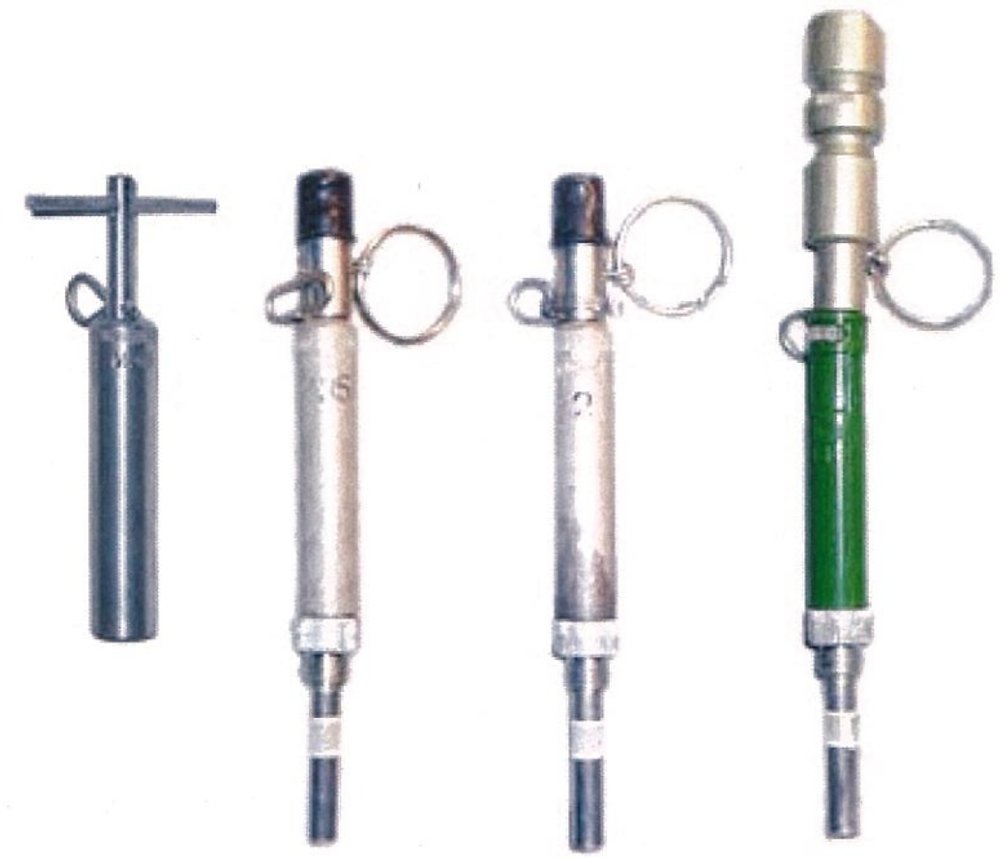
They are destroyed at the emplacement site by sweeping with grapnels thrown onto the wire tripwires from cover.
The mine consists of a cast-iron body containing the explosive charge, an explosive powder charge, a delay element, and an igniter. The mine is supplied with a MUV-series fuze with an R-shaped safety pin, two wooden stakes, and a 5 m length of wire on a wooden spool. To provide the capability of employing the mine in the command-detonated mode, an additional electric igniter is incorporated into the ejection charge, with its wires led outside through a special plug.
The mine is emplaced manually in the ground, and when emplacement in the ground is impossible, on the ground; in this case the mine is tied to a stake driven into the ground.

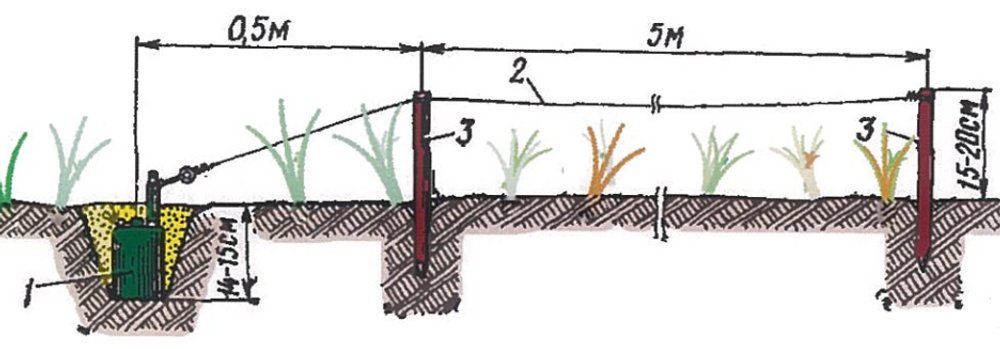
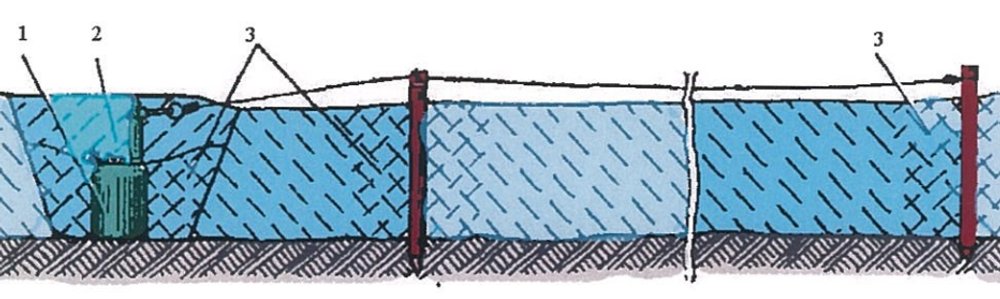
In frozen ground and with a snow cover of 15 cm or more, the mine is emplaced on the ground surface, packed on the sides with compacted snow, and camouflaged with snow. It should also be borne in mind that when the ground is frozen to a depth of 10-14 cm, the powder ejection charge may fail to propel the mine upward; although detonation will occur, the casualty radius will be significantly reduced.

The time required for the mine to become armed after removal of the safety pin depends on the type of MUV-series fuze. When the MUV fuze is used, the mine becomes armed immediately. When MUV-2 or MUV-3 fuzes are used, the time from pulling out the safety pin to the fuze being set to the armed position ranges, depending on ambient temperature, from 3 minutes at +40°C to 59 hours (2.5 days) at -40°C.
This mine, developed on the basis of the German World War II-era "Sprengmine", operates on the same principle: when the wire tripwire is pulled, the fuze firing pin is withdrawn. The fuze strikes the primer. The ejection charge and the delay element ignite. Under the action of the powder gases from the ejection charge, the base plate is forced out and the mine is propelled upward. It bounds to a height of 0.4-1.4 meters, after which it detonates, striking even persons lying on the ground with fragments.
Coloring
Green.
Marking
Standard, applied in black paint on the side wall and includes:
- OZM-3 - mine designation.
- D-U-66 - manufacturer’s plant code - lot number - year of manufacture.
- T - filling code.