Technical and Tactical Characteristics of the POB “Pilka” Mine
- Type of mine
- anti-personnel fragmentation mine with all-round effect
- Body
- plastic
- Weight
- 23 kg
- Weight of TG-40 explosive
- 0.51 kg
- Diameter
- 90 mm
- Height
- 170 mm
- Length of target sensor
- 20 m
- Height of detonation above ground surface
- 0.4 - 0.6 m
- Type of fragmentation casualty-producing elements
- flat semi-preformed
- Detonator sensitivity
- 0.35 - 0.45 kg
- Continuous casualty radius
- 20 m
- Operating temperature range
- -40 to +50 °C

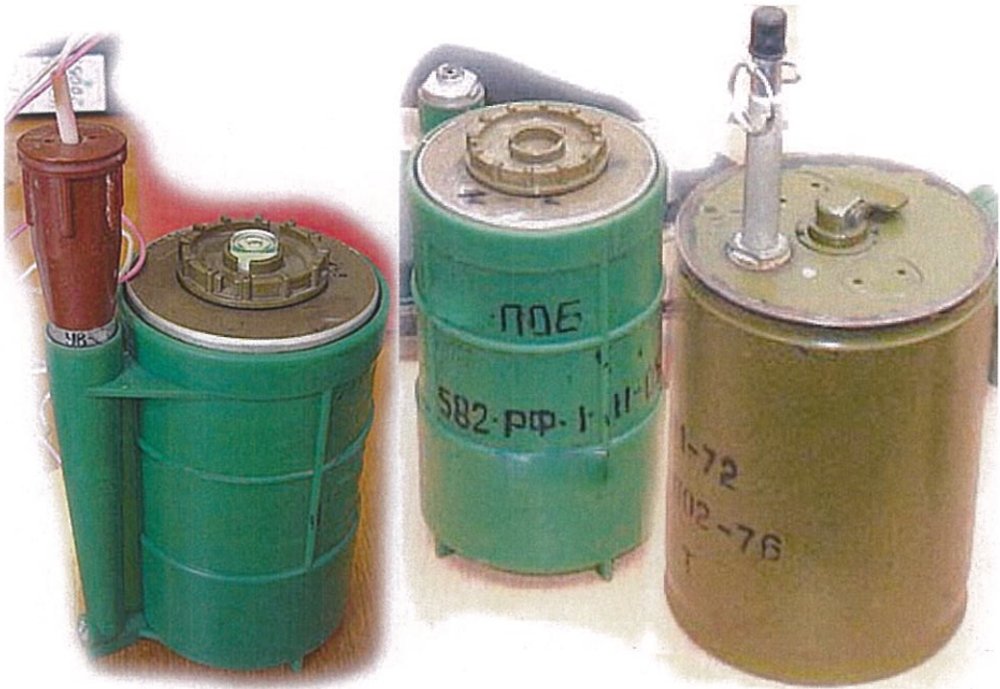
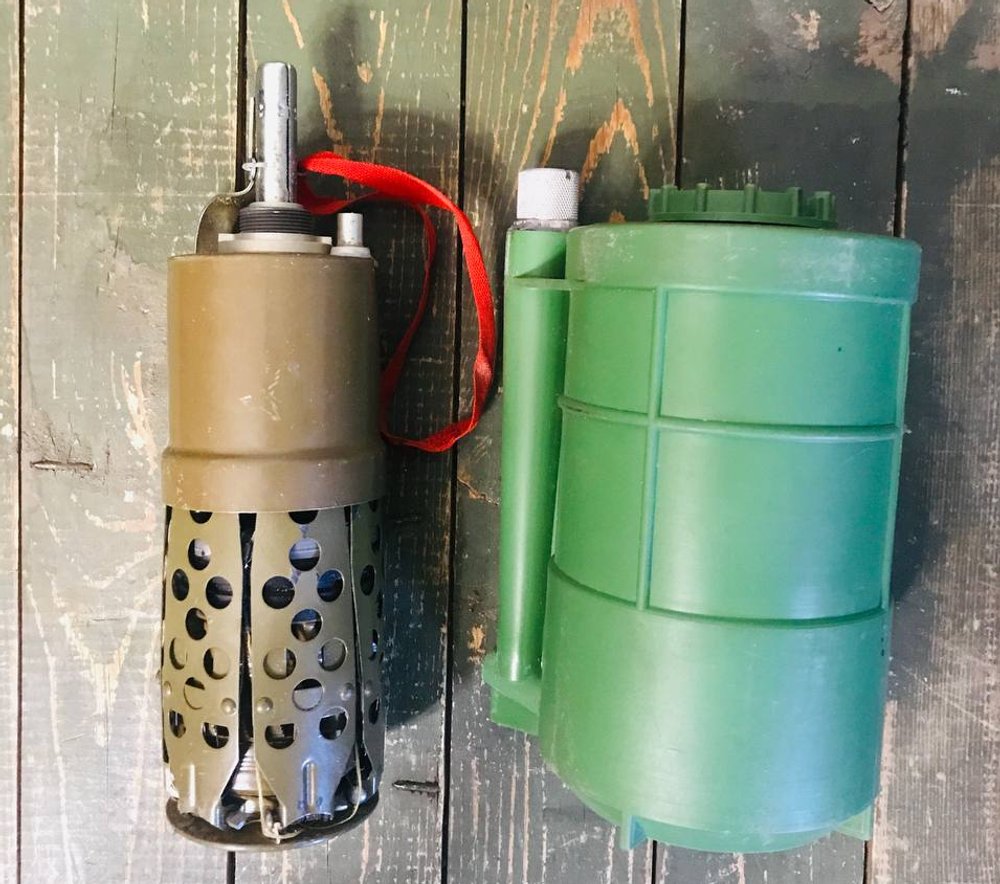
The mine is used with MUV-2, MUV-3, MUV-4, MVE-72, MVE-NS, and MVE-92 break-action detonators. The mine can also be used with the NM electric percussion mechanism. With it, the mine may be used either simply as a command-detonated mine (actuated by an electrical impulse from a control point), or as part of the NVU-P or NVU-P2 explosive device kit; that is, the principle is the same as for the OZM-72 mine.
The mine is emplaced manually in the ground, and when emplacement in the ground is not possible, on the ground surface (in this case the mine is tied to a stake driven into the ground).
The mine’s service life in combat is not limited. The mine is not fitted with a self-destruct mechanism. It has no anti-removal or anti-neutralization elements; however, the very high sensitivity of the MUV detonator, and especially of the MVE-72 and MVE-NS detonators, makes neutralization of the mine impossible. It can be fitted for anti-removal using booby-trap mines.
The safety level during mine emplacement depends on the type of detonator. For example, when using MUV-2 or MUV-3 detonators, from the moment the safety pin is pulled until the detonator becomes armed, depending on ambient temperature, between 3 minutes (at 40°C) and 59 hours (at -40°C) elapses.
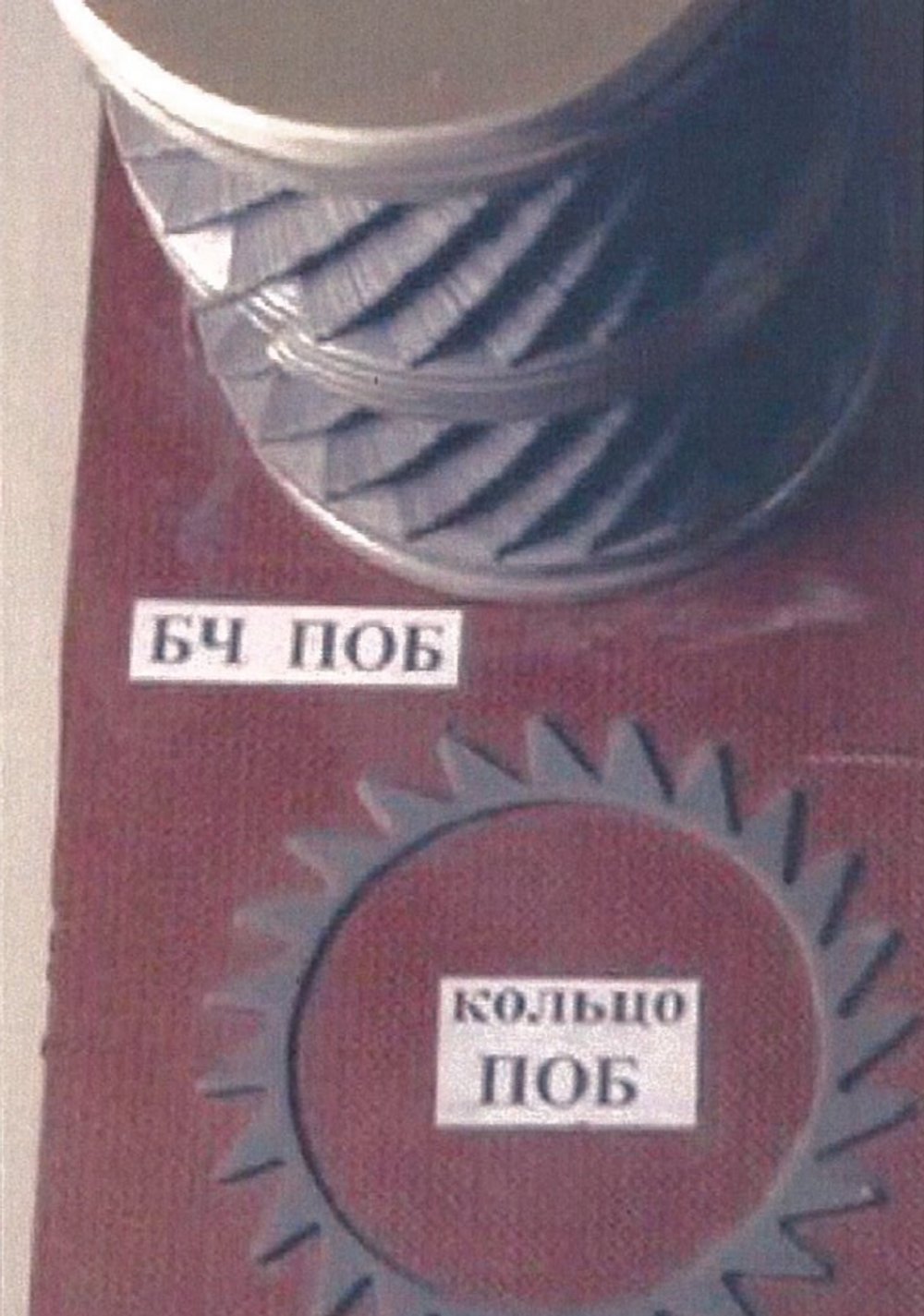
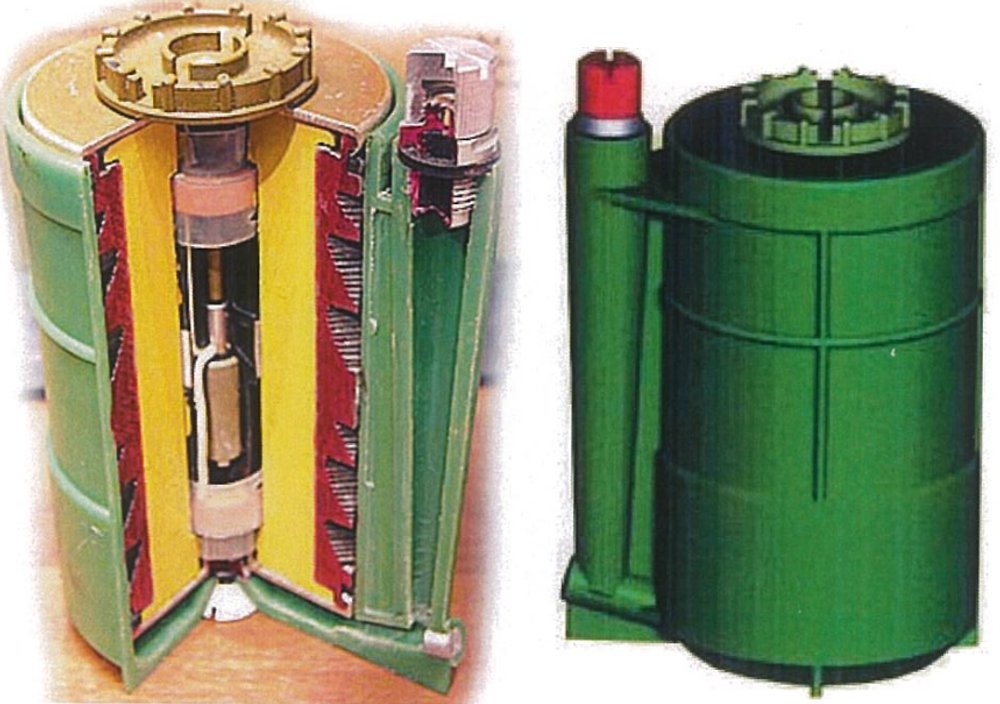
The mine body contains a set of annular plates with the same internal diameter and different external diameters, which form the casualty-producing elements when the mine detonates. Injury to one or more persons is caused by fragments of the annular plates when the mine charge detonates at the moment a person contacts the target sensor (a thin nylon thread 20 m long).



Coloration
Green, dirty yellow.
Marking
Standard, applied in black paint to the mine body and includes:
- POB - mine code.
- 582-RF-1-11 - manufacturer’s plant code - country of manufacture - batch number - year of manufacture.