Technical and Tactical Characteristics of the POM-1 and POM-1S Mines
- Mine type
- omnidirectional fragmentation antipersonnel
- Body
- steel
- Weight
- 0.75 kg
- Weight of TG-40 explosive charge
- 0.1 kg
- Diameter
- 80.4 mm
- Number of target sensors
- 8
- Target sensor length
- 4.5 m
- Mine burst height
- 0.6 - 0.9 m
- Sensitivity
- 0.2 - 0.3 kg
- Radius of lethal effect
- 4 m
- Operating temperature range
- -20 to +40 °C

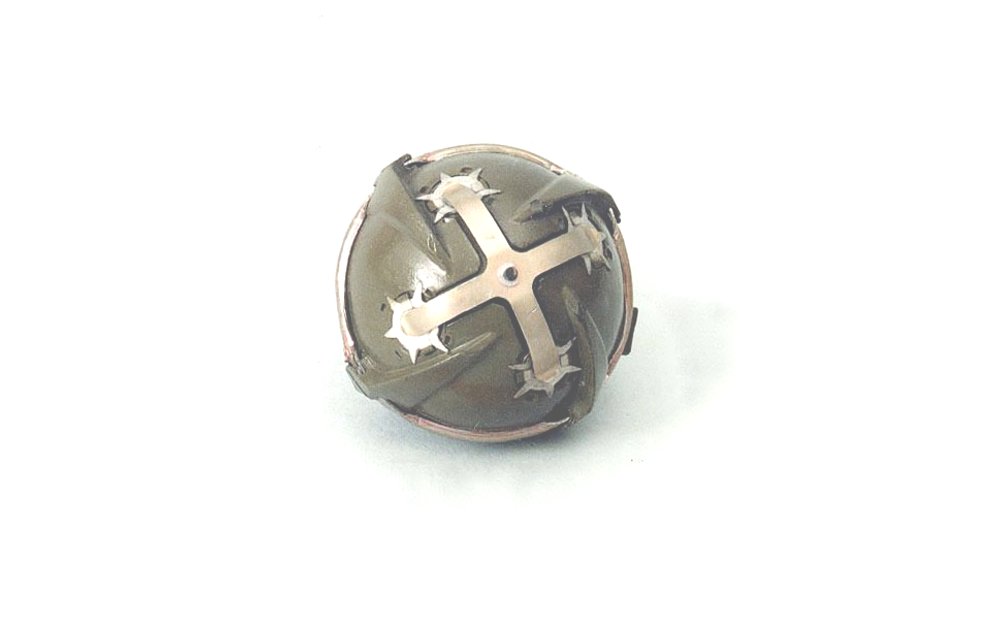
The POM-1 mine is a copy of the U.S. BLU-42/B mine used in Vietnam in 1974-1975. It is designed to incapacitate enemy personnel. One or more persons are injured by fragments of the body when the mine charge detonates at the moment a person contacts one of the eight target sensors (thin nylon threads, each 4.5 meters long, with weighted anchors at the ends) and thereby changes the position of the mine. The mine can be emplaced only on the ground by remote mine-laying systems: the hand-held PKM-1, the helicopter-borne VSM-1, the aircraft-mounted KMGU, and the ground mine-laying systems UMZ and UMZ-K. Of these, the primary means is the VSM-1. Manual emplacement of the mines is not provided for.
Each VSM-1 container holds 29 KSO-1 cassettes. Each KSO-1 cassette contains 8 POM-1 mines. In total, a Mi-8 helicopter can carry 4 VSM-1 containers, i.e. 116 KSO-1 cassettes (928 POM-1 mines). One Mi-8 helicopter with one VSM-1 ammunition load (29 cassettes) emplaces a minefield measuring 2000 x 30 meters. A flight of helicopters emplaces a minefield measuring 13.2 km x 30 m in 3-4 minutes.

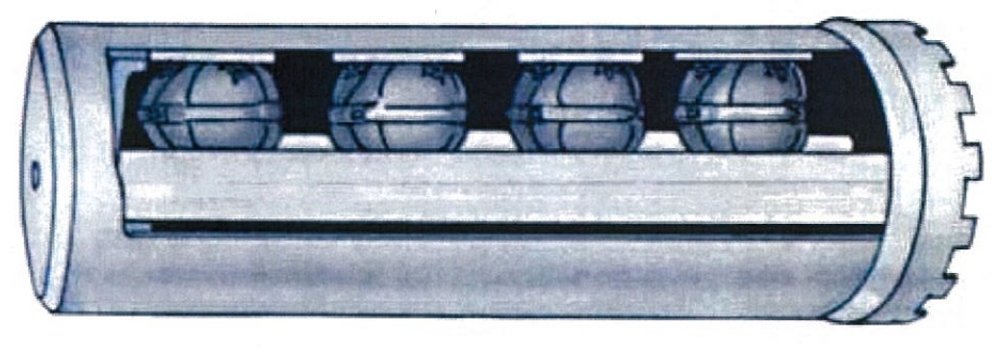

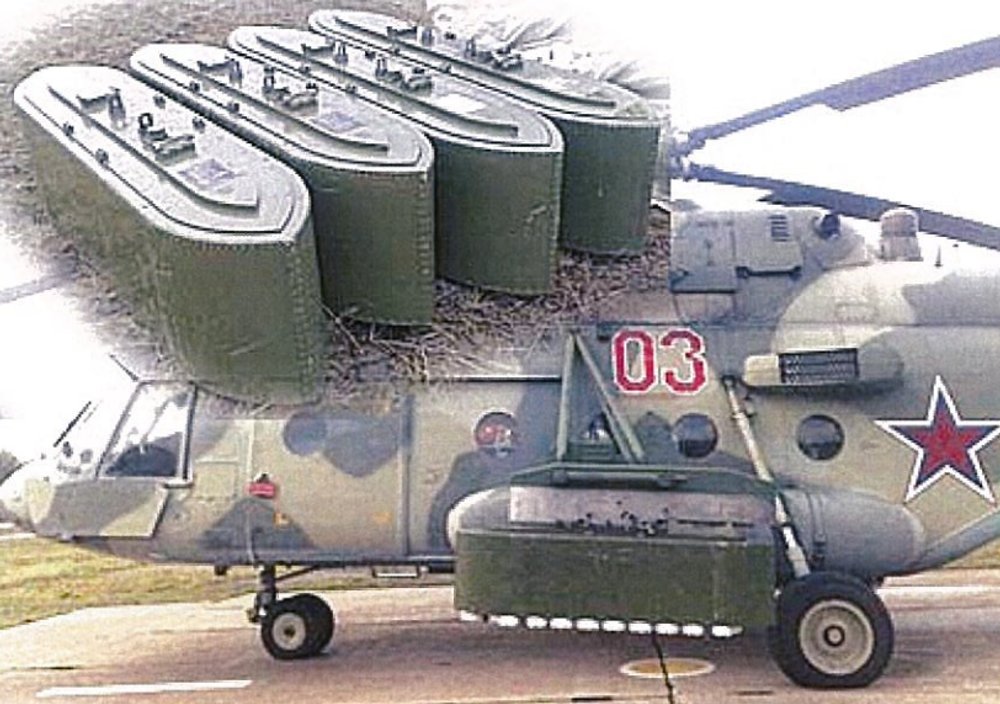
The basis of the ASM-POM-1S aircraft mine-laying system is a KMGU-type container, into which 192 POM-1S mines are loaded, and which can be suspended from a Su-24 frontline bomber (7 containers, 1344 mines), Su-25 and Su-39 attack aircraft (6 containers, 1152 mines). It can also be suspended from other combat aircraft such as the MiG-29M (4 containers, 768 mines), MiG-35 (4 containers, 768 mines), Su-30 (6 containers, 1152 mines), Su-34 (6 containers, 1152 mines), and Yak-130 (4 containers, 768 mines). The container is not jettisoned. The mines are expelled rearward from it at a preset interval.


After leaving the cassette, the mine begins to rotate under the action of the airflow. For this purpose, the body is fitted with aerodynamic fins. The centrifugal safety device releases two crosspieces on the lower and upper halves of the body, which retain the spring-loaded weighted anchors with wires. The crosspieces move away from the body, and the weighted anchors are ejected from the body by the springs. Under the action of centrifugal force, the weighted anchors are thrown away from the body to the full length of the wires.

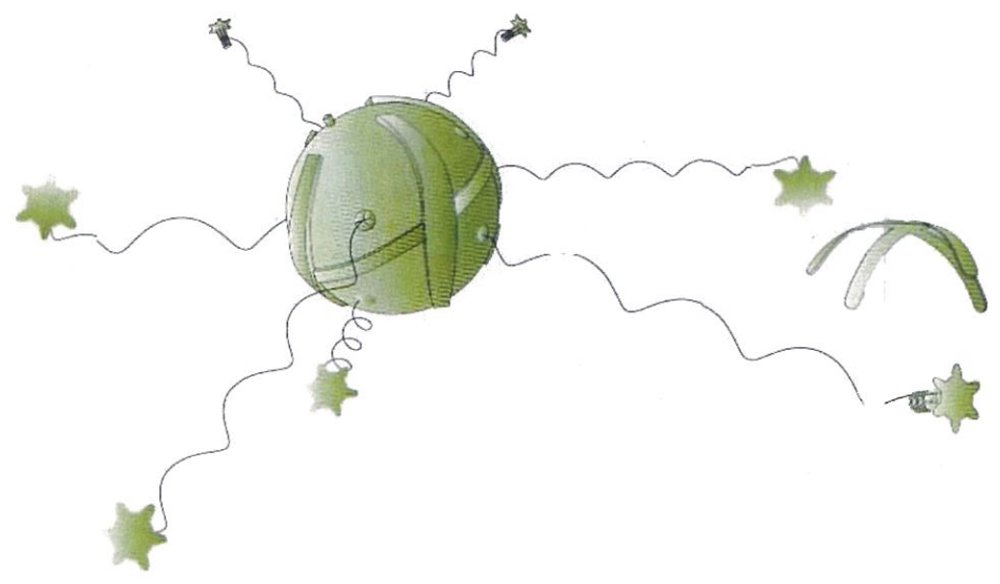
After the mine falls to the ground and the centrifugal force ceases, the return movement of the centrifugal safety device closes the contacts of the firing circuit. From this moment, the mine is in the armed state and the operating time in the armed state begins to run, which may be from 1 to 40 hours (20 hours on average). The mine detonates when its position changes by more than 15-20 degrees, as an enemy soldier who catches on the thin nylon wire will inevitably displace the mine. Upon expiry of the armed operating period, the mine self-neutralizes by short-circuiting the power source (the POM-1 does not have this feature; only the POM-1S does). After this, the mine is safe, but the mine design has no external indications (signals) of self-neutralization.

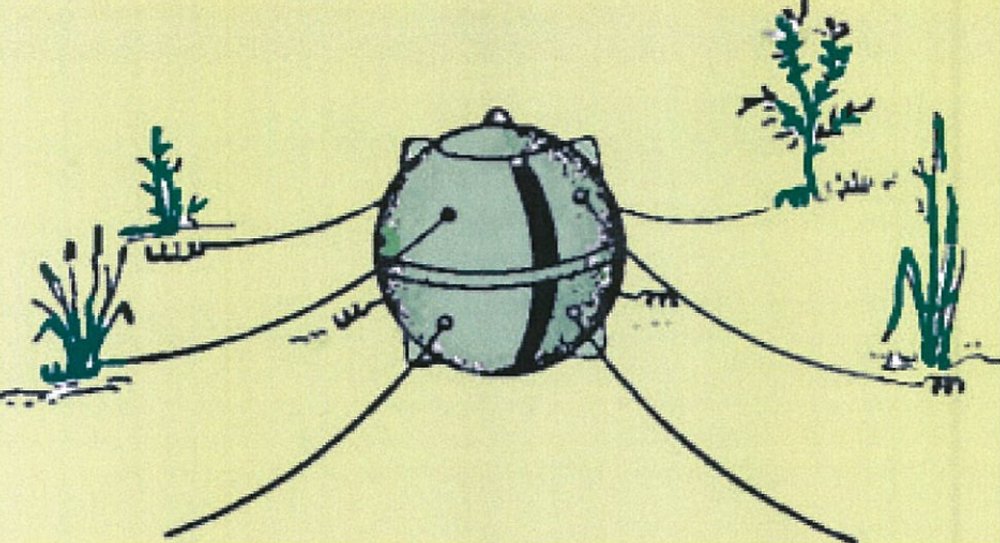
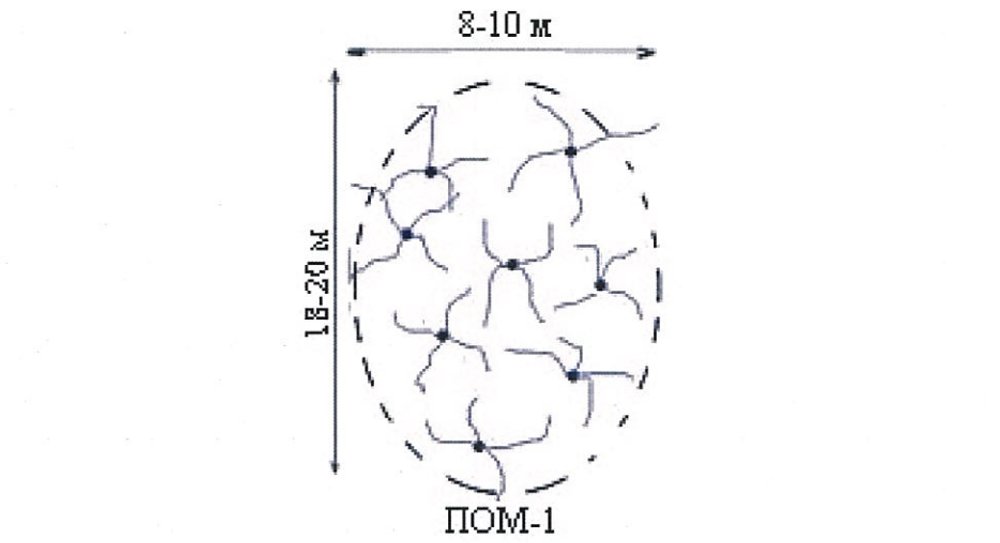
The mine is non-recoverable and is not subject to disarming. The detonator is built-in and electric-contact operated. One cassette produces a dispersion ellipse of 8-10 by 18-20 meters; therefore, eight mines from one cassette will be scattered within this ellipse. The distance between mines averages 1.5-7 meters. The trip threads of the eight mines, intertwining repeatedly, ensure a 100% probability that an enemy soldier will catch on one of the threads.

Countering these mines is possible by repeatedly driving armored vehicles over the terrain. Although the mine is metallic, it is impossible to use a metal detector (mine detector) or probe to search for it, because the five-meter threads prevent approach to the mine. Mine trawling by throwing grapnels with ropes is extremely dangerous because, due to the high sensitivity, detonation of the mine is possible already at the moment the rope falls onto the mine thread. Breaching minefields containing POM-1 mines by means of explosive mine-clearing line charge systems (UR-67, UR-77, ZRP-2) produces good results.
The mine has destructive power comparable to the RGD-5 fragmentation hand grenade; however, the high mine-laying density ensures virtually 100-percent target engagement. A drawback of the mine is that it is not suitable for long-term storage in depots, because after 5 years the power sources self-discharge, and their replacement is not provided for by the mine design. In addition, storage of the mines in unheated storage facilities is inadmissible (the power sources freeze and fail). The mines can be stored only in the southern regions of the country. The second drawback is its excessive sensitivity. If the mines are used in terrain with tall grass or shrubs, some of them hang on branches or the threads lie on tall grass blades or branches, and under the influence of wind the mines detonate. The same occurs when they fall into snow. When the snow melts or as a result of gradual settling into loose snow, the position of the mines changes and they detonate.
Coloring
Green, gray, or brown.
Marking
Standard; applied in black paint to the upper hemisphere of the mine and contains:
- POM-1 - mine designation.
- 912-78-82 - manufacturing plant code - lot number - year of manufacture.
- TG-40 - filling designation.