Technical and Tactical Characteristics of the POM-2 "Otek" Mine
- Mine type
- anti-personnel fragmentation mine with all-round effect
- Casing
- steel
- Weight
- 1.6 kg
- Weight of TNT explosive charge
- 0.14 kg
- Diameter
- 63 mm
- Height
- 180 mm
- Number of target sensors
- 4
- Target sensor length
- 9.5 m
- Detonator
- built-in mechanical VP-09S
- Detonator sensitivity
- 0.35 - 0.45 kg
- Radius of continuous casualty effect
- 16 m
- Self-destruction
- 4 - 100 hours
- Operating temperature range
- -20 to +40 °C

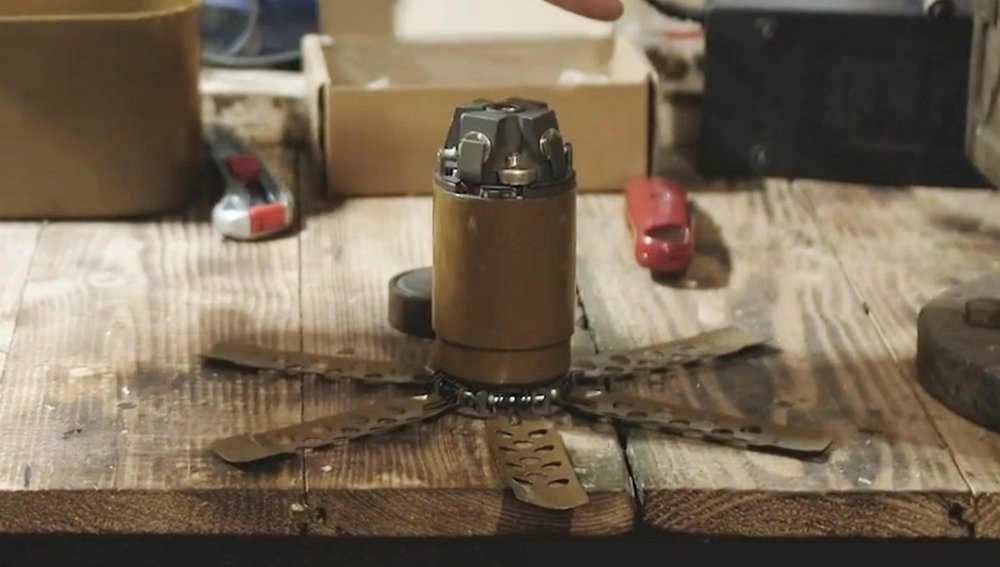

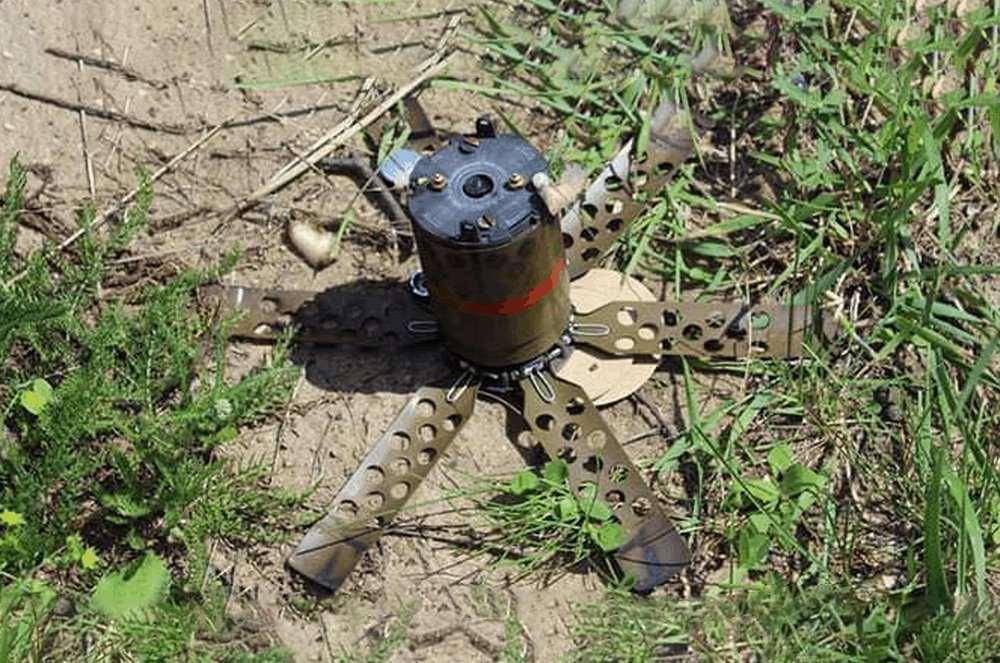
The mine can be emplaced only on the ground and only by remote mining systems: hand-held PKM, helicopter-mounted VSM-1, ground-based UMZ and UMZ-K. Manual emplacement of the mines is not provided for.
The mines are placed four per KPOM-2 cassette. Each mine is housed in a metal cylinder — a sub-cassette. The cassettes are loaded into the appropriate carrier (PKM-1, VSM, UMZ, UMZ-K).
A Mi-8 helicopter can carry 4 VSM containers. One container holds 29 KPOM-2 cassettes (116 mines). In total, the helicopter carries 464 mines. One helicopter emplaces a minefield with a frontage of 40-41 km and a depth of 35-65 meters in 60-100 seconds.

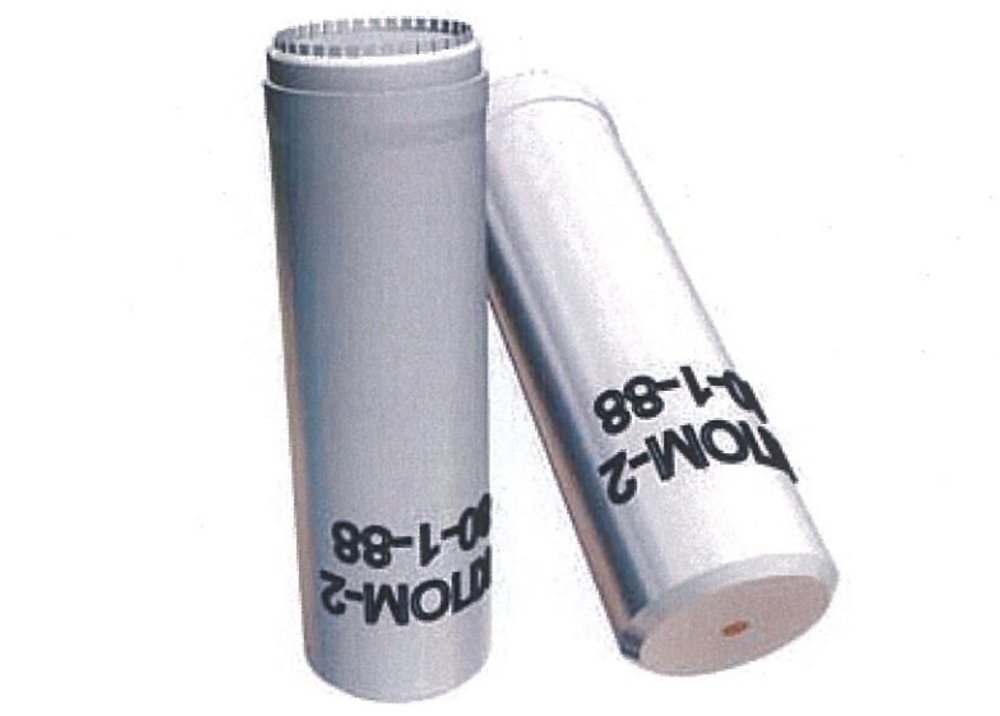

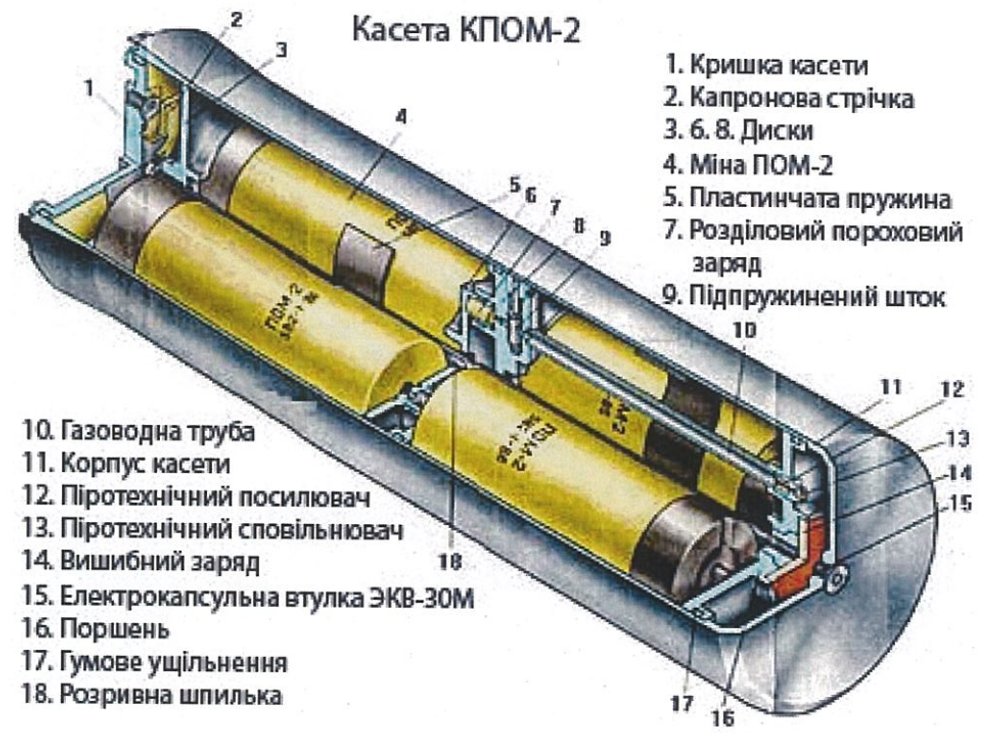

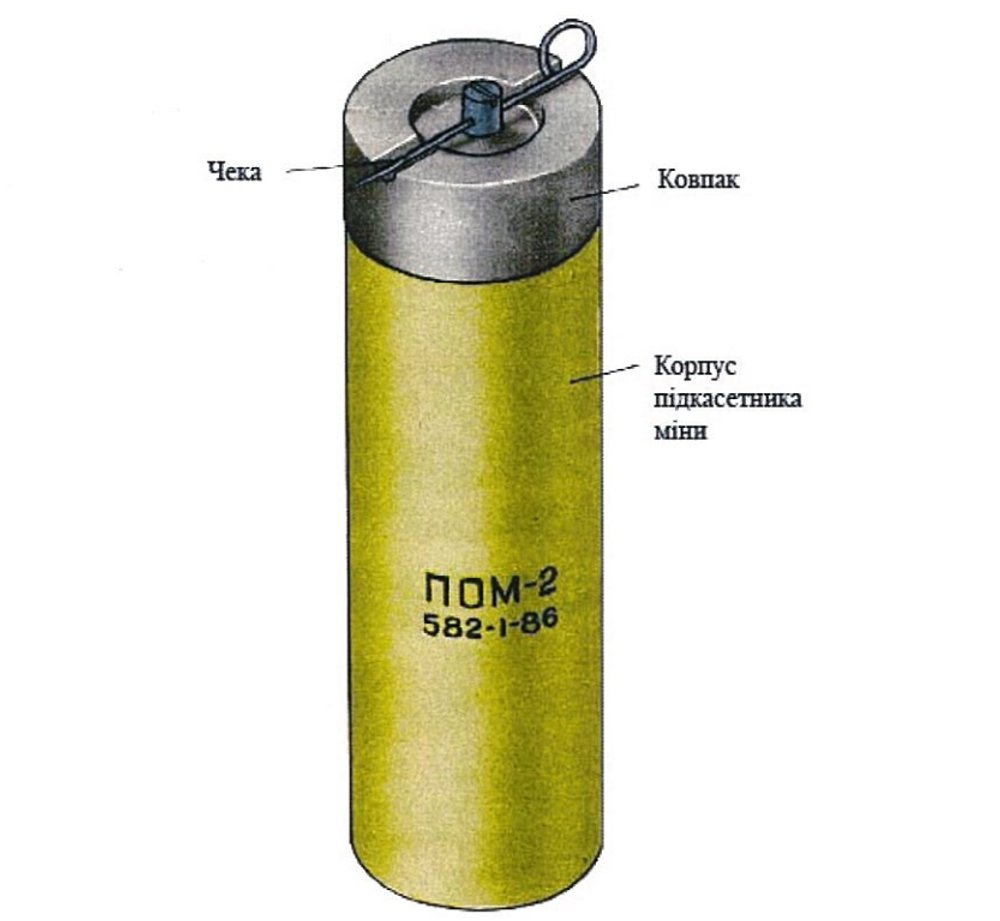
When mines are ejected from a cassette using the PKM-1 or UMZ, two mines are projected to a distance of 60-140 meters, and the other two to a distance of 30-70 meters, forming a dispersion ellipse with a major axis of 60-140 meters and a minor axis of 12-15 m. When the PKM system is used with several cassettes positioned every 24-30 meters of frontage, a two-belt minefield 60-140 meters deep is formed. The length of the minefield depends on the number of cassettes used. One UMZ mine-laying vehicle, with its ammunition load of 720 mines, is capable of emplacing a two-belt minefield with a frontage of 5 km and a depth of 60-140 meters.
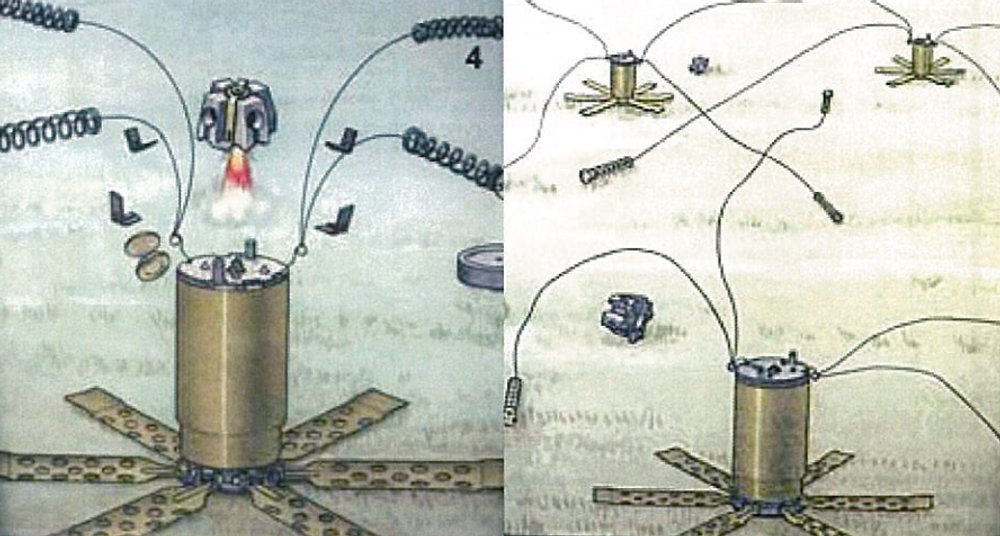
The mines are ejected from the cassette inside the sub-cassette. As soon as the mine leaves the cassette, the cap is jettisoned from the sub-cassette and nylon ribbon stabilizers deploy, ensuring the correct attitude of the mine in flight. The mine in the sub-cassette either lies on its side or stands on its base.
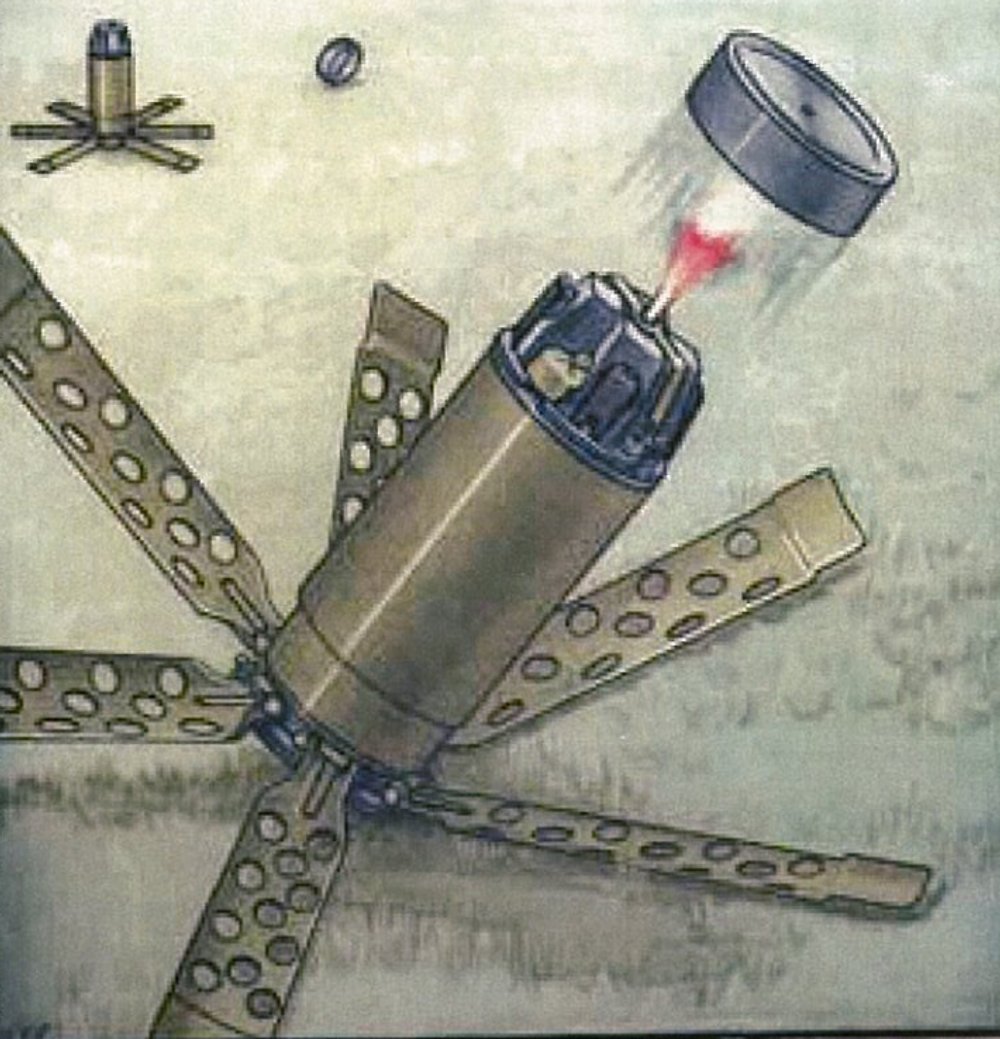
After the mine falls onto the ground, upon completion of the 50-60 second operation of the pyrotechnic delay, a powder expelling charge functions, pushing the mine out of the sub-cassette.
At the same time, a pyrotechnic delay ignites, which after 3-4 seconds ignites the second expelling charge; this ejects the cover and releases the folding legs. The spring-loaded legs spread out horizontally and place the mine in a vertical position.
After 2 seconds, the target sensor unit is fired from the upper part of the mine. After the target sensor unit rises to 0.5 meters, four target-sensor anchor weights are ejected from the mine to the sides to a distance of 9.5 meters, unwinding four thin break wires.
From this moment, the mine is in the armed position and the combat operating time begins to count down, which may range from 4 to 100 hours (on average 23 hours; the warmer it is, the longer; the colder it is, the shorter). After this, the mine self-destructs by detonation.

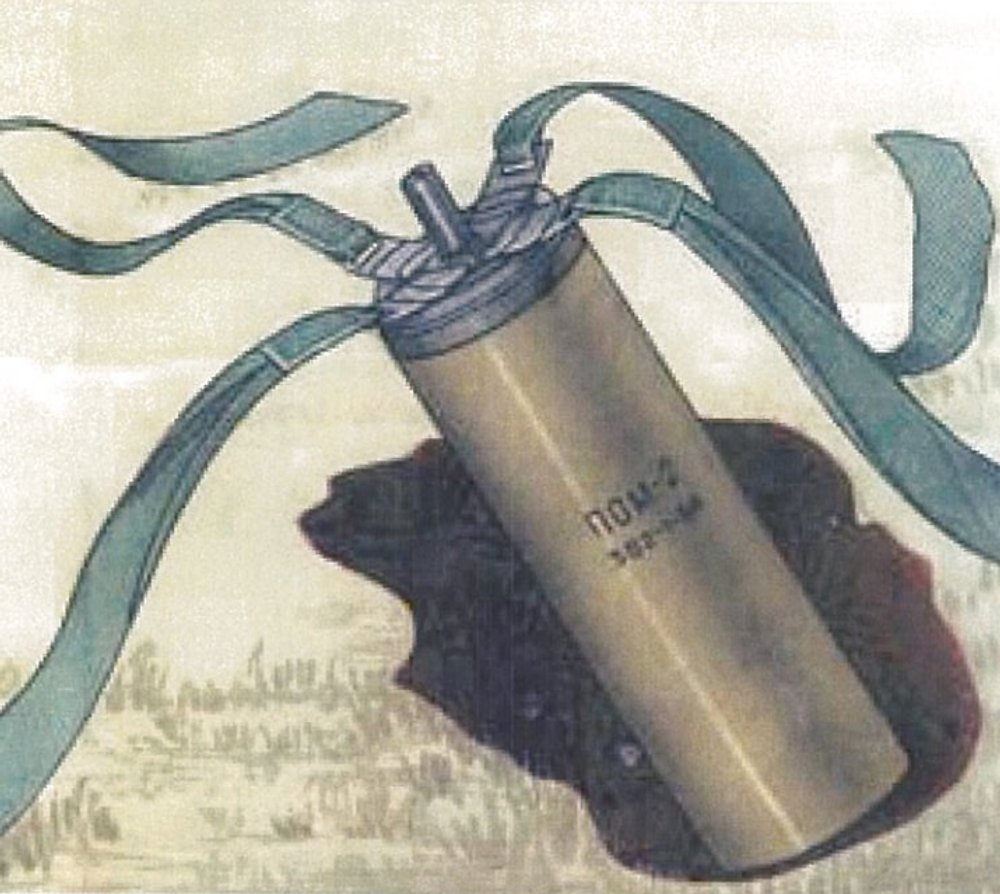

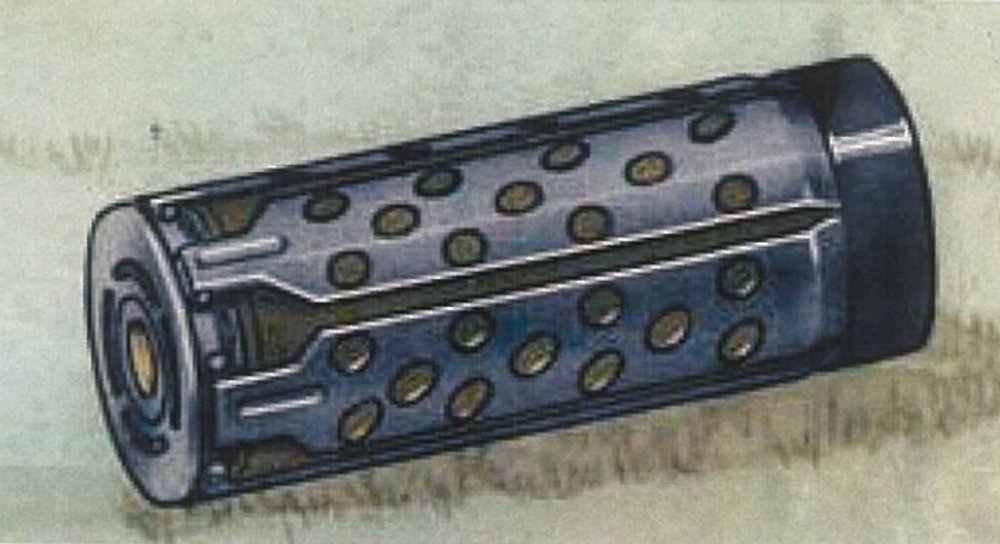


The mine is non-recoverable and is not subject to neutralization. The detonator is built-in electronic. Some mines may have an additional built-in seismic target sensor and/or an anti-disturbance element (tilt type, functioning when the mine’s position changes by 5-7 degrees).
The mine detonates when any of the four wires is broken or upon expiration of the combat operating time.
If, during the mine’s combat operation, a soldier catches and pulls any of the four threads (force not exceeding 450 grams), this will cause the detonator to function and the mine to explode.
If the mine does not assume the correct position after falling, for example due to landing in deep snow or a swamp, or if the target sensors fail to assume the correct position (did not deploy fully or not all deployed, or did not deploy to the full distance), the mine nevertheless operates in the normal combat mode.
POM-2 mines are quite conspicuous. In addition, there is a lot of debris scattered across the minefield (sub-cassettes, covers with ribbons, target sensor units).
Coloring
Green.
Marking
Standard, applied in black paint on the mine casing and includes:
- POM-2 - mine code.
- 582-1-86 - manufacturer’s plant code - batch number - year of manufacture.