
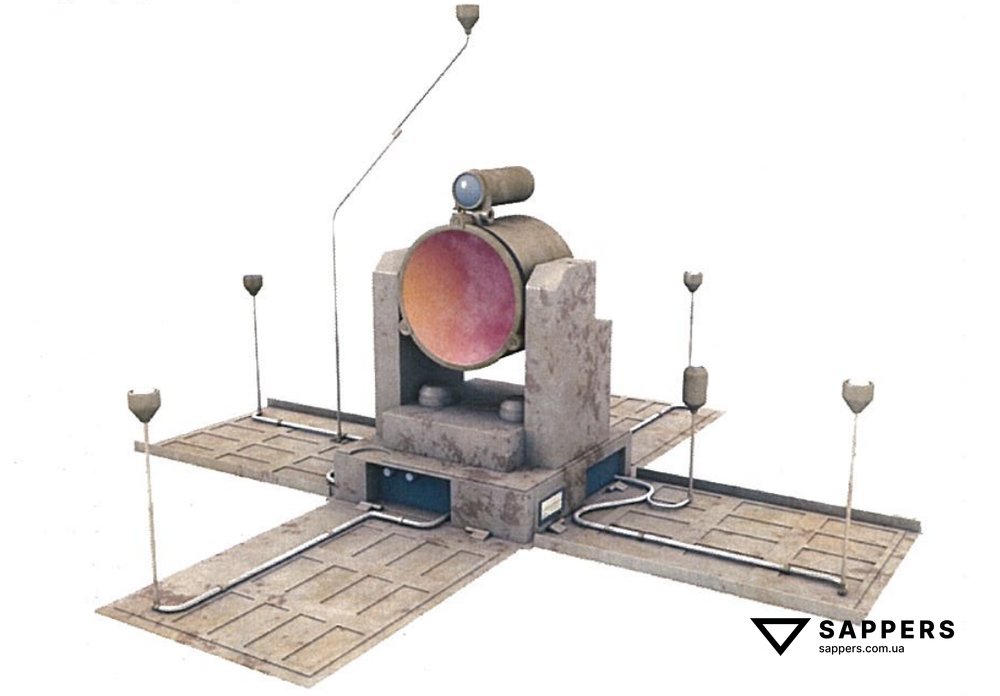
Tactical and Technical Characteristics of the PVM “Temp-20” and VTM-105 Mines
- Type of mine
- anti-helicopter, shaped-charge directional-effect
- Weight
- 12 kg
- Weight of TG-50 explosive
- 6.4 kg
- Length without deployed legs
- 455 mm
- Width without deployed legs
- 474 mm
- Height without deployed legs
- 470 mm
The mine is emplaced on the ground only manually and is stabilized on the ground by four spring-loaded legs. There is also a variant of the mine for remote emplacement by helicopters. This mine was developed slightly earlier than the PVM “Temp-20” and is designated VTM-105. Externally, the mine differs from the Temp-20 by a slightly different configuration and has six spring-loaded legs of a different shape, but the combat characteristics of both mines are identical.
The mine operates against low-flying aerial targets (aircraft, helicopters, and other powered flying vehicles) moving at speeds of up to 100 m/s (360 km/h). Target damage during mine detonation is inflicted by an explosively formed projectile fired toward the target at a range of up to 150 meters. The target sensor is a combined acoustic-infrared type, with sensitivity down to 0.6 decibels, which allows it to detect and reliably identify the engine noise of a powered hang glider at a distance of up to 0.6 km and a helicopter at up to 3.2 km.

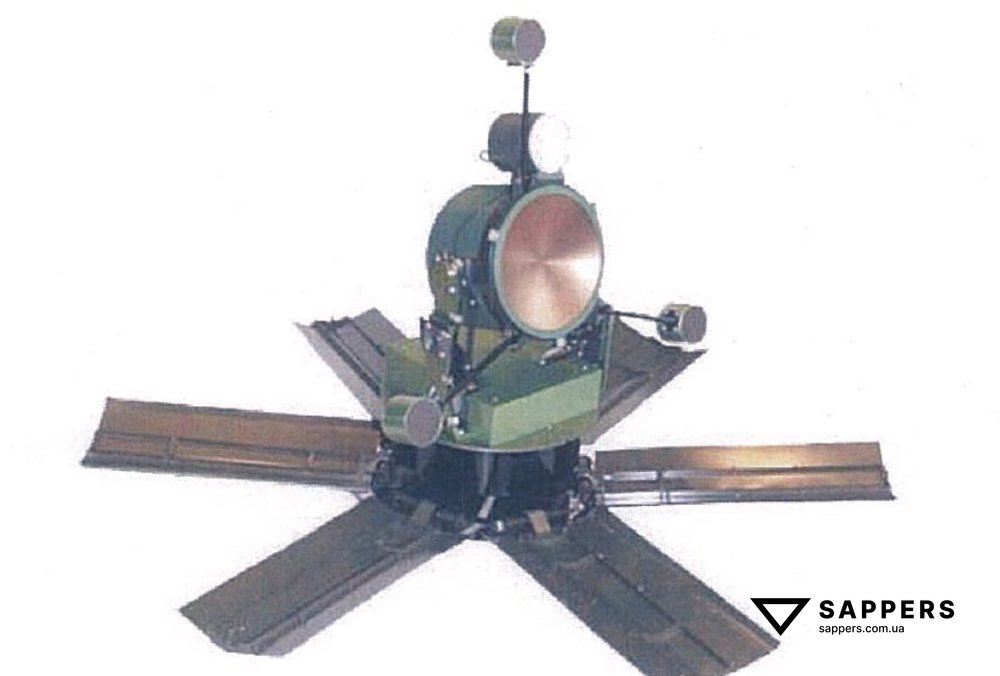
The noise-selection system makes it possible to isolate the sound of an aircraft or helicopter engine against the background of engine noise from ground vehicles, explosions, and gunfire. If the noise is identified as the engine noise of an aerial target, then, as the target approaches to within 1 kilometer, the warhead is slewed toward the target and the infrared target sensors (4–6 sensors) are activated; these determine the precise bearing to the target and the distance to it. Reacquisition of another target at this time is excluded. The combination of simultaneous operation of the acoustic and infrared sensors prevents the mine from reacting to thermal anti-missile decoys dispensed by the target. When the target enters the lethal zone (a hemisphere with a radius of 150 meters), the mine is detonated and the explosively formed projectile, traveling at a speed of approximately 2500 km/h, strikes the target. The target is considered to be a simultaneous source of sound and infrared radiation (the engine of the aircraft). The charge is aimed at the upper hemisphere of the helicopter (at the engine or rotor blades). If the target does not enter the lethal zone, then when it moves away to a distance of more than 1 kilometer the infrared sensors are switched off and the mine again enters the target-waiting state.
The mine’s active service life is limited by the capacity of the power source and the number of activations of the infrared guidance system, as well as by air temperature. However, in all cases the active service life is not less than 3 months.
A remotely emplaced mine is equipped with anti-disturbance and self-destruct systems. The self-destruct system provides for self-detonation of the mine after the preset period has expired or if the power-source voltage drops below the operating norm. Safe distances during mine detonation to the rear and to the sides are 35 meters; however, individual fragments of the casing fly to the rear and to the sides over a significantly greater distance.
The mine also has redundant radio-channel control.